
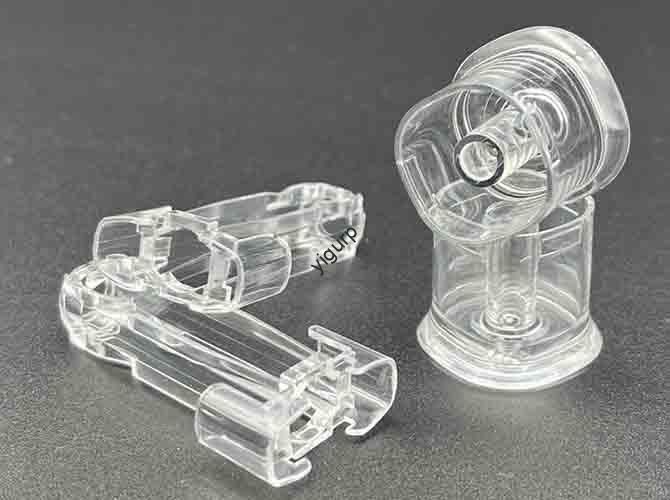
A high-quality CNC machining slow cooker prototype is essential for validating design concepts, tester la stabilité structurelle, et assurer la fiabilité fonctionnelle avant la production en série. Cet article décompose systématiquement l'ensemble du processus de développement, de la préparation préliminaire aux tests finaux, avec des comparaisons basées sur les données., directives étape par étape, et des solutions pratiques aux défis communs.
1. Préparation préliminaire: Lay the Groundwork for Prototype Accuracy
Preliminary preparation directly impacts the prototype’s precision and production efficiency. It focuses on two core tasks: 3D design finalization et sélection des matériaux, both of which require strict adherence to slow cooker-specific requirements.
1.1 3D Design & Split Planning
The design phase must clarify every detail of the slow cooker’s structure to avoid machining errors. Use professional software like SolidWorks ou UG to create a comprehensive 3D model, and follow these steps for split design:
- Component Split: Divide the slow cooker into independent parts (par ex., pot body, lid, handle, heating base, control panel) for easier machining and assembly.
- Key Detail Marking: Highlight critical features such as:
- Diameter and depth of the inner pot (tolérance: ±0,1mm)
- Position of heat dissipation holes (pour éviter la surchauffe)
- Groove size for the silicone sealing ring (ensures airtightness)
- Layout of buttons on the control panel (ergonomic accessibility)
Why is split design important? Sans ça, machining large integrated parts would increase tool wear by 30% and extend production time by 2–3 days.
1.2 Sélection des matériaux: Match Materials to Component Functions
Different components of the slow cooker require materials with specific properties. The table below compares the most commonly used materials and their applications:
| Type de matériau | Propriétés clés | Ideal Components | Fourchette de coût (par kg) | Usinabilité |
| Plastique ABS | Faible coût, easy to shape, bonne finition de surface | Outer shell, lid, control panel housing | \(2–)4 | Excellent (fast cutting, low tool wear) |
| Acrylique (PMMA) | High transparency, moderate heat resistance | Viewing windows (to check food status) | \(5–)8 | Bien (requires low feed rate to avoid cracking) |
| Alliage d'aluminium | Conductivité thermique élevée, poids léger, haute résistance | Heating base, support brackets | \(7–)12 | Bien (needs coolant to prevent sticking) |
| Acier inoxydable | Résistant à la corrosion, high hardness, alimentaire | Inner pot (direct contact with food) | \(15–)20 | Modéré (high hardness increases tool load) |
Exemple: The inner pot must be acier inoxydable to meet food safety standards, while the outer shell can use Plastique ABS to reduce costs without compromising appearance.
2. Processus d'usinage CNC: Turn Design into Physical Components
The CNC machining phase follows a linear workflow—programming → clamping → rough machining → finishing—with special attention to slow cooker-specific structures like thin walls and complex curved surfaces.
2.1 Programmation & Toolpath Planning
Precise programming ensures that the machine accurately replicates the 3D design. Use CAM software (par ex., Mastercam, PowerMill) and follow these steps:
- Rough Machining Setup:
- Tool selection: Use a large-diameter tool (par ex., Φ10mm flat end mill) to remove 80–90% of excess material.
- Parameters: Leave a 0.5–1mm machining allowance for finishing.
- Finishing Setup:
- Tool selection: Use small tools (par ex., Φ2mm ball end mill) for curved surfaces (par ex., inner pot walls).
- Parameters:
- For ABS Plastic: Cutting speed = 1800–2200 rpm; Feed rate = 600–800 mm/min.
- For Stainless Steel: Cutting speed = 800–1000 rpm; Feed rate = 200–300 mm/min.
- Special Structure Handling:
- Thin-walled parts (par ex., lid): Process in layers (0.2mm per layer) to avoid deformation.
- Heat dissipation holes: Use a Φ1mm center drill for array holes; for high precision, use EDM (Usinage par électroérosion).
2.2 Clamping & Exécution de l'usinage
Proper clamping prevents workpiece movement during machining. The table below outlines clamping methods and key considerations for different materials:
| Matériel | Clamping Method | Key Precautions | Common Issues to Avoid |
| Plastique ABS (block) | Flat pliers or vacuum adsorption platform | Ensure even pressure to avoid crushing | Loose clamping (causes offset) |
| Alliage d'aluminium (cylindrique) | Three-jaw chuck or indexing head | Align with the centerline to ensure concentricity | Misalignment (leads to uneven thickness) |
| Acier inoxydable (feuille) | Fixture with pressure plates | Use soft gaskets to prevent surface scratches | Over-tightening (deforms the workpiece) |
Pendant l'usinage:
- Use coolant for alliage d'aluminium et acier inoxydable to reduce tool temperature (prevents sticking and extends tool life by 50%).
- Pour acrylique, use a high-speed, low-feed approach (par ex., 2000 tr/min, 300 mm/min) to avoid cracking.
3. Post-traitement: Enhance Appearance and Functionality
Post-processing removes machining flaws and prepares the prototype for assembly. It includes ébavurage, traitement de surface, et pre-assembly checks.
3.1 Ébavurage & Ponçage
Burrs (sharp edges) are a common byproduct of machining and must be removed for safety and assembly. Use the following methods based on burr size:
- Small burrs (<0.5mm): Sand with 400–600 grit sandpaper (pour pièces en plastique) or 200–400 grit sandpaper (pour pièces métalliques).
- Large burrs (>1mm): First remove with a file (flat or round), then sand with 120–200 grit sandpaper.
- Metal parts (par ex., aluminum alloy heating base): Use polishing paste to eliminate scratches and improve surface smoothness.
Étude de cas: A slow cooker handle with unremoved burrs could cause user cuts. Deburring takes 5–10 minutes per handle but eliminates safety risks.
3.2 Surface Treatment Options
Surface treatment improves the prototype’s appearance, durabilité, et fonctionnalité. Choose the right method based on the material and component:
| Treatment Method | Compatibilité des matériaux | But | Process Notes |
| Oil Spraying | Plastique ABS, Alliage d'aluminium | Uniform color, résistance aux rayures | Use matte/gloss paint (par ex., AkzoNobel industrial paint); apply in a dust-free room to avoid spots. |
| Silk Screen/Hot Stamping | Plastique ABS, Acrylique | Print logos, operation instructions (par ex., “High/Low/Auto”) | Use scratch-resistant ink; for curved surfaces, use hot stamping for better adhesion. |
| Anodisation | Alliage d'aluminium | Résistance à la corrosion, texture enhancement | Available in colors like black/silver; increases surface hardness by 2x. |
| Galvanoplastie | Acier inoxydable | Glossy finish, sécurité alimentaire | Use food-grade nickel plating for inner pots to meet FDA standards. |
4. Assemblée & Essai: Validate Prototype Quality
Assembly and testing ensure the prototype meets design requirements for appearance, structure, and function.
4.1 Assembly Process
Follow a sequential assembly order to avoid rework:
- Attach the heating base to the outer shell using M3 screws (couple: 1.5–2.0 N·m).
- Install the silicone sealing ring into the lid’s groove (ensure it fits tightly to prevent air leakage).
- Mount the control panel onto the outer shell (align buttons with pre-machined holes).
- Assemble the handle to the lid (test for stability—should support 5kg weight without loosening).
- Place the inner pot into the heating base (check for smooth placement and removal).
4.2 Testing Checklist
Test the prototype in three key areas to ensure reliability:
| Test Category | Tools/Methods | Pass Criteria |
| Appearance Test | Inspection visuelle, gloss meter | – Uniform color (no uneven spraying).- Clear logos/instructions (no smudging).- No scratches or burrs on accessible parts. |
| Structural Test | Pull test (handle), pressure test (sealing ring) | – Handle resists 5kg pull force without loosening.- Sealing ring prevents air leakage (no steam escape when simulating heating). |
| Functional Test | Manual operation (boutons), visual check (viewing window) | – Buttons press smoothly with clear feedback.- Viewing window is transparent (no cloudiness).- Inner pot fits tightly in the heating base (no wobbling). |
Yigu Technology’s Perspective
Chez Yigu Technologie, we believe CNC machining slow cooker prototypes are the “bridge” between design and mass production. Our team focuses on two critical priorities: material precision and process optimization. Par exemple, we use food-grade acier inoxydable for inner pots (répondant aux normes de sécurité mondiales) and optimize machining parameters for alliage d'aluminium heating bases to reduce thermal deformation by 25%. We also integrate 3D scanning into post-processing to verify dimensional accuracy (tolérance <0.05mm). By investing in prototype quality, we help clients reduce post-production defects by 18–22% and accelerate time-to-market by 1–2 weeks. Whether you need an appearance prototype for market research or a functional prototype for performance testing, we tailor solutions to your unique needs.
FAQ
- Q: How long does it take to produce a CNC machining slow cooker prototype?
UN: Typically 6–8 days. This includes 1–2 days for design finalization, 2–3 days for CNC machining, 1 day for post-processing, and 1–2 days for assembly and testing.
- Q: Can I replace stainless steel with another material for the inner pot?
UN: It’s not recommended. Stainless steel is the only material that meets both food safety (par ex., FDA, UE 10/2011) and corrosion resistance requirements. Alternatives like aluminum alloy would require a food-safe coating, which adds cost and risks peeling over time.
- Q: What should I do if the prototype’s sealing ring leaks during testing?
UN: D'abord, check the groove dimensions (ensure depth/width match the ring size—tolerance ±0.05mm). If the groove is correct, replace the sealing ring with a slightly thicker one (par ex., 1.1mm instead of 1.0mm). Most leakage issues are resolved with these two steps, adding only 1–2 hours to the process.