
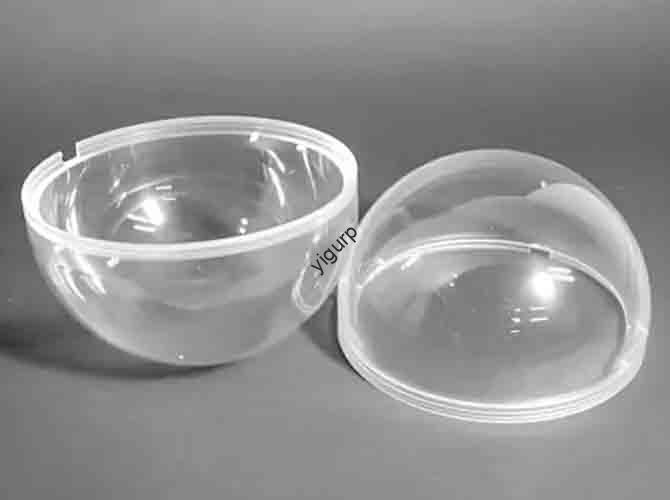
A well-engineered CNC machining dishwasher prototype model is a cornerstone of product development—it validates design rationality, teste les fonctions de base (comme l'efficacité du nettoyage et les performances d'étanchéité), et minimise les risques avant la production de masse. Cet article décompose systématiquement tout le processus de création, de la conception préliminaire au débogage final, utiliser des comparaisons claires, directives étape par étape, et des solutions pratiques pour relever les défis communs, helping you build a prototype that balances precision, fonctionnalité, and market readiness.
1. Préparation préliminaire: Lay the Foundation for Prototype Success
Preliminary preparation directly determines the prototype’s accuracy and usability. It focuses on two core tasks: 3Modélisation D & detail design et sélection des matériaux, both tailored to the unique needs of dishwashers (par ex., water resistance, résistance à la corrosion, efficient cleaning).
1.1 3Modélisation D & Key Detail Design
Use professional CAD software (par ex., SolidWorks, UG, Pro/E) to create a comprehensive 3D model of the dishwasher. The model must cover all components and prioritize critical details to avoid machining errors:
- Component Breakdown: Split the dishwasher into independent parts like the logement (armoire, corps de porte), control panel, internal structure (bowl rack, spray arm, water pump, motor, filter), et pièces fonctionnelles (charnières, door locks, sealing strips, drain pipes) for easier machining and assembly.
- Key Design Focus Areas:
- Door Sealing: Design the door opening/closing angle (typically 90–120°) and add grooves for silicone sealing strips (largeur: 2-3mm, profondeur: 1.5–2mm) to ensure waterproof and leak-proof performance.
- Spray Arm Rotation: Optimize the spray arm’s rotation coverage (360° without dead corners) and hole distribution (diamètre: 1–2mm) to ensure uniform water flow for cleaning.
- Bowl Rack Adjustability: Design the rack’s size (adaptable to plates, boules, cups of different sizes) and add positioning slots (tolérance: ±0,1mm) for stable tableware placement.
- Chaleur & Vibration Control: Add heat-dissipating ribs to the motor base (épaisseur: 1–1.5mm) and shock-absorbing pads to the water pump to reduce noise and vibration.
Why focus on these details? A poorly designed spray arm can leave 30% of tableware uncleaned, while an imprecise door seal may cause 40% water leakage—requiring rework that adds 2–3 days to the timeline.
1.2 Sélection des matériaux: Match Materials to Component Functions
Different components of the dishwasher need materials with specific properties (par ex., corrosion resistance for water-contacting parts, transparency for observation windows). The table below compares the most suitable materials:
| Type de matériau | Avantages clés | Ideal Components | Fourchette de coût (par kg) | Usinabilité |
| ABS/PC Plastic | Easy to cut, faible coût, simulates injection molding effect, good insulation | Housing, bowl rack, control panel (non-load-bearing parts) | \(3–)7 | Excellent (low cutting resistance, pas de bavures) |
| Alliage d'aluminium (6061) | Haute résistance, good heat dissipation, léger | Motor base, charnières, radiateurs (load-bearing/heat-generating parts) | \(6–)10 | Excellent (fast cutting, low tool wear) |
| Acier inoxydable (304/316) | Résistant à la corrosion, haute résistance, alimentaire | Water pump, filter, door locks (water-contacting/food-safe parts) | \(15–)22 | Modéré (needs coolant to prevent sticking; EDM assistance for complex parts) |
| PC (Polycarbonate) | Transparent, résistant aux chocs, résistant à la chaleur (jusqu'à 135°C) | Observation windows (for monitoring cleaning progress) | \(8–)12 | Modéré (requires high-speed cutting to avoid cracking) |
| Resin Compound | Faible coût, fast reproduction of complex shapes | Small-batch replica parts (paired with CNC-machined molds) | \(10–)14 | Modéré (not suitable for standalone structural parts) |
Exemple: The water pump and filter, which contact water long-term, utiliser 304 acier inoxydable pour la résistance à la corrosion. The bowl rack, a non-load-bearing part, is made of Plastique ABS for cost-effectiveness.
2. Processus d'usinage CNC: Turn Design into Physical Components
The CNC machining phase follows a linear workflow—programmation & toolpath planning → workpiece clamping → roughing & finition—with special attention to dishwasher-specific structures (par ex., curved spray arms, dense filter holes).
2.1 Programmation & Toolpath Planning
Import the 3D model into CAM software (par ex., Mastercam, PowerMill) to generate toolpaths and G-code. Key steps include:
- Cutting Parameter Setting (by Material):
- ABS/PC Plastic: Speed = 1500–3000 rpm; Feed = 0.08–0.15mm/tooth; Cutting depth = 0.5–1mm (no coolant needed for ABS; use coolant for PC to prevent softening).
- Alliage d'aluminium: Speed = 3000–6000 rpm; Feed = 0.1–0.2mm/tooth; Cutting depth = 1–2mm (use high-speed steel tools).
- Acier inoxydable: Speed = 800–2000 rpm; Feed = 0.05–0.1mm/tooth; Cutting depth = 0.3–1mm (use carbide tools; EDM for small holes).
- Sélection d'outils:
- Roughing: Use 8–16mm diameter end mills/face mills to remove 80–90% of excess material.
- Finition: Use 2–6mm diameter ball nose mills (for curved surfaces like door bodies, spray arms) or micro tools (Φ0.5mm or less) pour les petits trous (drain holes, screw holes).
- Special Structures: Utiliser five-axis linkage machining for spray arms (ensures uniform hole distribution) et GED (Usinage par électroérosion) for filter holes (Φ0.5–1mm, ensures uniform pore size).
2.2 Workpiece Clamping & Exécution de l'usinage
Proper clamping prevents deformation and ensures precision. The table below outlines clamping methods for different components:
| Component Type | Matériel | Clamping Method | Key Precautions |
| Housing & Door Body | ABS/PC Plastic | Vacuum adsorption platform | Even pressure to avoid warping; support thin walls (épaisseur <1.5mm) with auxiliary fixtures |
| Spray Arm | Aluminum Alloy/Stainless Steel | Three-jaw chuck + indexing head | Align with centerline to ensure rotation coaxiality (±0,05 mm) |
| Bowl Rack | Plastique ABS | Soft jaw vises | Reduce clamping force (≤40N) to avoid cracking; align positioning slots with toolpaths |
| Water Pump Base | Acier inoxydable | Custom fixture + flat pliers | Use soft pads to avoid surface scratches; ensure hole position accuracy (±0,1mm) |
Machining Execution Tips:
- For spray arms: Use five-axis linkage to machine curved surfaces and water holes in one setup (reduces positioning errors by 50%).
- For filters: Use EDM to process dense small holes (Φ0.5–1mm) to ensure no blockages and uniform water flow.
- For thin-walled housings: Reserve 0.2–0.3mm deformation allowance in programming to prevent machining stress-induced warping.
3. Post-traitement & Assemblée: Enhance Performance & Esthétique
Post-processing removes machining flaws and prepares components for assembly, while careful assembly ensures the prototype functions safely and smoothly.
3.1 Post-traitement
- Plastic Parts (Housing, Bowl Rack):
- Ponçage (200–800 grit sandpaper) to remove tool marks.
- Sandblasting to simulate injection molding texture.
- Peinture (imitation metallic texture or matte finish) to enhance aesthetics; use food-safe coatings for bowl racks.
- Metal Parts (Motor Base, Water Pump):
- Alliage d'aluminium: Anodize (color options: black/silver) pour la résistance à la corrosion; polish heat-dissipating ribs to improve heat transfer.
- Acier inoxydable: Passivate (traitement chimique) to enhance rust resistance; electroplate door locks for wear resistance.
- Silk Screen Printing: Print brand logos, operation instructions (par ex., “Start,” “Rinse,” “Sec”), and safety warnings (par ex., “Do not touch at high temperature,” “Do not block the drain outlet”) using wear-resistant, high-temperature environmental ink.
3.2 Step-by-Step Assembly
- Pre-Assembly Check: Verify all components meet dimensional standards (par ex., door seal groove tolerance ±0.05mm, spray arm hole diameter ±0.03mm).
- Core Component Assembly:
- Install the motor et water pump onto the base; connect hoses and wires (use heat-shrinkable tubes for insulation).
- Mount the spray arm to the water pump outlet; test rotation (should spin freely with no jitter).
- Assemble the bowl rack into the cabinet; ensure it slides smoothly and locks in place.
- Final Assembly:
- Attach the corps de porte to the cabinet via hinges; adjust the door opening angle (90–120°) and test the door lock (should close tightly).
- Install silicone sealing strips into the door groove; press firmly to ensure a tight seal.
- Mount the control panel onto the door; connect buttons to internal circuits (test button responsiveness).
4. Tests fonctionnels & Problem Troubleshooting
Testing validates the prototype’s performance, while troubleshooting resolves common issues to ensure reliability.
4.1 Functional Testing Checklist
Test the prototype in four key areas to validate performance:
| Test Category | Tools/Methods | Pass Criteria |
| Cleaning Efficiency | Oil-stained tableware, water pressure gauge | Removes 95%+ oil from tableware within 30 minutes; water pressure maintains 0.2–0.3 MPa |
| Leak-Proof Performance | Water filling (tank 80% full), inspection visuelle | No water leakage from door seal, drain pipes, or water pump junctions after 1 heure |
| Noise & Vibration | Decibel meter, vibration sensor | Operating noise <55 dB; vibration amplitude <0.1mm |
| Safety | Infrared thermometer, voltage tester | External surface temperature <45°C after 2 heures; no electrical leakage (voltage ≤36V) |
4.2 Common Problems & Solutions
| Problème | Cause | Solution |
| Spray arm rotation jitter | Coaxiality error (>0.05mm), bearing wear | Re-machine the spray arm to correct coaxiality; replace worn bearings |
| Door seal leakage | Sealing strip misalignment, groove size error | Realign the sealing strip; re-machine the groove to ±0.05mm tolerance |
| Filter blockage | Hole diameter inconsistency, bavures | Use EDM to reprocess filter holes (ensure Φ0.5–1mm); sand to remove burrs |
| Motor overheating | Poor heat dissipation, incorrect wiring | Add 2–3 more heat-dissipating ribs; rewire to ensure correct current flow |
Yigu Technology’s Perspective
Chez Yigu Technologie, we view CNC machining dishwasher prototype models as a “design validator”—they bridge ideas and mass production while ensuring user safety and cleaning efficiency. Our team prioritizes two core aspects: precision and durability. For critical parts like spray arms, we use five-axis machining to ensure 360° no-dead-corner coverage and EDM for uniform holes (±0.03mm tolerance). For water-contacting parts, we strictly select 304 stainless steel and passivation treatment to enhance corrosion resistance. We also integrate 3D scanning post-machining to verify component accuracy. By focusing on these details, we help clients reduce post-production defects by 25–30% and cut time-to-market by 1–2 weeks. Whether you need an appearance prototype for exhibitions or a functional one for testing, we tailor solutions to meet global food safety and electrical standards.
FAQ
- Q: How long does it take to produce a CNC machining dishwasher prototype model?
UN: Typically 9–12 working days. This includes 1–2 days for 3D programming, 3–4 days for CNC machining (including EDM for small holes), 1–2 days for post-processing, 2–3 days for assembly, et 1 day for testing & dépannage.
- Q: Can I use resin compound instead of ABS plastic for the bowl rack?
UN: It’s not recommended. Resin compound has low strength (can only bear ≤2kg weight) and poor water resistance (absorbs moisture and deforms after 10+ utilise). Plastique ABS, par contre, has high impact strength and water resistance—ideal for bowl racks that need to hold tableware (5–8kg) and contact water regularly.
- Q: What should I do if the prototype’s cleaning efficiency is low?
UN: D'abord, check the spray arm’s hole distribution (ensure even spacing at 5–8mm intervals) and water pressure (should be 0.2–0.3 MPa). If spacing is correct, verify the spray arm’s rotation speed (should be 30–40 rpm). If speed is low, clean the water pump filter (remove debris) or adjust the pump’s power supply—this fix takes 1–2 hours and resolves most cleaning efficiency issues.