
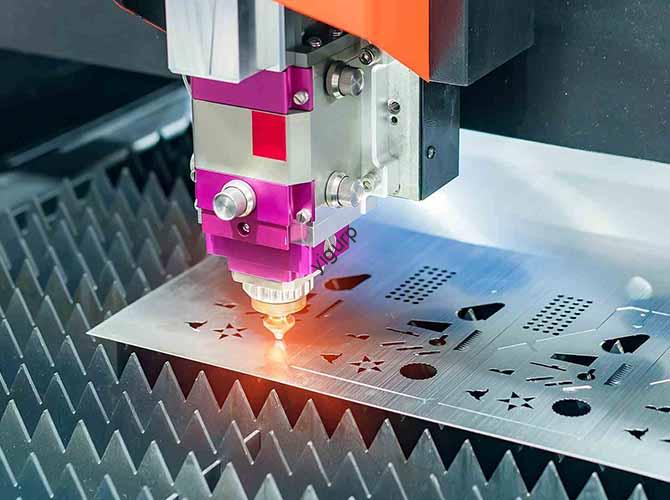
Que vous soyez un fabricant recherchant des pièces personnalisées ou un ingénieur budgétisant un projet, Comprendre comment calculer les frais d'usinage CNC est essentiel pour éviter les dépenses excessives ou les erreurs de devis.. Les frais d'usinage CNC ne sont pas arbitraires : ils sont basés sur des facteurs tangibles tels que les coûts des matériaux., temps d'usinage, et le type d'équipement. Ce guide détaille les 4 méthodes de calcul les plus fiables, key cost drivers, exemples concrets, and tips to optimize expenses.
1. 4 Proven Methods to Calculate CNC Machining Fees
Different suppliers use different pricing models, depending on part complexity, taille du lot, et équipement. Below are the most common methods, each with clear formulas, exemples, and best-use scenarios:
Method 1: Machining Time-Based Calculation (Most Widely Used)
This method charges based on how long the CNC machine operates, combinant amortissement du matériel, coûts de main d'œuvre, energy consumption, et entretien into an hourly rate.
Formula: CNC Machining Fee = Machining Time (Hours) × Hourly Rate (RMB/Hour)
Hourly rates vary by machine type—here’s a practical reference:
| Type de machine | Hourly Rate (RMB/Hour) | Idéal pour |
| Ordinary 3-Axis CNC Machine | 50 ~ 200 | Pièces simples (par ex., flat aluminum brackets, basic steel components) |
| High-Precision 5-Axis CNC Machine | 200 ~ 500 | Pièces complexes (par ex., curved aerospace components, multi-sided industrial parts) |
| Specialized Equipment (EDM/Laser Cutting) | 300 ~ 800 | Ultra-precision parts (par ex., mold inserts, micro-composants) |
Exemple:
- A stainless steel part requires 3 hours of machining on an ordinary 3-axis CNC machine (hourly rate: 150 RMB).
- Machining Fee = 3 × 150 = 450 RMB
Method 2: Material Cost-Based Calculation (Simple for Small Batches)
This method uses the raw material cost as the base and multiplies it by a profit margin to cover machining, travail, and overhead.
Formula: CNC Machining Fee = Material Cost × Profit Margin (1.5 ~ 3x)
Material cost is calculated by part weight et material unit price—here’s a breakdown of common material prices:
| Type de matériau | Unit Price (RMB/gramme) | Typical Part Weight Range | Material Cost Example (100g Part) |
| Alliage d'aluminium | 0.1 ~ 0.5 | 50 ~ 500g | 5 ~ 50 RMB |
| Acier inoxydable | 0.5 ~ 2 | 100 ~ 1000g | 50 ~ 200 RMB |
| Alliage de titane | 10 ~ 50 | 50 ~ 300g | 500 ~ 15,000 RMB |
| Superalloys (par ex., Inconel) | 20 ~ 80 | 50 ~ 200g | 1,000 ~ 16,000 RMB |
Exemple:
- A 200g aluminum alloy part (material unit price: 0.3 RMB/gramme)
- Material Cost = 200 × 0.3 = 60 RMB
- Profit margin: 2x (standard for small batches)
- Machining Fee = 60 × 2 = 120 RMB
Method 3: Process-by-Process Calculation (Transparent for Complex Parts)
This method breaks the machining workflow into individual processes (par ex., fraisage, forage, tapotement) and bills each step separately. It’s ideal for parts with multiple operations, as it lets you see exactly where costs come from.
| Processus d'usinage | Fourchette de coût (RMB/Piece) | Description |
| Fraisage (Single-Sided) | 20 ~ 80 | Flat surface milling for simple shapes |
| Forage (Per Hole) | 5 ~ 30 | Standard holes (直径 1 ~ 10mm); larger holes cost more |
| Tapotement (Per Hole) | 10 ~ 40 | Threaded holes (par ex., M3, M5); fine threads cost more |
| Tournant (Cylindrical Parts) | 30 ~ 150 | Machining round parts (par ex., arbres, boulons) |
| 5-Usinage des axes (Complex Surfaces) | 100 ~ 500 | Curved or multi-sided parts requiring precision |
Exemple:
- A part requires single-sided milling (50 RMB) + 2 percer des trous (10 RMB each) + 1 tapping hole (20 RMB).
- Total Machining Fee = 50 + (2×10) + 20 = 90 RMB
Method 4: Batch-Based Calculation (Cost-Effective for Large Orders)
The larger the batch, the lower the unit machining fee—this is because fixed costs (par ex., configuration de la machine, programmation) are spread across more parts. Suppliers often offer tiered discounts for bulk orders.
Formula: Unit Machining Fee (Batch) = (Single-Piece Fee × Batch Quantity × Discount Rate) ÷ Batch Quantity
| Batch Size | Discount Rate | Exemple (Single-Piece Fee: 100 RMB) | Unit Machining Fee | Total Batch Fee |
| 1 ~ 10 pièces | 100% (No Discount) | 100 RMB × 10 × 1.0 | 100 RMB | 1,000 RMB |
| 11 ~ 50 pièces | 80 ~ 90% | 100 RMB × 20 × 0.8 | 80 RMB | 1,600 RMB |
| 51 ~ 100 pièces | 70 ~ 80% | 100 RMB × 50 × 0.7 | 70 RMB | 3,500 RMB |
| 100+ pièces | 60 ~ 70% | 100 RMB × 100 × 0.6 | 60 RMB | 6,000 RMB |
Exemple:
- Ordering 30 pieces of a part with a single-piece fee of 150 RMB.
- Discount rate: 85% (pour 11 ~ 50 pièces).
- Unit Machining Fee = (150 × 30 × 0.85) ÷ 30 = 127.5 RMB
- Total Batch Fee = 127.5 × 30 = 3,825 RMB
2. 6 Key Factors That Impact CNC Machining Fees
Even with the right calculation method, fees can vary based on these critical factors. Understanding them helps you optimize costs and negotiate better quotes:
(1) Type de matériau & Difficulty to Machine
Not all materials are equal—harder or rarer materials take longer to machine and require specialized tools, increasing fees:
- Easy-to-machine materials (alliage d'aluminium, acier à faible teneur en carbone): Lower fees (50 ~ 200 RMB/piece for simple parts).
- Hard-to-machine materials (alliage de titane, superalloys): Higher fees (500 ~ 2,000 RMB/piece for simple parts) due to slower cutting speeds and tool wear.
(2) Part Complexity & Précision
Complex geometries and tight tolerances demand more programming time and skilled labor:
- Pièces simples (surfaces planes, no curves, tolerances ±0.1mm): Lower fees (20 ~ 150 RMB/piece).
- Pièces complexes (surfaces courbes, parois minces <2mm, tolérances ±0,01 mm): Higher fees (200 ~ 1,000 RMB/piece) due to longer machining time and quality checks.
(3) Equipment Type
Advanced machines cost more to operate and maintain, which is reflected in hourly rates:
- Ordinary 3-axis machines: 50 ~ 200 RMB/hour (best for simple parts).
- 5-machines à axes: 200 ~ 500 RMB/hour (required for complex parts, but reduces multiple setups).
(4) Labor Costs
Skilled programmers and operators command higher wages, especially for complex parts:
- Basic operation (simple 3-axis parts): 50 ~ 80 RMB/hour.
- Advanced programming (5-axis or precision parts): 100 ~ 150 RMB/hour.
(5) Post-Processing Requirements
Treatments like heat treatment or plating add extra costs—skip unnecessary steps to save:
| Post-Processing Step | Coût (RMB/Piece) | Impact on Total Fees |
| Traitement thermique | 50 ~ 300 | Adds 10 ~ 50% to base machining fees |
| Galvanoplastie | 80 ~ 500 | Adds 20 ~ 80% to base machining fees |
| Peinture | 30 ~ 200 | Adds 5 ~ 30% to base machining fees |
| Deburring/Cleaning | 10 ~ 50 | Adds 2 ~ 10% to base machining fees |
(6) Batch Size
As shown in Method 4, larger batches lower unit fees. Petits lots (1 ~ 10 pièces) have higher unit costs because fixed setup costs are spread across fewer parts.
3. Real-World CNC Machining Fee Calculation Cases
To make these methods more tangible, here are two practical cases covering simple and complex parts:
Cas 1: Simple Aluminum Alloy Part (Bracket)
- Matériel: Alliage d'aluminium (0.3 RMB/gramme), part weight = 150g → Material Cost = 150 × 0.3 = 45 RMB.
- Usinage: 1 hour on an ordinary 3-axis CNC machine (100 RMB/hour) → Time-Based Fee = 1 × 100 = 100 RMB.
- Post-traitement: Ébavurage (10 RMB) → No other treatments.
- Total Machining Fee: 100 + 10 = 110 RMB (material cost is separate unless using Method 2).
Cas 2: Complex Stainless Steel Part (Aerospace Component)
- Matériel: Acier inoxydable (1 RMB/gramme), part weight = 300g → Material Cost = 300 × 1 = 300 RMB.
- Usinage: 5 hours on a 5-axis CNC machine (300 RMB/hour) → Time-Based Fee = 5 × 300 = 1,500 RMB.
- Post-traitement: Traitement thermique (200 RMB) + Galvanoplastie (300 RMB) → Total Post-Processing = 500 RMB.
- Total Machining Fee: 1,500 + 500 = 2,000 RMB (material cost + 2,000 RMB = total part cost: 2,300 RMB).
4. 5 Practical Tips to Reduce CNC Machining Fees
You don’t have to compromise on quality to lower costs—try these strategies:
- Optimize part design: Remove unnecessary features (par ex., oversize holes, extra curves) to reduce machining time by 10 ~ 30%.
- Choose the right material: Use aluminum alloy instead of stainless steel for non-corrosive applications—saving 50 ~ 70% on material and machining fees.
- Merge processes: Complete multiple operations in one clamping (par ex., fraisage + forage) to cut setup time by 20 ~ 40%.
- Order in bulk: Even small batch increases (par ex., depuis 5 à 20 pièces) can unlock 10 ~ 20% discounts.
- Simplify post-processing: Skip plating for internal, non-visible surfaces to save 80 ~ 500 RMB/piece.
Yigu Technology’s Perspective on CNC Machining Fees
Chez Yigu Technologie, we believe transparency and design optimization are the keys to fair CNC machining pricing. Many clients overpay because they use complex designs or overspecify materials—for example, choosing titanium alloy for parts that only need aluminum. Our team works with clients to simplify designs (par ex., replacing multi-step setups with single-clamping machining) and select cost-effective materials, cutting fees by 15 ~ 30%. We also offer flexible batch discounts: même 10+ pieces get 15% off, et 100+ pieces get 40% off. By breaking down quotes into time, matériel, and post-processing costs, we ensure clients understand every expense—making CNC machining accessible and cost-effective for projects of all sizes.
FAQ
- Which calculation method should I use for a single complex part?
For a single complex part, use the process-by-process method—it breaks down costs by each operation (par ex., fraisage, forage), so you can see exactly where expenses come from. This also makes it easier to negotiate fees for specific steps (par ex., reducing tapping costs by simplifying thread size).
- Why does titanium alloy machining cost so much more than aluminum?
Titanium alloy is harder (requires slower cutting speeds) and more expensive (10 ~ 50 RMB/gram vs. 0.1 ~ 0.5 RMB/gram for aluminum). It also wears out tools faster, adding tool replacement costs. For a simple 100g part, titanium machining fees can be 10 ~ 20x higher than aluminum.
- Can I negotiate CNC machining fees with suppliers?
Yes—especially for bulk orders or simple parts. Ask for batch discounts (par ex., 20% éteint pour 50+ pièces) or to adjust profit margins (par ex., from 3x to 2x for large orders). You can also reduce fees by optimizing design or simplifying post-processing before negotiating.