
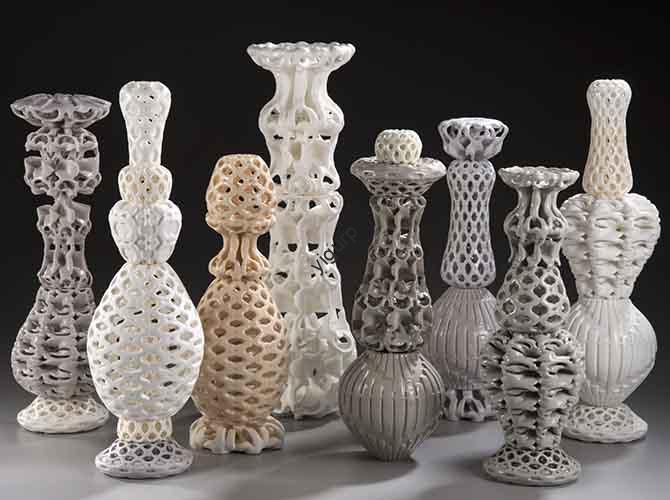
Si vous envisagez d'utiliser l'impression 3D pour des prototypes, pièces personnalisées, ou production en petites séries, comprendre comment il est facturé est la clé d’une budgétisation efficace. 3Les frais d’impression D ne sont pas un chiffre unique : ils dépendent du type de matériau, complexité du modèle, portée du service, et taille du lot. Ce guide détaille les 4 méthodes de chargement de base, facteurs d'influence clés, reference price ranges, and cost-saving tips to help you navigate quotes and avoid overspending.
1. 4 Core Charging Methods for 3D Printing
Different 3D printing service providers use distinct pricing models, each tailored to specific scenarios (par ex., type de matériau, taille de la commande). Below are the most common methods, with clear formulas, exemples, and best-use cases:
Method 1: Charged by Material Weight (Most Common for Basic Materials)
This method calculates fees based on the weight of the printing material utilisé, making it simple and transparent for common materials like PLA, ABS, and resin.
Formula: 3D Printing Fee = Part Weight (grammes) × Material Unit Price (RMB/gramme)
Material unit prices vary widely by type—here’s a practical reference:
| Type de matériau | Unit Price (RMB/gramme) | Applications typiques | Exemple (100g Part) |
| PLA (Normal) | 0.1 ~ 0.5 | Projets de loisirs, low-strength prototypes | 10 ~ 50 RMB |
| ABS (Normal) | 0.2 ~ 0.8 | Pièces fonctionnelles (par ex., coques de téléphone, parenthèses) | 20 ~ 80 RMB |
| Résine (Photosensitive) | 1 ~ 5 | Pièces très détaillées (par ex., bijoux, modèles dentaires) | 100 ~ 500 RMB |
| Nylon (Poudre) | 2 ~ 10 | Durable industrial prototypes | 200 ~ 1,000 RMB |
| Acier inoxydable | 10 ~ 50 | Heavy-duty parts (par ex., small machinery components) | 1,000 ~ 5,000 RMB |
| Alliage de titane | 50 ~ 100 | Des pièces performantes (par ex., aérospatial, implants médicaux) | 5,000 ~ 10,000 RMB |
Note: Some providers include a small markup (10–20%) to cover material waste (par ex., unused powder, structures de soutien). Par exemple, a 100g PLA part with 10% waste would be charged for 110g, totaling 11 ~ 55 RMB.
Method 2: Charged by Model Volume or Size (Idéal pour les formes complexes)
For parts with irregular or complex geometries (par ex., structures creuses, détails complexes), some providers charge based on model volume (length × width × height) ou number of sliced layers, as volume better reflects material usage than weight alone.
| Charging Basis | Unit Price Range | Idéal pour | Exemple |
| Volume (per cm³) | 0.5 ~ 5 RMB/cm³ | Resin or metal parts with complex shapes | A 50cm³ resin part: 25 ~ 250 RMB |
| Layers (per layer) | 0.01 ~ 0.1 RMB/layer | Simple FDM parts with uniform layer height | A 1,000-layer PLA part: 10 ~ 100 RMB |
Exemple:
- A resin model with a volume of 30cm³ (unit price: 2 RMB/cm³)
- 3D Printing Fee = 30 × 2 = 60 RMB
Method 3: Charged by Service Type (Flexible for Custom Needs)
This method splits fees into separate service categories—printing, post-traitement, and design—so you only pay for what you need. It’s ideal for projects requiring extra steps beyond basic printing.
| Service Category | Fourchette de coût (RMB/Piece) | What It Covers |
| Basic Printing Service | 50 ~ 1,000 | Core printing (billed via weight or volume) |
| Post-Processing Service | 50 ~ 300 | Ponçage, peinture, placage, assemblée, or deburring |
| Design Service | 100 ~ 1,000 | 3D model modification, optimisation, or custom design |
Exemple:
- A PLA part requires basic printing (80 RMB) + ponçage (50 RMB) + simple painting (100 RMB)
- Total 3D Printing Fee = 80 + 50 + 100 = 230 RMB
Method 4: Charged by Batch (Cost-Effective for Large Orders)
For bulk orders (10+ pièces), providers offer volume discounts—the more parts you order, the lower the unit price. This is because fixed costs (par ex., configuration de la machine, programmation) are spread across more units.
| Taille du lot | Discount Rate (contre. Single Piece) | Exemple (Single-Piece Fee: 100 RMB) | Unit Fee | Total Batch Fee |
| 1 ~ 10 pièces | 0% (No Discount) | 100 RMB × 5 | 100 RMB | 500 RMB |
| 11 ~ 50 pièces | 20 ~ 50% | 100 RMB × 20 × 0.8 | 80 RMB | 1,600 RMB |
| 51 ~ 100 pièces | 30 ~ 60% | 100 RMB × 50 × 0.7 | 70 RMB | 3,500 RMB |
| 100+ pièces | 40 ~ 70% | 100 RMB × 100 × 0.6 | 60 RMB | 6,000 RMB |
Exemple:
- Ordering 30 pieces of a part with a single-piece fee of 150 RMB
- Discount rate: 30% (pour 11 ~ 50 pièces)
- Unit Fee = 150 × (1 – 0.3) = 105 RMB
- Total Batch Fee = 105 × 30 = 3,150 RMB
2. 5 Key Factors That Affect 3D Printing Charges
Even with the same charging method, fees can vary significantly based on these critical factors. Understanding them helps you optimize costs and negotiate better quotes:
(1) Coût du matériel (Biggest Price Driver)
Material is the single most influential factor—common materials like PLA are cheap, while specialized metals or resins drive up costs:
- Low-cost materials (PLA, ABS): 0.1 ~ 0.8 RMB/gram → Keep fees low (50 ~ 200 RMB/piece for simple parts).
- High-cost materials (alliage de titane, super resins): 50 ~ 100 RMB/gram → Push fees to 5,000+ RMB/piece for small parts.
(2) Model Complexity
Complex models require more time, matériel, et post-traitement, increasing charges:
- Simple models (solid blocks, pas de soutien): Lower fees (50 ~ 200 RMB/piece) → Fast printing, un minimum de déchets.
- Complex models (structures creuses, parois minces <2mm, détails complexes): Higher fees (200 ~ 1,000 RMB/piece) → Longer print time, more support material, and extra post-processing.
(3) 3Technologie d'impression D
Different technologies have varying equipment and maintenance costs, which affect fees:
| Type de technologie | Cost Level | Hourly Rate (RMB/Hour) | Idéal pour |
| FDM (Modélisation des dépôts fondus) | Faible | 20 ~ 80 | PLA/ABS parts, hobby projects |
| SLA/DLP (Light Curing) | Moyen | 50 ~ 150 | High-detail resin parts |
| SLM/EBM (Impression 3D en métal) | Haut | 200 ~ 500 | Industrial metal parts (par ex., aérospatial) |
(4) Post-Processing Requirements
Basic post-processing (par ex., simple cleaning) adds little cost, but complex steps can double or triple fees:
| Post-Processing Step | Coût (RMB/Piece) | Impact on Total Fees |
| Simple Cleaning/Deburring | 10 ~ 50 | Adds 5 ~ 10% to base printing fees |
| Sanding/Polishing | 50 ~ 150 | Adds 20 ~ 50% to base printing fees |
| Painting/Plating | 100 ~ 300 | Adds 50 ~ 100% to base printing fees |
| Assemblée | 80 ~ 200 | Adds 30 ~ 80% to base printing fees |
(5) Service Provider Type
Small studios and industrial-grade providers have distinct pricing strategies:
- Personal/Hobby Studios: Lower fees (50 ~ 500 RMB/piece) → Good for simple, low-precision projects.
- Industrial-Grade Providers: Higher fees (200 ~ 5,000+ RMB/piece) → Better for high-precision, large-batch, or metal parts (with stricter quality checks).
3. Reference Price Ranges for 3D Printing Services
To help you gauge if a quote is reasonable, here’s a breakdown of typical fees by service type and material:
| Service/Material Type | Price Range (RMB/Piece) | Cas d'utilisation courants |
| Simple PLA/ABS Printing | 50 ~ 200 | Projets de loisirs, prototypes de base |
| High-Detail Resin Printing | 200 ~ 1,000 | Bijoux, modèles dentaires, detailed miniatures |
| Industrial Metal Printing (Acier inoxydable) | 1,000 ~ 5,000 | Small machinery parts, composants fonctionnels |
| Post-traitement (Ponçage + Peinture) | 100 ~ 400 | Aesthetic parts (par ex., custom figurines) |
| Batch Printing (10+ Pieces) | 50 ~ 80% of Single-Piece Price | Production en petits lots (par ex., 20 supports personnalisés) |
4. 4 Practical Tips to Reduce 3D Printing Charges
You don’t have to compromise on quality to lower costs—try these strategies:
- Optimize model design: Remove unnecessary support structures (par ex., use self-supporting angles) and simplify geometry (par ex., replace complex curves with straight lines) to cut material use by 15 ~ 30%.
- Choose the right material: Use PLA instead of ABS for non-functional parts, or resin instead of metal for small, detailed items—saving 50 ~ 80% on material costs.
- Order in bulk: Even small batch increases (par ex., depuis 5 à 15 pièces) can unlock 20 ~ 30% discounts, lowering unit fees significantly.
- Do self-post-processing: Handle simple steps like cleaning or sanding yourself instead of paying the service provider—saving 50 ~ 200 RMB/piece.
Yigu Technology’s Perspective on 3D Printing Charges
Chez Yigu Technologie, we believe transparency and customization are the foundation of fair 3D printing pricing. Many clients overpay because they don’t realize how model design or material choice impacts fees—for example, using titanium alloy for parts that only need PLA, or including unnecessary post-processing. Our team works with clients to optimize designs (par ex., reducing support structures by 20 ~ 40%) and select cost-effective materials, cutting charges by 15 ~ 30%. We also offer flexible batch discounts: 10+ pieces get 20% off, et 100+ pieces get 50% off. By breaking down quotes into material, impression, and post-processing costs, we ensure clients understand every expense—making 3D printing accessible and cost-effective for projects of all sizes.
FAQ
- Why do some providers charge by volume instead of weight for 3D printing?
Volume better reflects material usage for complex shapes (par ex., pièces creuses, détails complexes) where weight doesn’t fully capture the material needed to build the structure. Par exemple, a hollow resin model may weigh little but have a large volume—charging by volume ensures the provider covers the actual material used.
- How much extra does expedited 3D printing cost?
Service accéléré (par ex., 24-hour turnaround instead of 3–5 days) typically adds 50 ~ 100% to the base fee. Par exemple, un 100 RMB PLA part with standard delivery would cost 150 ~ 200 RMB with expedited service, as it requires prioritizing machine time and overtime labor.
- Can I negotiate 3D printing charges with a service provider?
Yes—especially for bulk orders or simple parts. Pour 50+ pièces, ask for 30 ~ 50% discounts. For simple designs, you can also negotiate to skip unnecessary post-processing (par ex., polishing non-visible surfaces) or use a lower-cost material, cutting fees by 20 ~ 40%.