
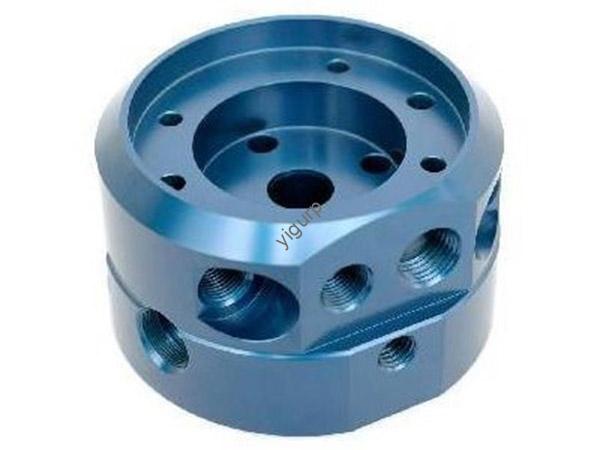
Si vous concevez des composants devant résister à des températures extrêmes, charges lourdes, ou environnements difficiles, que ce soit pour les moteurs aérospatiaux, voitures hautes performances, or industrial machinery—high performance steel delivers the strength, durabilité, et une polyvalence qu'aucun autre matériau ne peut égaler. Ce guide détaille ses principales caractéristiques, utilisations réelles, et comment il surpasse les alternatives, so you can build products that excel in demanding conditions.
1. Core Material Properties of High Performance Steel
High performance steel isn’t a single grade—it’s a category of steels engineered with precisionchemical composition and heat treatment to achieve “next-level” performance. Unlike conventional steels, it’s tailored to excel in specific high-stress scenarios (par ex., températures élevées, corrosion, or wear). Below’s a detailed breakdown:
1.1 Composition chimique
Its chemistry is the foundation of its performance—alloying elements are added to boost strength, résistance à la chaleur, ou résistance à la corrosion. Typiquechemical composition includes:
- High carbon (C): 0.80–1.50% (for high hardness and wear resistance in cutting tools or gears).
- High chromium (Cr): 12–20% (enhances corrosion resistance and forms hard carbides for wear protection).
- Molybdène (Mo): 0.50–5.00% (improves high-temperature strength and fatigue resistance).
- Vanadium (V): 0.10–1.00% (refines grain structure, boosting toughness and wear resistance).
- Nickel (Dans): 2.00–10.00% (increases low-temperature impact toughness and corrosion resistance).
- Cobalt (Co): 5.00–15.00% (used in ultra-high-temperature steels for aerospace turbines).
- Tungsten (W): 10.00–20.00% (retains strength at extreme temperatures—critical for cutting tools).
- Other alloying elements: Trace amounts of titanium or niobium (stabilize carbides and prevent grain growth).
1.2 Propriétés physiques
These traits vary by grade but consistently outperform conventional steels for high-demand needs:
| Physical Property | Gamme typique (Acier haute performance) | Conventional Carbon Steel (1018) |
|---|---|---|
| Densité | 7.70–8.10 g/cm³ | 7.85 g/cm³ |
| Point de fusion | 1400–1550°C | 1430–1450°C |
| Conductivité thermique | 35–50 W/(m·K) (20°C) | 45 Avec(m·K) (20°C) |
| Thermal expansion coefficient | 10.5–13.0 × 10⁻⁶/°C (20–100°C) | 11.7 × 10⁻⁶/°C (20–100°C) |
| Electrical resistivity | 0.20–0.50 Ω·mm²/m (20°C) | 0.16 Ω·mm²/m (20°C) |
Key highlight: High performance steel’spoint de fusion élevé (up to 1550°C) makes it suitable for aerospace turbines or industrial furnaces—applications where conventional steel would soften or fail.
1.3 Propriétés mécaniques
This is where high performance steel truly stands out—itspropriétés mécaniques are engineered to handle extreme stress. Below’s a comparison with conventional steel and HSLA steel:
| Mechanical Property | Acier haute performance (par ex., AISI M2) | Conventional Steel (1018) | Acier HSLA (A572 Grade 50) |
|---|---|---|---|
| Ultra-high tensile strength | 2400–2800 MPa | 440 MPa | 450–620 MPa |
| High yield strength | 2000–2400 MPa | 370 MPa | ≥345 MPa |
| Haute dureté | 60–65 HRC (Rockwell C) | 12–15 HRC | 130–160 HB |
| High impact toughness | 12–20 J (Charpy V-notch, 20°C) | 60–70 J | 34 J. |
| High elongation | 4–8% | 25–30% | 18–22% |
| Haute résistance à la fatigue | 800–1000 MPa (10⁷ cycles) | 190 MPa | 250–300 MPa |
Key takeaways:
- Strength advantage: Tensile strength is 5–6x higher than conventional steel—ideal for load-bearing parts like landing gear.
- Résistance à l'usure: Dureté (60–65 HRC) makes it 4–5x more wear-resistant than HSLA steel—perfect for cutting tools.
- Tradeoff note: It has lower elongation than conventional steel, but this is acceptable for applications where strength matters most.
1.4 Autres propriétés
- Excellent wear resistance: Hard carbides (from chromium, tungstène, or vanadium) resist abrasion—critical for drills or milling cutters.
- Excellente résistance à la corrosion: High chromium content (12–20%) creates a protective oxide layer—suitable for marine components or medical implants.
- High-temperature strength: Maintains hardness and strength up to 600°C (for cobalt-alloyed grades)—used in gas turbine blades.
- Good weldability: Most grades require preheating (200–300°C) and post-weld heat treatment, but advanced grades (par ex., duplex stainless steels) offer easier welding.
- Good formability: Shaped via hot forging or cold rolling (hot forming is preferred for high-carbon grades to avoid cracking).
2. Key Applications of High Performance Steel
High performance steel’s versatility makes it indispensable across industries where “suffisant” isn’t enough. Below are its top uses, paired with real case studies:
2.1 Aérospatial
Aerospace relies on it for components that face extreme heat and stress:
- Aircraft engine components: Aubes de turbines, chambres de combustion, and valve springs (withstand 500–600°C temperatures).
- Gas turbine blades: Cobalt-alloyed grades retain strength at high temperatures—critical for jet engines.
- Train d'atterrissage: Ultra-high-strength grades handle heavy loads (jusqu'à 30 tons per gear) during takeoff and landing.
Étude de cas: A leading aerospace manufacturer used a cobalt-rich high performance steel for gas turbine blades. The blades lasted 3x longer than nickel-alloyed alternatives (depuis 5,000 à 15,000 flight hours) and reduced maintenance costs by 40%—a major win for commercial airlines.
2.2 Automobile (Haute performance)
High-performance cars and racing vehicles use it for power and durability:
- High-performance engine parts: Pistons, arbres à cames, and connecting rods (handle high RPMs and heat).
- Transmission components: Gear teeth and shafts (resist wear from aggressive shifting).
- Suspension systems: Coil springs and control arms (maintain stiffness under heavy loads).
2.3 Machines industrielles
Industrial equipment uses it for long-lasting, low-maintenance parts:
- Outils de coupe: Forets, fraises, and lathe bits (stay sharp 5–10x longer than conventional steel tools).
- Gears and shafts: Heavy-duty gearboxes (handle torque and repeated stress in mining or construction machinery).
2.4 Articles de sport, Équipement médical & Marin
- Articles de sport: Têtes de clubs de golf (tungsten-alloyed grades add weight for better ball control) and bicycle frames (léger, high-strength grades improve speed and durability).
- Matériel médical: Instruments chirurgicaux (corrosion-resistant grades stay sterile) and implants (titanium-alloyed grades are biocompatible and long-lasting).
- Marin: Ship propellers, composants de coque, and offshore oil rig structures (corrosion-resistant grades withstand saltwater).
Étude de cas: A medical device maker used a high-chromium high performance steel for surgical scalpels. The scalpels retained sharpness 4x longer than stainless steel versions and resisted rust even after repeated sterilization—reducing replacement costs for hospitals.
3. Manufacturing Techniques for High Performance Steel
Producing high performance steel requires precision to ensure consistent properties. Here’s how it’s made:
3.1 Steelmaking Processes
- Four à arc électrique (AEP): Most common for small-batch production. Melts scrap steel and adds alloys to hit chemical specs—ideal for custom grades.
- Four à oxygène de base (BOF): Used for large-scale production. Blows oxygen into molten iron to reduce carbon, then adds alloys—cost-effective for high-volume grades (par ex., duplex stainless steels).
- Vacuum Arc Remelting (VAR): Critical for aerospace grades. Remelts steel in a vacuum to remove impurities (par ex., oxygène, azote)—ensures no defects in turbine blades or landing gear.
3.2 Traitement thermique
Heat treatment unlocks its full performance:
- Quenching and tempering: Standard process. Heat to 800–1000°C, quench in oil/water to harden, then temper at 150–600°C to reduce brittleness.
- Recuit: Softens steel for forming. Heat to 700–900°C, cool slowly—used before cold rolling or machining.
- Normalizing: Improves uniformity. Heat to 900–1000°C, cool in air—enhances toughness for gears or shafts.
- Precipitation hardening: Used for high-strength grades. Heat to 400–600°C to form tiny precipitates that strengthen the steel—used in aerospace components.
3.3 Forming Processes
- Hot rolling: Heats steel to 1100–1200°C and rolls into bars, tiges, or sheets—used for large components like landing gear.
- Cold rolling: Rolls at room temperature to create precise shapes with smooth surfaces—used for cutting tools or medical instruments.
- Forgeage: Heats steel and hammers/presses it into complex shapes—ideal for turbine blades or gear blanks.
- Extrusion: Pushes heated steel through a die to create long, uniform shapes—used for bicycle frames or marine rails.
- Estampillage: Used for thin, pièces simples (par ex., small springs) after annealing.
3.4 Traitement de surface
Surface treatments enhance durability and performance:
- Placage: Chromium plating (adds corrosion resistance and reduces friction for automotive parts).
- Revêtement: Titanium nitride (Étain) revêtement (harder than steel; used for cutting tools to extend life).
- Shot peening: Blasts surface with metal balls (creates compressive stress, improving fatigue resistance by 20–30%).
- Polissage: Crée une surface lisse (critical for medical instruments to prevent bacteria buildup).
4. How High Performance Steel Compares to Other Materials
Choosing high performance steel means understanding its advantages over alternatives. Here’s a clear comparison:
| Catégorie de matériau | Key Comparison Points |
|---|---|
| Conventional steels (par ex., 1018) | – Force: High performance steel is 5–6x stronger. – Résistance à l'usure: 4–5x better. – Coût: 3–4x more expensive but lasts 5–10x longer. |
| HSLA steels (par ex., A572 Grade 50) | – Force: 4–5x higher; résistance à la fatigue: 3–4x better. – Performances à haute température: HSLA fails at 300°C; high performance steel works up to 600°C. – Coût: 2–3x more expensive but offers superior durability. |
| Stainless steels (par ex., 304) | – Résistance à la corrosion: Similar for high-chromium high performance steel. – Force: 3–4x higher; résistance à l'usure: 2–3x better. – Coût: 1.5–2x more expensive (better for high-stress, environnements corrosifs). |
| High-speed steels (par ex., AISI M42) | – Résistance à l'usure: Similar (both have tungsten carbides). – Performances à haute température: High-speed steel works up to 650°C; high performance steel up to 600°C. – Coût: High-speed steel is 10–15% more expensive (high performance steel is better for non-cutting applications). |
| Tool steels (par ex., AISI D2) | – Dureté: Similar (60–65 HRC). – Dureté: High performance steel is 10–20% tougher. – Coût: Tool steel is 5–10% more expensive (high performance steel is more versatile). |
5. Yigu Technology’s Perspective on High Performance Steel
Chez Yigu Technologie, we seehigh performance steel as a catalyst for innovation—helping clients solve their toughest engineering challenges. It’s our top recommendation for aerospace turbine blades, pièces automobiles hautes performances, and industrial cutting tools—addressing pain points like frequent component failure, limited temperature resistance, and poor wear performance. For aerospace clients, it boosts engine efficiency and reduces maintenance; for manufacturers, it extends tool life and cuts downtime. While it costs more than conventional steel, its long-term durability and performance make it a cost-effective investment. We work closely with clients to select the right grade (par ex., cobalt-alloyed for high temperatures, high-chromium for corrosion) and optimize manufacturing to maximize value.
FAQ About High Performance Steel
- Can high performance steel be used for medical implants?
Yes—high-chromium (17–19%) or titanium-alloyed high performance steel is biocompatible, résistant à la corrosion, and strong enough for implants like hip replacements or bone plates. It’s also easy to sterilize, making it safe for medical use. - Is high performance steel hard to machine?
It’s harder to machine than conventional steel due to its high hardness (60–65 HRC). For best results, use carbide or ceramic tools, slow cutting speeds, and cutting fluids. Annealing the steel first (softening it to 20–25 HRC) also makes machining easier. - What’s the typical lead time for high performance steel components?
Standard grades (par ex., AISI M2) take 3–4 weeks for bars or sheets. Qualités personnalisées (par ex., cobalt-alloyed for aerospace) take 6–8 weeks due to complex steelmaking (par ex., vacuum arc remelting) and heat treatment steps. Finished components (par ex., pales de turbine) take 8–10 weeks with machining and testing.