
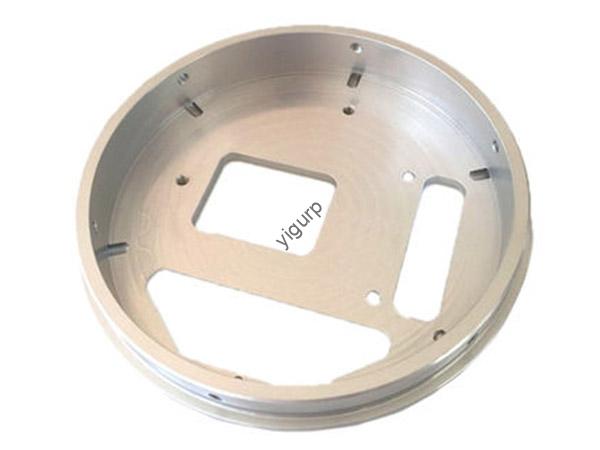
Industries comme l'outillage, automobile, et l'agriculture a besoin de matériaux capables de supporter une usure constante et des contraintes importantes.. High carbon high chromium steel is a top choice here—it combines two key elements (carbone et chrome) en concentrations élevées pour offrir une durabilité imbattable. Ce guide détaille ses principales caractéristiques, applications du monde réel, comment c'est fait, et comment il se compare à d'autres matériaux, helping engineers and buyers pick the right solution for tough jobs.
1. Core Material Properties of High Carbon High Chromium Steel
The performance of high carbon high chromium steel comes from its unique composition and carefully adjusted properties. Below’s a detailed look at its chemical, physique, mécanique, and functional characteristics.
1.1 Composition chimique
The high levels of carbone (C) et chrome (Cr) are what make this steel special. The table below shows its typical composition and what each element does:
| Élément | Gamme de contenu (%) | Role in High Carbon High Chromium Steel |
| High Carbon (C) | 1.0-2.0 | Booste dureté and creates wear-resistant carbides (critical for cutting tools) |
| High Chromium (Cr) | 12.0-18.0 | Forms a protective oxide layer for résistance à la corrosion and strengthens carbides |
| Manganèse (Mn) | 0.3-1.0 | Améliore résistance à la traction and reduces brittleness after heat treatment |
| Silicium (Et) | 0.1-0.8 | Helps remove oxygen during steelmaking and boosts high-temperature strength |
| Phosphore (P.) | ≤0.035 | Controlled to avoid making the steel brittle |
| Soufre (S) | ≤0.035 | Minimized to prevent cracking when forging or machining |
| Molybdène (Mo)/Vanadium (V) | 0.2-1.0 | Refines grain size for better résistance à la fatigue (great for springs and bearings) |
1.2 Propriétés physiques
These traits make the steel easy to manufacture and reliable in harsh conditions:
- Densité: 7.75-7.85 g/cm³ (similar to regular steel, so no extra work for design calculations)
- Point de fusion: 1400-1450°C (works with standard forging and heat treatment processes)
- Conductivité thermique: 40-45 Avec(m·K) (ensures even heating when shaping tools)
- Thermal Expansion Coefficient: 10-12 μm/(m·K) (reduces warping when the steel heats up or cools down)
- Electrical Resistivity: 0.5-0.6 μΩ·m (higher than low alloy steels, so it’s not used for electrical parts)
1.3 Propriétés mécaniques
This steel is built for strength and durability. Typical values (they change a bit by grade) inclure:
- High Tensile Strength: 1200-1800 MPa (handles heavy loads, like in automotive gears or shafts)
- High Yield Strength: 900-1500 MPa (won’t deform permanently, even under stress)
- Haute dureté: 58-65 CRH (after heat treatment—perfect for cutting tools that need to stay sharp)
- High Impact Toughness: 20-40 J at room temperature (tough enough for cold work tools that might hit hard)
- High Elongation: 3-8% (enough to form simple shapes, like small springs)
- High Fatigue Resistance: 400-600 MPa (10⁷ cycles) (won’t crack from repeated stress, like bearings spinning nonstop)
1.4 Other Key Properties
- Excellent Wear Resistance: The mix of high carbon (C) et haute teneur en chrome (Cr) creates hard carbides—ideal for cutting tools and plows that grind against materials.
- Good Corrosion Resistance: Chromium forms a thin, protective layer that stops rust—great for agricultural machinery left outside.
- High-Temperature Strength: Keeps its hardness up to 400°C (works for hot forging dies that touch hot metal)
- Weldability: Needs pre-heating (to avoid cracks) and post-heating, but it’s doable for joining tool parts.
- Formabilité: Can be hot-forged or rolled into complex shapes, like molds and dies.
2. Real-World Applications of High Carbon High Chromium Steel
This steel’s mix of hardness and wear resistance makes it useful across many industries. Below are its most common uses, plus a case study to show how it performs in real jobs.
2.1 Applications clés
- Outils de coupe: Forets, outils de tour, et milling cutters rely on its high hardness to cut through metal without dulling.
- Outillage & Meurt: Cold work tools (like stamping dies for metal sheets) et hot work tools (like forging dies) use its wear and heat resistance.
- Composants automobiles: Ressorts, roulements, et engrenages need its résistance à la fatigue to last through years of use.
- Agricultural Machinery: Charrues et harrows use its wear resistance to handle soil, rocks, and rough terrain.
- Pièces mécaniques: Arbres and industrial rollers depend on its strength to carry heavy loads.
2.2 Étude de cas: Cold Forming Dies for Metal Fabrication
UN 2024 metal fabrication company used high carbon high chromium steel (1.5% C, 15% Cr) for cold forming dies. These dies stamped 10,000 metal brackets every day. Après 8 mois:
- Résistance à l'usure: The dies showed almost no wear—unlike low alloy steel dies that needed replacing every 2 mois.
- Toughness: They didn’t crack, even when stamping thick metal sheets.
- Économies de coûts: Fewer die replacements and less downtime saved the company $80,000 a year.
3. Manufacturing Techniques for High Carbon High Chromium Steel
Making this steel requires precise steps to keep its hardness and wear resistance. Here’s how it’s done:
3.1 Steelmaking Processes
- Four à arc électrique (AEP): The most common method. Scrap steel, carbone (C), et chrome (Cr) are melted with electric arcs. This lets workers control the composition exactly.
- Four à oxygène de base (BOF): Used for large batches. Iron ore is melted, then oxygen and alloying elements are added to get the right carbon and chromium levels.
3.2 Traitement thermique
Heat treatment is key to unlocking the steel’s full potential:
- Quenching and Tempering: Heated to 950-1050°C, then quenched (cooled fast in oil or air), and tempered at 180-300°C. This makes the steel hard and tough—perfect for cutting tools.
- Recuit: Heated to 800-850°C, puis refroidi lentement. Softens the steel so it’s easy to machine (done before shaping dies).
- Normalizing: Heated to 900-950°C, then cooled in air. Makes the steel’s structure uniform—good for automotive gears.
- Carburizing/Nitriding: Adds carbon or nitrogen to the surface. Booste surface hardness for bearings that need extra wear protection.
3.3 Forming Processes
- Hot Rolling: Rolled at 1100-1200°C to make plates or bars (used as blanks for tools).
- Cold Rolling: Creates thin, smooth sheets (for small parts like spring washers).
- Forgeage: Hammered or pressed into shapes (like forging dies) at high temperatures—makes the steel stronger.
- Extrusion: Pushed through a die to make tubes or profiles (for industrial rollers).
3.4 Traitement de surface
To make the steel last longer and work better:
- Chromium Plating: Adds a thin chromium layer (for bearings) to boost corrosion and wear resistance.
- Titanium Nitride Coating: Coats cutting tools to reduce friction—lets them cut faster without dulling.
- Grenaillage: Blasts the steel with tiny beads to create compressive stress—improves résistance à la fatigue (for springs).
- Polissage: Makes the surface smooth (for gears) pour réduire la friction et l'usure.
4. High Carbon High Chromium Steel vs. Other Materials
How does this steel stack up against other common materials? The table below shows the key differences:
| Matériel | Dureté (CRH) | Résistance à l'usure | Résistance à la corrosion | Coût (contre. Acier à haute teneur en carbone et à haute teneur en chrome) | Idéal pour |
| Acier à haute teneur en carbone et à haute teneur en chrome | 58-65 | Excellent | Bien | 100% | Outils de coupe, cold work dies, roulements |
| Acier à faible teneur en carbone | 15-25 | Pauvre | Pauvre | 40% | Pièces à faible contrainte (nails, parenthèses) |
| Acier faiblement allié | 30-45 | Bien | Équitable | 60% | Construction, simple machinery |
| Acier inoxydable | 25-40 | Bien | Excellent | 180% | Ustensiles de cuisine, outils médicaux |
| High-Speed Steel | 60-65 | Excellent | Équitable | 350% | High-speed cutting tools |
| Acier à outils (H13) | 50-55 | Bien | Équitable | 200% | Hot work dies |
Key Takeaways
- contre. Acier à faible teneur en carbone: It’s 3x harder and way more wear-resistant—worth the extra cost for parts that need to last.
- contre. Acier inoxydable: It’s harder but less corrosion-resistant—better for dry, high-wear jobs (not wet places like marine settings).
- contre. High-Speed Steel: It’s cheaper but can’t handle as much heat—great for low-to-moderate speed cutting tools.
5. Yigu Technology’s Perspective on High Carbon High Chromium Steel
Chez Yigu Technologie, we see high carbon high chromium steel as a go-to for wear-heavy jobs. Its mix of high hardness, résistance à l'usure, and affordability fits our clients in tooling and automotive perfectly. We recommend grades like 1.5%C-15%Cr for cold forming dies and pair them with titanium nitride coatings to extend life by 60%+. Pour une utilisation en extérieur, we offer chromium-plated options to boost corrosion resistance, keeping performance high without overspending.
FAQ About High Carbon High Chromium Steel
- What grade of high carbon high chromium steel is best for cold work tools?
Grades with 1.2-1.6% carbone (C) et 13-15% chrome (Cr) (like D2 steel) work best—they have the right mix of dureté (60-62 CRH) and toughness for stamping or cutting cold metal.
- Can this steel be used in high-temperature applications (over 400°C)?
It’s okay up to 400°C, but above that, its hardness drops. For jobs over 400°C (like hot forging dies), use a grade with extra molybdenum (Mo) or switch to high-speed steel.
- How do I machine high carbon high chromium steel without damaging tools?
Machine it when it’s annealed (softened to 20-25 CRH)—this is easier on cutting tools. Avoid machining after quenching and tempering, as its high hardness will dull tools fast.