
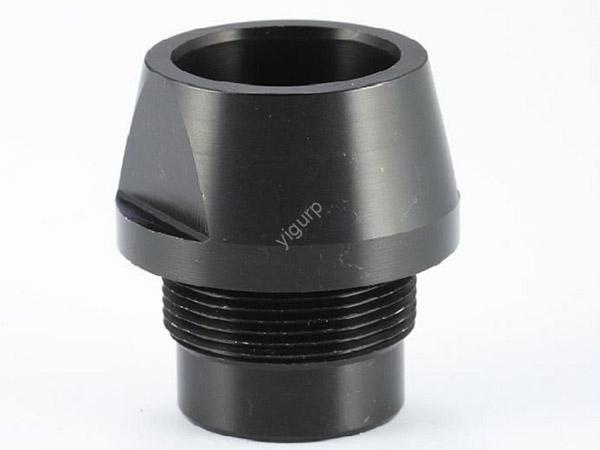
Des secteurs comme l'aérospatiale, énergie, et les soins de santé exigent des matériaux qui excellent dans des conditions extrêmes : températures élevées., environnements corrosifs, et de fortes contraintes mécaniques. High alloy steel stands out as a top-tier solution, grâce à son mélange unique d'éléments d'alliage qui offrent une résistance exceptionnelle, durabilité, et la résistance. Ce guide détaille ses principales caractéristiques, utilisations réelles, méthodes de production, et comment il se compare à d'autres matériaux, helping engineers and project teams make informed choices.
1. Core Material Properties of High Alloy Steel
High alloy steel’s performance is defined by its carefully crafted properties, driven by its high concentration of alloying elements. Below is a detailed breakdown of its chemical, physical, mécanique, and functional traits.
1.1 Chemical Composition
The high proportion of alloying elements in this steel sets it apart. The table below outlines its typical composition and the role of each key element:
| Element | Content Range (%) | Role in High Alloy Steel |
| High Chromium (Cr) | 10-30 | Booste résistance à la corrosion et oxidation resistance |
| High Nickel (Dans) | 5-25 | Enhances dureté and low-temperature performance |
| High Molybdenum (Mo) | 2-10 | Améliore résistance à haute température et résistance à l'usure |
| High Cobalt (Co) | 5-15 | Increases strength at extreme temperatures (ideal for turbine blades) |
| High Vanadium (V) | 0.1-5 | Refines grain structure for better résistance à la fatigue |
| High Tungsten (W) | 1-10 | Enhances dureté et résistance à la chaleur (used in cutting tools) |
| High Carbon (C) | 0.1-1.5 | Booste dureté et résistance à l'usure (for tools and dies) |
| Titane (De)/Niobium (Nb) | 0.1-1 | Prevents grain growth at high temperatures |
1.2 Physical Properties
These traits make high alloy steel suitable for demanding manufacturing and service conditions:
- High Density: 7.8-8.2 g/cm³ (higher than carbon steel, providing better vibration damping)
- High Melting Point: 1400-1600°C (handles high-temperature applications like gas turbines)
- High Thermal Conductivity: 40-50 W/(m·K) (ensures even heat distribution in engine components)
- High Thermal Expansion Coefficient: 11-15 μm/(m·K) (controlled to reduce stress in high-heat environments)
- High Electrical Resistivity: 0.5-1.0 μΩ·m (prevents electrical interference in precision equipment)
1.3 Propriétés mécaniques
High alloy steel’s mechanical strength is unmatched for high-performance needs. Typical values (varie selon le niveau) inclure:
- High Tensile Strength: 800-1500 MPa (handles heavy loads in aerospace components)
- High Yield Strength: 600-1200 MPa (resists permanent deformation in power generation equipment)
- Haute dureté: 250-600 HB (ideal for cutting tools and molds)
- High Impact Toughness: ≥40 J at -60°C (critical for cold-temperature aerospace applications)
- High Elongation: 10-25% (allows flexibility in forming complex parts like aircraft engine casings)
- High Fatigue Resistance: 300-600 MPa (10⁷ cycles) (prevents cracking in repeatedly stressed parts like turbine blades)
1.4 Other Key Properties
- Excellent Corrosion Resistance: Thanks to haute teneur en chrome (Cr) et nickel (Dans), it withstands harsh chemicals in processing equipment.
- Excellent Oxidation Resistance: Resists rust and degradation at high temperatures (vital for gas turbine blades).
- Excellent Wear Resistance: Depuis high tungsten (W) et carbone (C), making it perfect for cutting tools and dies.
- Weldability: Varies by grade—some require pre-heating, but most can be welded with proper techniques for joint integrity.
- Formabilité: Can be shaped via rolling, forger, ou extrusion (used to make automotive components and surgical instruments).
2. Real-World Applications of High Alloy Steel
High alloy steel’s versatility makes it indispensable across high-performance industries. Below are its most common uses, with a case study to illustrate its impact.
2.1 Applications clés
- Composants aérospatiaux: Includes aircraft engine parts, rocket engine casings, and structural elements—relies on haute résistance à la traction et résistance à la fatigue.
- Gas Turbine Blades: Needs résistance à haute température et oxidation resistance to perform in power generation turbines.
- Chemical Processing Equipment: Tanks and pipes use its résistance à la corrosion to handle acids and solvents.
- Oil and Gas Industry: Downhole tools and pipelines rely on résistance à l'usure et résistance à la corrosion in harsh well environments.
- High-Performance Cutting Tools: Utilisations high hardness depuis tungstène (W) to cut through tough materials.
- Équipement médical: Surgical and dental instruments use its résistance à la corrosion et biocompatibilité (often with nickel (Dans) -free grades).
- Composants automobiles: High-performance parts like racing engine valves use its résistance à haute température.
2.2 Étude de cas: Gas Turbine Blades for Power Plants
UN 2022 project by a leading energy company used high alloy steel (avec 18% Cr, 10% Dans, 2% Mo) for gas turbine blades. The blades operate at 1200°C and face constant rotational stress. Results after 2 années:
- High-temperature strength: Maintained structural integrity without deformation.
- Oxidation resistance: No significant rust or degradation, extending blade life by 50% contre. low alloy steel.
- Fatigue resistance: Withstood 10⁷ cycles of rotation without cracking, reducing maintenance costs by 35%.
3. Manufacturing Techniques for High Alloy Steel
Producing high alloy steel requires precise processes to preserve its properties. Vous trouverez ci-dessous un aperçu étape par étape:
3.1 Steelmaking Processes
- Electric Arc Furnace (EAF): Most common method. Scrap steel and alloying elements (par ex., chrome (Cr), nickel (Dans)) are melted with electric arcs to control composition.
- Vacuum Arc Remelting (VAR): Used for high-purity grades (par ex., composants aérospatiaux). Melts steel in a vacuum to remove impurities, ensuring uniform alloy distribution.
- Fusion par faisceau d'électrons (EBM): For ultra-high-purity parts (like medical instruments). Uses an electron beam to melt metal, producing defect-free steel.
3.2 Traitement thermique
Heat treatment optimizes high alloy steel’s properties for specific uses:
- Solution Annealing: Heated to 900-1100°C, then quenched. Enhances résistance à la corrosion (used for chemical equipment).
- Quenching and Tempering: Heated to 800-1000°C, quenched, then tempered. Booste dureté et résistance à la traction (for cutting tools).
- Precipitation Hardening: Heated to low temperatures (400-600°C) to form tiny particles. Améliore force without losing ductility (pour pièces aérospatiales).
- Carburizing/Nitriding: Adds carbon or nitrogen to the surface. Increases surface hardness (for gears and dies).
3.3 Forming Processes
- Hot Rolling: Rolled at 1000-1200°C to create plates and sheets (used for turbine casings).
- Cold Rolling: Creates thin, precise sheets (for medical instruments) with improved surface finish.
- Forgeage: Shapes complex parts (like aircraft engine components) by hammering or pressing—enhances résistance à la fatigue.
- Extrusion: Pushes steel through a die to make tubes or profiles (for oil and gas pipelines).
3.4 Traitement de surface
Pour améliorer les performances et la longévité:
- Placage: Gold or nickel plating (for electrical components) improves conductivity and corrosion resistance.
- Revêtement: Titanium nitride or diamond-like carbon coating (for cutting tools) booste résistance à l'usure.
- Grenaillage: Blasts steel with tiny beads to create compressive stress—improves résistance à la fatigue (for turbine blades).
- Polissage: Crée une surface lisse (for medical instruments) pour empêcher la croissance bactérienne.
4. High Alloy Steel vs. Other Materials
How does high alloy steel compare to other common materials? Le tableau ci-dessous met en évidence les principales différences:
| Matériel | Force (Yield) | Résistance à la corrosion | High-Temp Performance | Coût (contre. Acier hautement allié) | Idéal pour |
| Acier hautement allié | 600-1200 MPa | Excellent | Excellent (1200°C) | 100% | Aérospatial, turbines, outils de coupe |
| Acier faiblement allié | 300-600 MPa | Bien | Pauvre (≤600°C) | 50% | Construction, general machinery |
| Acier au carbone | 200-400 MPa | Pauvre | Pauvre (≤400°C) | 30% | Pièces à faible contrainte (nails, poutres) |
| Acier inoxydable | 200-500 MPa | Excellent | Équitable (≤800°C) | 80% | Appareils de cuisine, produits chimiques doux |
| Alliages d'aluminium | 100-500 MPa | Bien | Pauvre (≤300°C) | 70% | Lightweight parts (carrosseries de voitures) |
| Composites | 500-1000 MPa | Excellent | Équitable (≤800°C) | 300% | Light aerospace parts (ailes) |
Key Takeaways
- contre. Acier faiblement allié: High alloy steel has 2x higher force et mieux résistance à la corrosion—worth the cost for high-performance needs.
- contre. Acier inoxydable: High alloy steel handles higher temperatures (1200°C contre. 800°C) but is more expensive.
- contre. Composites: High alloy steel is cheaper and more durable at extreme temperatures, but composites are lighter.
5. Yigu Technology’s Perspective on High Alloy Steel
Chez Yigu Technologie, we see high alloy steel as a cornerstone for high-performance industries. C'est excellente résistance à la corrosion et résistance à haute température align with our clients’ needs in aerospace and energy. We recommend tailored grades—e.g., high-Cr/Ni for chemical equipment, high-W for cutting tools—and pair them with our precision surface treatments to extend service life by 40%+. For cost-sensitive projects, we offer hybrid solutions combining high alloy steel with composites, balancing performance and budget.
FAQ About High Alloy Steel
- What grade of high alloy steel is best for high-temperature applications like gas turbines?
Grades with high chrome (Cr), nickel (Dans), et molybdène (Mo) (par ex., 18-10-2 Cr-Ni-Mo) work best—they withstand 1200°C and resist oxidation.
- Is high alloy steel suitable for medical instruments?
Oui, but choose nickel-free grades (par ex., 20% Cr, 2% Mo) pour la biocompatibilité. They offer résistance à la corrosion and are easy to sterilize.
- How does the cost of high alloy steel compare to low alloy steel, et quand vaut-il l'investissement?
High alloy steel costs ~2x more, but it’s worth it for applications needing résistance à haute température, résistance à la corrosion, ou résistance à l'usure (par ex., aérospatial, traitement chimique)—it reduces maintenance and replacement costs long-term.