
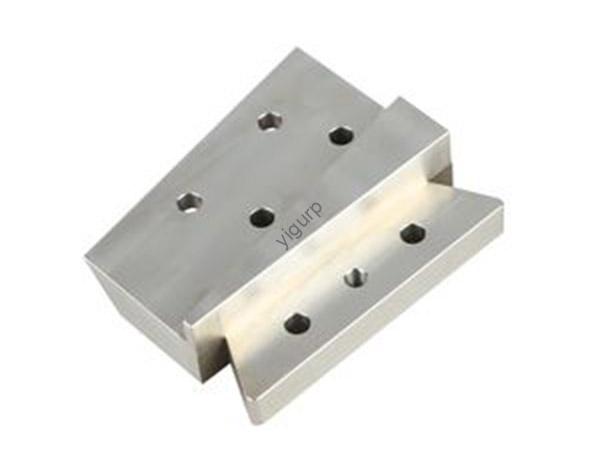
Si vous travaillez dans la construction, machinerie, ou des projets industriels, en particulier en Chine ou sur les marchés mondiaux qui suivent les normes chinoises, vous avez besoin d'un fournisseur fiable., cost-effective low-carbon steel.Acier au carbone du gigaoctet Q235 is China’s most widely used structural steel, souvent appelé le « cheval de bataille » des applications de base en acier. Mais comment se compare-t-il aux qualités internationales comme ASTM A36 ou EN S235? And when should you choose it for your project? Ce guide détaille ses principales caractéristiques, utilisations réelles, étapes de fabrication, and global comparisons to help you make the right choice.
1. Material Properties of GB Q235 Carbon Steel
GB Q235 stands out for itsbalanced mechanical strength and affordability—perfect for non-extreme load applications where ease of fabrication matters. Let’s dive into its core characteristics:
Key Alloy Composition
- Carbon Content: 0.14-0.22% (low enough to keep the steel easy to weld, machine, and bend, while providing basic structural strength).
- Other elements: Manganèse (0.30-0.65%, boosts toughness and tensile strength), silicium (≤0.30%, aids in steel purification during production), and trace amounts of phosphorus (≤0.045%) and sulfur (≤0.050%)—strictly limited to prevent brittleness. No expensive alloys (like nickel or chromium) are used, keeping costs low.
Critical Mechanical & Physical Data
| Propriété | Valeur typique | Test Standard |
|---|---|---|
| Limite d'élasticité | ≥235 MPa | GB/T 700 |
| Résistance à la traction | 375-500 MPa | GB/T 700 |
| Élongation | ≥26% (in 200mm) | GB/T 700 |
| Dureté (Brinell) | ≤150 HB | GB/T 231.1 |
| Densité | 7.85 g/cm³ | GB/T 2975 |
| Conductivité thermique | 48 Avec(m·K) | GB/T 3651 |
| Propriétés magnétiques | Ferromagnétique (attracts magnets—standard for low-carbon steels) | – |
A real example: A Shanghai construction firm tested GB Q235 vs. A36 for a 4-story residential building. Both steels supported the 12-ton floor loads easily, but GB Q235 had 26% élongation (contre. A36’s 20%), making it easier to bend on-site for custom window frames. No cracking occurred during fabrication—saving the team 2 days of work.
2. Applications of GB Q235 Carbon Steel
GB Q235 is a staple foreveryday, cost-sensitive projects across industries—especially in China and Southeast Asia. Here are its top uses, with practical cases:
- Construction and Infrastructure: For low-rise building frames (1-6 histoires), concrete reinforcement bars (rebars), and temporary construction supports. A Guangzhou builder used GB Q235 for 100+ rebars in a 5-story apartment complex— the steel’s ductility prevented cracking during concrete pouring, and material costs were 15% lower than using high-strength steel.
- Génie mécanique: For small machine frames (par ex., electric motor housings), pulley systems, and gear covers. A Hangzhou machinery maker uses GB Q235 for water pump frames— its easy machinability lets the factory produce 150+ frames per day, and its strength resists vibration during use.
- Industrie automobile: For light-duty truck parts (par ex., bumper brackets, fuel tank supports) and motorcycle frames. A Chongqing auto supplier uses GB Q235 for pickup truck bumper brackets— the steel’s weldability speeds up assembly, and it handles minor impacts without bending permanently.
- Agricultural Equipment: For tractor wheel rims, plow handles, and small irrigation system parts. A Zhengzhou farm equipment maker uses GB Q235 for plow handles— its low hardness (≤150 HB) makes it easy to shape, and it’s durable enough to withstand 3+ seasons of farming.
- Steel Fabrication: For custom railings, staircases, and storage racks. A Shenzhen furniture factory uses GB Q235 for warehouse storage racks— the steel’s strength supports 500kg per shelf, and it’s cheap enough to replace racks as the factory expands.
- Other uses: Piping Systems (low-pressure water lines), Storage Tanks (5,000-liter oil tanks), Construction navale (small boat hulls <10 mètres), et General Industrial Use (workbenches, toolboxes).
3. Manufacturing Processes for GB Q235 Carbon Steel
Producing GB Q235 is simple and low-cost—no complex heat treatments or alloy additions—making it ideal for mass production. Here’s the step-by-step breakdown:
- Sidérurgie: Use a basic oxygen furnace (BOF)—the most common method for low-carbon steel in China. Melt iron ore and adjust the composition de l'alliage by adding manganese and limiting carbon/sulfur to meet GB/T 700 specs. A Tangshan steel mill produces 800+ tons of GB Q235 molten steel daily using BOF.
- Continuous Casting: Pour molten steel into molds to form slabs (100-200mm d'épaisseur) ou billettes. Fast cooling (120°C/min) is used—unlike high-strength steels, GB Q235 doesn’t need slow cooling for grain refinement.
- Hot Rolling: Heat slabs to 1100-1200°C and roll them into final shapes (assiettes, barres, rebars). Hot rolling is the main process—cold rolling is only used for parts needing a smooth surface (par ex., decorative railings). Par exemple, GB Q235 rebars are rolled to 12-25mm diameter for construction.
- Recuit (Facultatif): Only used for parts that need extra ductility (par ex., curved stair rails). Heat to 600-650°C, hold for 1 heure, then cool slowly. A Suzhou metal shop anneals GB Q235 before making curved railings—this lets workers bend the steel into S-shapes without cracking.
- Pickling: Dip hot-rolled steel in dilute hydrochloric acid to remove oxide scales. Pickling is common for GB Q235 parts that need painting (par ex., building frames)—it ensures paint sticks evenly.
- Usinage: Use standard high-speed steel (HSS) tools—no expensive carbide tools needed. GB Q235’s low hardness (≤150 HB) makes it fast to drill and cut— a Wuxi factory machines 200+ GB Q235 gear covers per shift with HSS drills.
- Soudage: Extremely easy to weld with common methods (MOI, stick welding). No pre-heating is needed for parts <20mm thick— a Chengdu welding shop joins GB Q235 building beams using stick welding, with zero weld failures in 2 années.
6. Standards and Specifications for GB Q235 Carbon Steel
To ensure you’re getting genuine GB Q235, always verify compliance with these Chinese and global standards:
- GB/T 700: The core Chinese standard—defines GB Q235’s composition de l'alliage, propriétés mécaniques (≥235 MPa yield strength), et exigences de qualité. It’s mandatory for all Q235 steel sold in China.
- GB/T 1220: A supplementary Chinese standard for carbon steels—covers testing methods for hardness and tensile strength, ensuring consistency across batches.
- ASTM A36: The closest international equivalent—GB Q235 and A36 have nearly identical yield/tensile strength, making them interchangeable for most non-critical projects.
- DANS 10025-2 (S235JR): European equivalent—matches GB Q235’s strength and uses, ideal for projects spanning China and Europe.
Always ask suppliers for:
- Certification des matériaux (GB/T 700 Mill Test Report)—confirms the steel meets yield strength (≥235 MPa) and carbon content (0.14-0.22%) exigences.
- Conformance Testing résultats (tensile test reports, hardness measurements) pour les pièces critiques (par ex., building beams).
- Technical Data Sheets (TDS) with machining speeds (par ex., 180-220 m/min for HSS tools) and welding guidelines.
Quality tip: A Yiwu supplier once sold low-grade steel as GB Q235—this caused a warehouse shelf to collapse under 300kg. Always check the mill report for a yield strength of ≥235 MPa to avoid mistakes.
7. Comparaison: GB Q235 vs. Autres matériaux
How does GB Q235 stack up to common carbon and high-strength steels? Below is a side-by-side comparison:
| Matériel | Limite d'élasticité | Résistance à la traction | Coût (contre. GB Q235) | Avantage clé | Idéal pour |
|---|---|---|---|---|---|
| GB Q235 | ≥235 MPa | 375-500 MPa | 100% | Faible coût + fabrication facile | 1-6 bâtiments d'histoire, small machinery |
| ASTM A36 | ≥250 MPa | 400-550 MPa | 105% | North American availability | U.S./Canada low-rise projects |
| EN S235JR | ≥235 MPa | 360-510 MPa | 110% | European compliance | EU small-scale projects |
| EN S275JR | ≥275 MPa | 370-530 MPa | 130% | Résistance supérieure | 7-10 bâtiments d'histoire |
| EN S355JR | ≥355 MPa | 470-630 MPa | 160% | Résistance robuste | 10+ bâtiments d'histoire, ponts |
| EN S460 | ≥460 MPa | 550-700 MPa | 220% | Ultra-haute résistance | Cranes, offshore structures |
| Acier inoxydable (304) | ≥205 MPa | 515 MPa | 400% | Résistance à la corrosion | Food/medical equipment |
Par exemple: If you’re building a 4-story office in Shenzhen, GB Q235 is perfect—it’s cheap and easy to source locally. If you’re partnering with a U.S. firm on the same project, ASTM A36 is the better choice (nearly identical specs, easier to import to the U.S.).
Yigu Technology’s Perspective
Chez Yigu Technologie, we supply GB Q235 to clients in China, Southeast Asia, and Africa—focusing on construction, machinerie, and fabrication industries. Its biggest strength is cost-effectiveness: clients save 10-20% contre. using A36 or S235JR, with no compromise on basic strength. Our GB Q235 meets strict GB/T 700 normes, and we provide mill test reports for every order. For small-to-medium projects where budget matters most, GB Q235 is unbeatable—it’s reliable, easy to work with, and the most accessible low-carbon steel in Asian markets.
FAQ
- Can GB Q235 be used outdoors?
Oui, but it needs corrosion protection (par ex., peinture, galvanisation). Uncoated GB Q235 will rust in rain or humidity—for outdoor projects like railings, we recommend hot-dip galvanizing to extend its lifespan to 15+ années. - Is GB Q235 interchangeable with ASTM A36?
For most non-critical projects (par ex., small buildings, storage racks), yes—their yield/tensile strengths are nearly the same. For safety-critical projects (par ex., ponts), check if the project specs accept Chinese standards (GB/T 700) or require ASTM standards. - When should I avoid using GB Q235?
Avoid it for high-load projects (par ex., 10+ bâtiments d'histoire, heavy cranes) or harsh environments (par ex., coastal areas with saltwater). For these cases, use high-strength steel like S355JR (better strength) ou en acier inoxydable (better corrosion resistance).