
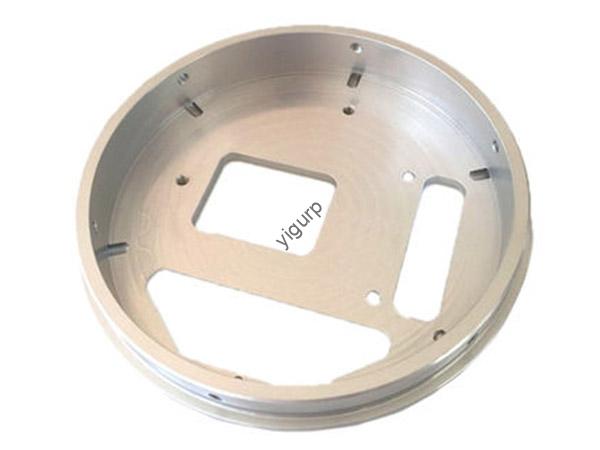
Si vous avez besoin d’un acier inoxydable résistant, résiste à l'usure, et résiste à une légère corrosion - pour les outils, roulements, or surgical instruments—Acier inoxydable du gigaoctet 9Cr18Mo est un premier choix. Mais qu’est-ce qui rend sa structure martensitique et sa teneur élevée en carbone si spéciales ?? Et quand devriez-vous le choisir par rapport aux qualités courantes comme SUS440C? Ce guide détaille ses principales caractéristiques, applications du monde réel, étapes de fabrication, et comment il se compare à d'autres matériaux. À la fin, you’ll know if it’s the right fit for your project.
1. Material Properties of GB 9Cr18Mo
What setsGB 9Cr18Mo apart is its unique mix ofcomposition de l'alliage etmartensitic structure—a combination that delivers exceptional hardness and wear resistance. Let’s dive into the details:
Core Alloy Elements
- High carbon content (0.90-1.00%): Hardens the steel during heat treatment, critical for wear-resistant parts like knife blades.
- High chromium content (17.0-19.0%): Forms a protective oxide layer to fight rust and mild corrosion.
- Molybdenum addition (0.90-1.30%): Boosts both wear resistance and corrosion resistance, especially in damp environments.
- Martensitic structure: Achieved through heat treatment (trempe et revenu), this structure gives the steel its high strength and hardness.
Key Mechanical Performance Data
| Propriété | Valeur typique | Test Standard |
|---|---|---|
| Yield Strength | ≥600 MPa | GB/T 228.1 |
| Résistance à la traction | ≥800 MPa | GB/T 228.1 |
| Élongation | ≥10% | GB/T 228.1 |
| Dureté (Rockwell C) | 58-62 CRH | GB/T 230.1 |
| Impact Toughness | ≥25 J/cm² | GB/T 229 |
A real example: A Zhejiang knife manufacturer usesGB 9Cr18Mo for high-end kitchen knives. After quenching and tempering, the steel reaches 60 HRC hardness—sharp enough to cut through meat easily, and it stays sharp 30% longer than knives made from SUS420J2.
2. Applications of GB 9Cr18Mo
GB 9Cr18Mo excels in projects that need hardness, résistance à l'usure, and mild corrosion protection—where softer austenitic steels (like SUS304) would wear out quickly. Here are its top uses, with practical cases:
- Cutlery and Knives: Ideal for chef’s knives, hunting knives, and industrial cutting blades. A Guangdong cutlery brand reports that GB 9Cr18Mo knives have a longer service life—customers replace them 50% less often than SUS440C knives.
- Instruments chirurgicaux: Used for scalpels, hémostatiques, and forceps. A Wuhan medical device factory chose GB 9Cr18Mo for scalpels because its high hardness (58-62 CRH) keeps the blade sharp during surgery, and its corrosion resistance stands up to sterilization chemicals.
- Bearings and Bushings: Critical for high-wear parts in motors and machinery. A Shanghai motor manufacturer replaced carbon steel bearings with GB 9Cr18Mo ones—bearing failure rates dropped by 40% because the steel resists wear from friction.
- Industrial Tools: Used for dies, coups de poing, and gauges. A Jiangsu tooling company uses GB 9Cr18Mo dies to stamp metal parts—these dies last 2x longer than those made from SUS410.
- Composants aérospatiaux: Found in small parts like valve cores and fasteners that need to withstand wear. A Chinese aerospace supplier uses GB 9Cr18Mo fasteners in aircraft engines—they handle high speeds without wearing down, meeting strict safety standards.
- Other uses: Pièces automobiles (brake rotors for racing cars), Marine Applications (corrosion-resistant hardware), et Matériel (high-strength bolts for outdoor furniture).
3. Manufacturing Processes for GB 9Cr18Mo
ProduireGB 9Cr18Mo requires precise steps to unlock itsmartensitic structure and high hardness. Here’s a breakdown of the key processes:
- Hot Rolling: Heat the alloy to 1100-1200°C and roll it into bars or plates. This step shapes the raw material while preserving its alloy uniformity. A Hebei steel mill hot-rolls GB 9Cr18Mo into 50mm-diameter bars for knife blanks.
- Recuit: Heat to 800-850°C, hold for 2-4 heures, then cool slowly. Annealing softens the steel, making it easier to machine (critical for complex parts like surgical forceps).
- Usinage: Cut the annealed steel into rough shapes using carbide tools. Since GB 9Cr18Mo is hard even after annealing, machinists use a slow cutting speed (80-100 m/mon) to avoid tool wear.
- Quenching and Tempering: The most important step for achieving hardness:
- Trempe: Heat the machined part to 950-1050°C, then cool it quickly in oil. This forms the martensitic structure but makes the steel brittle.
- Tempering: Reheat to 150-200°C and hold for 1-2 heures. This reduces brittleness while keeping the high hardness (58-62 CRH). A Suzhou heat treatment shop uses this process for GB 9Cr18Mo bearings—tempering at 180°C gives the best balance of hardness and toughness.
- Pickling: Dip the finished part in nitric acid to remove oxide scales from heat treatment. Pickling improves the surface finish and enhances corrosion resistance.
- Grinding/Polishing: For parts like knife blades or surgical instruments, grind and polish the surface to a smooth finish. This step sharpens blades and removes any machining marks.
6. Standards and Specifications for GB 9Cr18Mo
To ensure you’re getting high-quality, genuineGB 9Cr18Mo, always check compliance with these standards:
- GB/T 1220: The core Chinese standard for stainless steels—it defines the alloy’s composition de l'alliage (y compris le carbone, chrome, and molybdenum levels) and mechanical properties.
- ASTM A240: NOUS. standard—GB 9Cr18Mo is equivalent to ASTM 440C, so it meets this standard’s requirements for martensitic stainless steels.
- DANS 10088: European standard—equivalent grade is X90CrMoV18, making it suitable for EU-based projects (par ex., surgical instrument manufacturers in Germany).
- ISO Standards: OIN 683-13 aligns with GB 9Cr18Mo for cutlery and surgical steels.
Always ask suppliers for:
- Certification des matériaux (par ex., Mill Test Report) to verify carbon content (must be 0.90-1.00%) and hardness after heat treatment.
- Conformance Testing résultats (par ex., GB/T 4334 for corrosion resistance—critical for surgical instruments).
- Technical Data Sheets (TDS) with details on quenching and tempering parameters.
Contrôle de qualité is vital: A Fujian supplier once sold fakeGB 9Cr18Mo with low molybdenum—parts rusted after 3 months of use. Always confirm compliance before purchasing.
7. Comparaison: GB 9Cr18Mo vs. Other Materials
How doesGB 9Cr18Mo stack up against common stainless steels and alloys? Below is a side-by-side comparison focusing on key factors like hardness, résistance à l'usure, et le coût:
| Matériel | Dureté (CRH) | Résistance à l'usure | Résistance à la corrosion | Coût (contre. GB 9Cr18Mo) | Idéal pour |
|---|---|---|---|---|---|
| GB 9Cr18Mo | 58-62 | Excellent | Bien (mild environments) | 100% | Knives, roulements, outils chirurgicaux |
| SUS440C | 58-62 | Excellent | Bien | 105% | Global equivalent (same performance as GB 9Cr18Mo) |
| SUS304 | ≤20 | Pauvre | Excellent | 60% | Mild environments (kitchens, appareils électroménagers) |
| SUS316 | ≤22 | Pauvre | Excellent (saltwater) | 85% | Marine or acidic environments |
| SUS410 | 40-45 | Équitable | Équitable | 50% | Faible coût, low-wear parts (attaches) |
| Acier au carbone | 55-60 | Bien | Pauvre (rusts easily) | 30% | Low-cost tools (hammers) |
| Alliages de titane | 30-35 | Pauvre | Excellent | 600% | Léger, corrosion-resistant parts (aérospatial) |
Par exemple: If you’re making surgical scalpels, GB 9Cr18Mo is better than SUS304 (Plus fort, sharper) and cheaper than titanium. If you’re building outdoor furniture, though, SUS316 is better (more corrosion-resistant).
Yigu Technology’s Perspective
Chez Yigu Technologie, we’ve suppliedGB 9Cr18Mo to knife makers, medical device firms, and machinery manufacturers for 13 années. Its biggest strength is balance—exceptional hardness for wear resistance, plus enough corrosion protection for most non-salty environments. Our data shows it reduces tool replacement costs by 40% contre. SUS410. We also offer custom heat treatment to fine-tune hardness (58-62 CRH) for specific needs, comme 60 HRC for knives and 58 HRC for bearings. For clients needing durable, long-lasting parts, it’s our top martensitic stainless steel recommendation.
FAQ
- Can GB 9Cr18Mo be used in seawater?
No—its corrosion resistance is only good for mild environments. In seawater, it will rust quickly. For marine applications, use SUS316 or duplex stainless steel instead. - Is GB 9Cr18Mo easy to machine?
It’s harder to machine than austenitic steels (like SUS304) but manageable if annealed first. Use carbide tools and slow cutting speeds (80-100 m/mon) to avoid tool wear. - Can GB 9Cr18Mo be welded?
Welding is not recommended—its high carbon content causes brittleness and cracking in welds. If you need welded parts, choose a low-carbon stainless steel like SUS304 instead.