
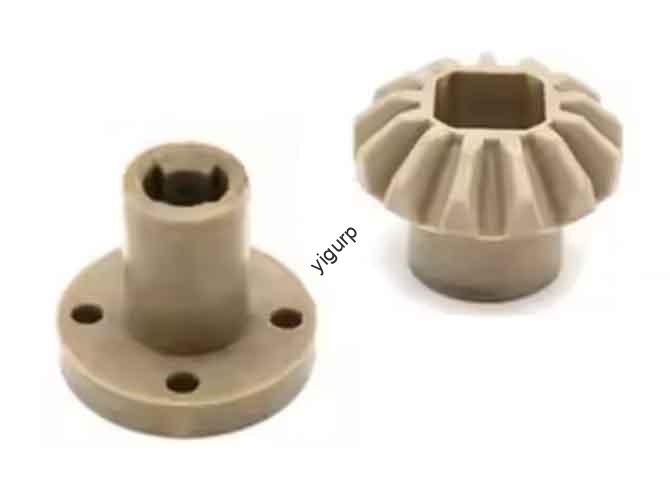
Dans des secteurs comme le ferroviaire, automobile, et électronique, 3D printed parts must resist fire to ensure safety. Mais tous les matériaux d’impression 3D ne peuvent pas résister à des températures élevées ni empêcher la propagation des flammes.. Ce guide décompose le haut fireproof and flame retardant consumables for 3D printing, helping you choose the right material for your project and avoid common pitfalls like poor heat resistance or non-compliance with industry standards.
1. Key Types of Fireproof & Flame Retardant 3D Printing Consumables
Not all flame retardant materials are the same—each is designed for specific uses, with unique strengths in flame resistance, stabilité thermique, and compatibility. Below is a detailed comparison of the most widely used options:
| Consumable Name | Matériau de base | Flame Retardancy Rating | Key Performance Metrics | Ideal Industry Applications |
| Clariant Exolit Material | PA6/66-GF20FR LS | UL94V-0 (down to 0.4mm thickness) | Glow filament ignition temp: 750°C (3.0mm épaisseur); low smoke/toxicity | Chemin de fer, électronique (parts needing strict fire safety) |
| Formlabs Flame Retardant Resin | Photopolymer Resin | UL94V-0 (Blue Card certified); passes FAR25.853(un) | HDT: 111°C (0.45MPa, after 80°C post-curing for 120min); tensile modulus: 3.1GPa | Aérospatial, automobile (léger, pièces de haute précision) |
| Nanovia Rail | Polyamide (Nylon) | Meets railway non-flammability standards | Contains ceramic flame retardants (stops flame spread); good mechanical strength | Chemin de fer (interior parts like panels, parenthèses) |
| BASF Ultramid B3GM30 SF | Polyamide | UL94V-0; halogen/red phosphorus-free | Excellent heat aging resistance; hydrolysis stability | Automobile (composants du moteur), électronique (boîtiers) |
2. How to Choose the Right Consumable: A Step-by-Step Checklist
Avec autant d'options, picking the wrong material can lead to failed parts or safety risks. Follow this 4-step process to make the right choice:
Étape 1: Check Industry Standards Compliance
Different industries have strict fire safety rules—your material must meet them to avoid regulatory issues. Par exemple:
- If you’re making railway parts: Choose materials that meet EN45545-2 (sécurité incendie ferroviaire) ou SMP800-C (like Clariant Exolit or Nanovia Rail).
- Pour les pièces aérospatiales: Go with options certified to FAR25.853(un) (such as Formlabs Flame Retardant Resin).
- Pour l'électronique: Prioritize materials meeting NFPA130 (includes ASTME162 for flame spread and ASTME662 for smoke toxicity, like Clariant Exolit).
Why does this matter? A part that doesn’t meet standards will be rejected—costing you time and money to reprint.
Étape 2: Match Material Performance to Your Project’s Needs
Ask yourself two critical questions:
- How much heat will the part face? If it’s near an engine (auto/aviation), pick materials with high HDT (like Formlabs Resin’s 111°C or BASF Ultramid’s heat aging resistance). For parts exposed to open flame (par ex., railway interiors), focus on ignition temperature (Clariant Exolit’s 750°C is a standout).
- Does it need extra properties? If the part is in a humid environment (par ex., train de roulement automobile), BASF Ultramid’s hydrolysis stability is key. For parts needing strength, Nanovia Rail’s polyamide base offers better durability than resin.
Étape 3: Ensure Compatibility with Your 3D Printer
Not all flame retardant materials work with every printer type. Here’s a quick compatibility guide:
- FDM Printers: Use Clariant Exolit (PA6/66-GF20FR LS), Nanovia Rail (polyamide), or BASF Ultramid B3GM30 SF (polyamide)—these are filament-based.
- SLA/DLP Printers: Only Formlabs Flame Retardant Resin works here (it’s a photopolymer resin, not a filament).
Pro Tip: If you’re using an FDM printer, adjust the nozzle temperature—polyamide-based flame retardant materials need 240–260°C (10–20°C higher than standard PLA).
Étape 4: Compare Cost vs. Valeur
Flame retardant consumables cost more than standard materials, but you don’t need to overspend. Here’s a cost breakdown (par kg, approximate):
- Clariant Exolit Material: \(80–)100
- Formlabs Flame Retardant Resin: \(120–)150 (resin is typically pricier than filament)
- Nanovia Rail: \(70–)90
- BASF Ultramid B3GM30 SF: \(90–)110
Choose the material that meets your performance needs without exceeding your budget. Par exemple, if you’re making low-volume railway brackets, Nanovia Rail offers good value; for high-precision aerospace parts, Formlabs Resin is worth the investment.
3. Défis communs & Solutions for Using Flame Retardant Consumables
Even the best materials can cause issues if not used correctly. Below are the top problems and how to fix them:
| Défi | Cause | Solution |
| Poor Layer Adhesion (FDM Printing) | Flame retardant additives reduce material flexibility | Increase bed temperature by 5–10°C (to 80–90°C for polyamide); slow print speed by 10% |
| Brittle Parts (Resin Printing) | Over-curing flame retardant resin | Shorten post-curing time by 20–30% (from 120min to 80–90min); lower post-curing temperature to 70°C |
| Inconsistent Flame Resistance | Incorrect print settings (par ex., épaisseur de couche) | Use layer thickness ≤0.2mm (thinner layers improve flame retardant uniformity); follow the manufacturer’s recommended print profile |
4. Yigu Technology’s Perspective
Chez Yigu Technologie, we see fireproof and flame retardant 3D printing consumables as a critical enabler for safe, industry-compliant manufacturing. Many clients struggle with balancing flame resistance, imprimable, and cost—our advice is to prioritize standards first (par ex., EN45545-2 for railway) then align material choice with printer type and project needs. We’re also exploring partnerships to integrate these consumables with our AI-driven 3D printing process optimization tools, which will auto-adjust settings for better layer adhesion and consistent flame resistance. As industries demand stricter safety rules, these consumables will become even more essential—and we’re committed to making their use simpler and more cost-effective.
5. FAQ: Answers to Common Questions
Q1: Can flame retardant 3D printing consumables be recycled?
A1: Oui, but with limitations. Filament-based options (like Clariant Exolit, Nanovia Rail) can be recycled 2–3 times if they’re clean (no debris). Résines (like Formlabs) are harder to recycle—look for specialized resin recycling services to reduce waste.
Q2: Do flame retardant parts lose their fire resistance over time?
A2: Not if stored correctly. Keep parts away from direct sunlight (UV rays break down flame retardant additives) and high humidity (can reduce hydrolysis stability). Most flame retardant parts retain their performance for 5–7 years under normal conditions.
Q3: Can I mix flame retardant consumables with standard materials?
A3: No—mixing will reduce flame resistance. Par exemple, mélange 10% standard PA6 with Clariant Exolit will drop the UL94 rating from V-0 to V-2, making the part non-compliant. Always use 100% flame retardant material for safety-critical parts.