
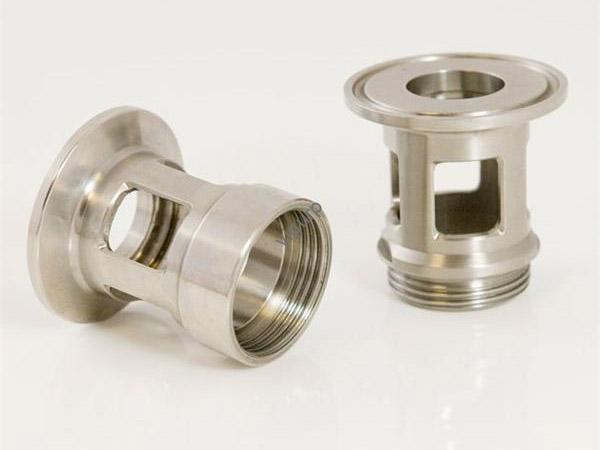
L'acier inoxydable ferritique est un matériau largement utilisé, connu pour son excellente résistance à la corrosion et sa rentabilité.. C'est un choix incontournable dans de nombreux secteurs, de l'automobile à la construction. Dans ce guide, nous allons décomposer ses propriétés clés, applications du monde réel, comment c'est fait, et comment il se compare à d'autres matériaux, afin que vous puissiez décider s'il convient à votre projet.
1. Propriétés matérielles clés de l’acier inoxydable ferritique
Comprendre les propriétés de l’acier inoxydable ferritique est essentiel pour l’utiliser efficacement. Ces propriétés proviennent de son caractère unique composition chimique, qui façonne ensuite son propriétés physiques, propriétés mécaniques, et d'autres traits critiques.
Composition chimique
L'élément principal de l'acier inoxydable ferritique est chrome-généralement entre 10.5% et 30%. Ce haut teneur en chrome c'est ce qui lui confère une forte résistance à la corrosion. Contrairement à l'acier inoxydable austénitique, il a très bas teneur en carbone (moins que 0.2%), ce qui réduit le risque de corrosion intergranulaire. D'autres éléments comprennent de petites quantités de manganèse, silicium, phosphore, et soufre (pour améliorer le traitement), plus molybdène (pour une meilleure résistance aux piqûres) ou titane/niobium (pour stabiliser le carbone et empêcher la précipitation des carbures).
Propriétés physiques
| Propriété | Valeur typique |
| Densité | 7.7 g/cm³ |
| Conductivité thermique | 25-30 Avec(m·K) (à 20°C) |
| Capacité thermique spécifique | 0.46 J/(g·K) (à 20°C) |
| Coefficient de dilatation thermique | 11-13 × 10⁻⁶/°C (20-100°C) |
| Propriétés magnétiques | Fortement magnétique (contrairement à l'acier inoxydable austénitique) |
Propriétés mécaniques
L'acier inoxydable ferritique équilibre résistance et ductilité. Valeurs communes pour les notes populaires (comme 430) inclure:
- Résistance à la traction: 450-600 MPa
- Limite d'élasticité: 270-400 MPa
- Élongation: 20-30% (dans 50 mm)
- Dureté: 150-180 Brinell, 60-70 Rockwell B., ou 160-190 Vickers
- Résistance à la fatigue: ~200 MPa (à 10⁷ cycles)
- Résistance aux chocs: 20-40 J. (à température ambiante)
Autres propriétés critiques
- Résistance à la corrosion: Excellent dans les environnements doux (par ex., air, eau) grâce au chrome.
- Résistance aux piqûres: Amélioré avec du molybdène (par ex., grade 434).
- Résistance à la fissuration par corrosion sous contrainte: Mieux que l'acier inoxydable austénitique dans les environnements chlorés.
- Soudabilité: Modéré : nécessite un préchauffage pour éviter la fragilité.
- Usinabilité: Bon avec les bons outils (vitesses plus lentes que l'acier au carbone).
2. Applications concrètes de l'acier inoxydable ferritique
L’acier inoxydable ferritique est utilisé dans toutes les industries car il est abordable et durable. Voici les utilisations les plus courantes:
Industrie automobile
- Systèmes d'échappement: Supporte les températures élevées (jusqu'à 800°C) et résiste à la corrosion des gaz d'échappement (par ex., grade 409).
- Convertisseurs catalytiques: La surface résistante à la chaleur protège les composants internes.
- Conduites de carburant: Résiste aux additifs de carburant et prévient la rouille.
Exemple de cas: Un grand constructeur automobile a opté pour l'acier inoxydable ferritique pour ses systèmes d'échappement en 2022. Cela a permis de réduire les coûts de 15% et une durabilité améliorée - les garanties pour les échappements sont passées de 5 à 7 années.
Industrie du bâtiment
- Bardage architectural: Utilisé pour l'extérieur des bâtiments (par ex., centres commerciaux) parce qu'il nécessite peu d'entretien et a une finition élégante (grade 430).
- Matériaux de toiture: Résiste à la pluie, neige, et dommages causés par les UV.
- Attaches: Remplace l'acier galvanisé dans les zones côtières (meilleure résistance à la corrosion en eau salée).
Appareils électroménagers
- Machines à laver: Les tambours intérieurs utilisent du grade 430 - résistent aux détergents et aux dégâts des eaux.
- Lave-vaisselle: Les revêtements de porte et les bras gicleurs sont chauds, eau savonneuse.
- Réfrigérateurs: Panneaux de porte et étagères (facile à nettoyer et inoxydable).
Traitement chimique & Industries alimentaires
- Réservoirs de stockage: Contient des produits chimiques doux (par ex., acides, alcalis) sans fuite (grade 444).
- Systèmes de tuyauterie: Transporte les liquides en toute sécurité dans les usines de transformation.
- Équipement de transformation des aliments: Répond aux normes d'hygiène (non toxique et facile à désinfecter).
3. Techniques de fabrication de l’acier inoxydable ferritique
La fabrication d’acier inoxydable ferritique nécessite des étapes précises pour garantir la qualité. Voici le processus:
1. Processus métallurgiques
- Four à arc électrique (AEP): La méthode la plus courante. La ferraille et le chrome sont fondus à 1 600°C.
- Four à oxygène de base (BOF): Utilisé pour la production à grande échelle : souffle de l'oxygène pour éliminer les impuretés.
2. Processus de roulement
- Laminage à chaud: Chauffe l'acier à 1 100-1 200°C et le roule en plaques ou bobines épaisses.
- Laminage à froid: Refroidit l'acier et le roule à nouveau pour fabriquer des tôles fines (par ex., pour pièces d'appareils).
3. Traitement thermique
- Recuit: Chauffe l'acier à 700-900°C et refroidit lentement. Cela adoucit le matériau et améliore la ductilité.
- Recuit de détente: Réduit le stress après le soudage (chauffé à 600-700°C) pour éviter les fissures.
4. Méthodes de formage
- Formage à la presse: Utilise des presses pour façonner les pièces (par ex., composants d'échappement).
- Pliage: Crée des angles pour le revêtement ou la tuyauterie.
- Emboutissage profond: Réalise des pièces creuses (par ex., tambours de machine à laver).
5. Traitement de surface & Contrôle de qualité
- Décapage: Trempe l'acier dans de l'acide pour éliminer la rouille ou le tartre.
- Passivation: Applique une couche d'oxyde de chrome pour augmenter la résistance à la corrosion.
- Électropolissage: Donne une douceur, finition brillante (pour l'électroménager ou l'architecture).
Les étapes de contrôle qualité comprennent:
- Tests par ultrasons: Vérifie les défauts internes.
- Tests radiographiques: Détecte les défauts de soudure.
- Essais de traction: Vérifie la force.
- Analyse de la microstructure: Garantit la bonne structure des grains ferritiques.
4. Étude de cas: Acier inoxydable ferritique dans un projet de construction côtière
Une entreprise de construction a construit un immeuble de bureaux de 10 étages à Miami (une ville côtière avec un air très salin). Ils ont choisi l'acier inoxydable ferritique (grade 430) pour:
- Bardage architectural: Couvert 80% de l’extérieur du bâtiment.
- Matériaux de toiture: Feuilles utilisées de 2 mm d'épaisseur.
- Attaches: 316 boulons ferritiques en acier inoxydable.
Résultats: Après 3 années, il n'y avait ni rouille ni corrosion. Les frais d'entretien ont été 50% inférieur à celui s'ils utilisaient de l'aluminium. Le bâtiment répondait également aux normes environnementales locales car l'acier inoxydable ferritique est 100% recyclable.
5. Acier inoxydable ferritique vs. Autres matériaux
Comment l’acier inoxydable ferritique se compare-t-il aux autres options? Comparons:
| Matériel | Coût (contre. Ferritique) | Résistance à la corrosion | Force | Poids | Soudabilité |
| Acier inoxydable ferritique | Base (100%) | Bien (excellent avec Mo) | Modéré | 7.7 g/cm³ | Modéré |
| Acier inoxydable austénitique (304) | 150% | Mieux | Plus haut | 7.9 g/cm³ | Excellent |
| Acier inoxydable martensitique (410) | 90% | Inférieur | Plus haut (Plus fort) | 7.8 g/cm³ | Bien |
| Acier inoxydable duplex (2205) | 200% | Meilleur | Le plus haut | 7.8 g/cm³ | Bien |
| Alliage d'aluminium (6061) | 120% | Bien (mais sujet aux piqûres) | Inférieur | 2.7 g/cm³ | Bien |
| Composite en fibre de carbone | 500% | Excellent | Le plus haut | 1.8 g/cm³ | Pauvre (a besoin de liaison) |
Adéquation des applications
- Automobile: Le ferritique est meilleur que l'austénitique (moindre coût, plus léger que le martensitique).
- Construction: Mieux que l'aluminium (entretien réduit dans les zones côtières).
- Appareils électroménagers: Plus rentable que l'austénitique (pas besoin de haute résistance).
- Traitement chimique: Le duplex c'est mieux (résistance à la corrosion plus élevée), mais le ferritique est moins cher pour les produits chimiques doux.
Le point de vue de Yigu Technology sur l’acier inoxydable ferritique
Chez Yigu Technologie, nous considérons l'acier inoxydable ferritique comme un matériau polyvalent, matériau durable pour une fabrication moderne. Son faible coût et sa forte résistance à la corrosion le rendent idéal pour les clients de l'automobile et de l'électroménager qui cherchent à équilibrer performances et budget.. Nous le recommandons également pour les projets de construction côtiers : sa recyclabilité s'aligne sur notre engagement envers des solutions respectueuses de l'environnement.. Pour les clients ayant besoin d’une résistance plus élevée, nous mélangeons souvent du ferritique avec de petites quantités de molybdène pour augmenter la résistance aux piqûres sans trop augmenter les coûts.
FAQ
1. L'acier inoxydable ferritique est-il magnétique?
Oui, l'acier inoxydable ferritique est fortement magnétique. C'est une différence clé avec l'acier inoxydable austénitique (qui n'est pas magnétique), facilitant l'identification sur le terrain.
2. L'acier inoxydable ferritique peut-il être soudé?
Oui, mais cela nécessite un préchauffage (à 150-200°C) et recuit après soudure pour éviter la fragilité. Utiliser des qualités à faible teneur en carbone (par ex., 430De) contribue également à améliorer la qualité des soudures.
3. Combien de temps dure l'acier inoxydable ferritique?
Dans des environnements doux (par ex., appareils d'intérieur), ça peut durer 20+ années. Dans des environnements difficiles (par ex., zones côtières), ça peut durer 10-15 années avec un bon entretien (par ex., passivation). Avec du molybdène (grade 444), ça peut durer encore plus longtemps.