
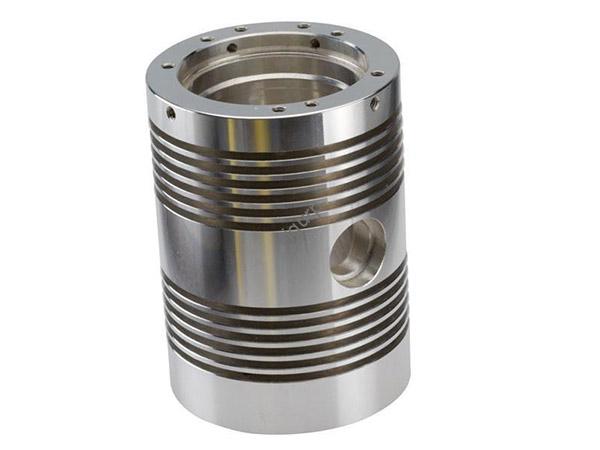
Si vous abordez des projets comme la construction de cadres, pièces de machines, ou des ouvrages routiers, EN3 structural steel is a reliable option worth considering. Cet acier polyvalent équilibre maniabilité et résistance., mais qu'est-ce qui le distingue de vos besoins spécifiques? Ce guide détaille ses principales caractéristiques, applications du monde réel, and how it compares to other materials—so you can make informed decisions.
1. Material Properties of EN3 Structural Steel
EN3’s popularity comes from its well-rounded properties, tailored for both light and medium-duty tasks. Let’s explore the details that define its performance.
1.1 Composition chimique
Lechemical composition of EN3 is simple yet effective, with controlled elements to ensure consistency (per EN standards):
| Élément | Gamme de contenu (%) | Key Role |
|---|---|---|
| Carbone (C) | 0.12 – 0.20 | Provides moderate strength without reducing ductility |
| Manganèse (Mn) | 0.30 – 0.60 | Improves flexibility and weldability |
| Silicium (Et) | 0.10 – 0.35 | Enhances heat resistance during fabrication |
| Soufre (S) | ≤ 0.050 | Minimisé pour éviter la fragilité |
| Phosphore (P.) | ≤ 0.050 | Contrôlé pour éviter les fissures |
| Other trace elements | ≤ 0.10 (par ex., cuivre, nickel) | No major impact on core properties |
1.2 Propriétés physiques
EN3’sphysical properties make it easy to work with across different environments:
- Densité: 7.85 g/cm³ (same as most common structural steels)
- Point de fusion: 1450 – 1510°C
- Conductivité thermique: 48 Avec(m·K) at 20°C (good for even heat distribution)
- Specific heat capacity: 470 J/(kg·K)
- Coefficient of thermal expansion: 13.3 × 10⁻⁶/°C (20 – 100°C, stable for structural use)
1.3 Propriétés mécaniques
These traits make EN3 ideal for tasks that need a mix of strength and flexibility:
- Résistance à la traction: 340 – 450 MPa
- Yield strength: ≥ 210 MPa
- Élongation: ≥ 25% (high ductility—great for bending and forming)
- Dureté: 100 – 130 HB (Brinell scale, facile à usiner)
- Résistance aux chocs: ≥ 30 J at 20°C (handles mild shocks, like small drops)
- Fatigue resistance: ~160 MPa (suitable for parts under repeated light loads, par ex., charnières de porte)
1.4 Autres propriétés
- Résistance à la corrosion: Modéré (needs coatings like paint or galvanizing for outdoor use)
- Weldability: Excellent (no preheating needed for thin sections, saves time on-site)
- Usinabilité: Bien (cuts smoothly with standard tools, low tool wear)
- Magnetic properties: Ferromagnétique (works with magnetic inspection tools)
- Ductilité: Haut (can be bent into shapes like brackets without breaking)
- Dureté: Modéré (resists breaking under sudden, small impacts)
2. Applications of EN3 Structural Steel
EN3’s versatility makes it a go-to for many industries. Voici ses utilisations les plus courantes, avec des exemples concrets:
- General construction:
- Structural frameworks: Used for small commercial buildings (par ex., local cafes) and residential homes. A U.K. builder used EN3 for a 3-story apartment’s interior support frames, thanks to its easy fabrication.
- Beams and columns: Supports floors and roofs in low-rise structures.
- Mechanical engineering:
- Machine parts: Makes gears and levers for small appliances (par ex., lawnmowers). Un États-Unis. appliance brand uses EN3 for its lawnmower gear systems.
- Shafts and axles: For light machinery (par ex., conveyor belts in small factories).
- Industrie automobile:
- Composants du châssis: Door frames and seat rails in compact cars. A Japanese carmaker uses EN3 for its hatchback door frames.
- Suspension parts: Small brackets for shock absorbers.
- Construction navale:
- Hull structures: Internal frames for small boats (par ex., fishing vessels) due to its ductility.
- Railway industry:
- Railway tracks: Minor components like rail clips (holds tracks to sleepers).
- Locomotive components: Small parts in the engine compartment, par ex., cable brackets.
- Infrastructure projects:
- Ponts: Side railings and minor support beams for pedestrian bridges.
- Highway structures: Guardrail posts and small drainage covers.
3. Manufacturing Techniques for EN3 Structural Steel
Turning raw steel into usable EN3 products involves four key steps, each tailored to preserve its properties:
3.1 Rolling Processes
- Hot rolling: The most common method. Steel is heated to 1100 – 1250°C and pressed into shapes (barres, assiettes, angles). Hot-rolled EN3 has a slightly rough surface but is cost-effective for construction.
- Cold rolling: Done at room temperature for thinner sheets (par ex., for automotive door panels). Cold-rolled EN3 has a smooth finish and tighter size tolerance.
3.2 Traitement thermique
Heat treatment fine-tunes EN3 for specific uses:
- Recuit: Chauffé à 800 – 850°C, held, puis refroidi lentement. Reduces hardness and makes machining easier.
- Normalizing: Chauffé à 850 – 900°C, then cooled in air. Improves strength slightly while keeping ductility.
- Trempe: Rarely used for EN3 (low carbon content), but can be done at 500 – 600°C if minor hardness adjustments are needed.
3.3 Fabrication Methods
- Coupe: Utilisations coupage au plasma (fast for thick plates) ou oxy-fuel cutting (affordable for basic shapes). EN3’s low carbon content prevents excessive melting.
- Welding techniques: Arc welding (most common for on-site work) et soudage au laser (precision for small parts). No preheating needed for sections under 12mm thick.
- Bending and forming: Easy to do with press brakes. EN3’s high elongation lets it be bent into 90-degree angles without cracking.
3.4 Contrôle de qualité
- Méthodes de contrôle:
- Ultrasonic testing: Checks for internal defects (par ex., trous) in thick plates.
- Magnetic particle inspection: Finds surface cracks (par ex., in welded joints).
- Certification standards: Must meet OIN 683-1 (structural steels) et FR 10025 (hot-rolled products) to ensure quality.
4. Études de cas: EN3 in Real Projects
4.1 Construction: A Residential Complex in Spain
A Spanish developer used EN3 for 10 low-rise apartment buildings (3 stories each). The team chose EN3 for itssoudabilité—they completed the framing 2 weeks early because no preheating was needed. Post-construction tests showed the beams maintained their strength through 5 years of weather changes.
4.2 Automobile: A Compact Car Factory in India
An Indian carmaker switched to EN3 for its hatchback door frames. Previously, they used a more expensive alloy steel, but EN3’susinabilité cut production time by 15%, and itsductilité let them form complex shapes for aerodynamic designs. The change saved the company $200,000 annuellement.
5. Comparative Analysis: EN3 vs. Autres matériaux
How does EN3 stack up against common alternatives? Décomposons-le:
5.1 contre. Other Types of Steel
| Feature | Acier de construction EN3 | Acier au carbone (A36) | Acier allié (EN19) |
|---|---|---|---|
| Résistance à la traction | 340 – 450 MPa | 400 – 550 MPa | 620 – 780 MPa |
| Weldability | Excellent | Excellent | Bien |
| Coût (per ton) | $650 – $850 | $600 – $800 | $800 – $1,000 |
5.2 contre. Non-Metallic Materials
- Béton: EN3 is lighter (7.85 g/cm³ vs. concrete’s 2.4 g/cm³) and easier to fabricate. But concrete is cheaper for foundations—e.g., a house might use concrete for its base and EN3 for upper framing.
- Matériaux composites (par ex., fibre de verre): Composites resist corrosion but cost 2x more. EN3 is better for budget-friendly indoor projects.
5.3 contre. Other Metallic Materials
- Alliages d'aluminium: Aluminum is lighter but has lower tensile strength (200 – 300 MPa). EN3 is better for parts that need more strength (par ex., small machine shafts).
- Acier inoxydable: Stainless steel resists corrosion but costs 3x more. EN3 is a better choice for coated outdoor use (par ex., galvanized guardrails).
5.4 Coût & Environmental Impact
- Cost analysis: EN3’s material cost is slightly higher than carbon steel (A36) but lower than alloy steel (EN19). C'est fabrication cost is lower, too—no preheating or special tools needed.
- Environmental impact: EN3 is 100% recyclable (enregistre 75% energy vs. making new steel). Its production uses less energy than stainless steel or aluminum.
6. Yigu Technology’s View on EN3 Structural Steel
Chez Yigu Technologie, we recommend EN3 for light to medium-duty projects where affordability and workability matter. C'estexcellent weldability etbonne usinabilité simplify on-site work, making it perfect for small construction or automotive component jobs. We often pair EN3 with our eco-friendly galvanizing solutions to boost itsrésistance à la corrosion pour usage extérieur. For clients needing a balance of performance and cost, EN3 is a reliable, practical choice.
FAQ About EN3 Structural Steel
- Can EN3 structural steel be used for outdoor projects?
Oui, but it needs protection. EN3’s résistance à la corrosion is moderate—uncoated, it may rust in wet or salty areas. Add a coating like galvanizing or epoxy paint to extend its lifespan. - Is EN3 hard to machine?
No—EN3 is easy to machine. Its low carbon content and good ductility let it cut smoothly with standard tools, reducing tool wear and production time. - How does EN3 compare to EN19 for mechanical parts?
EN19 is stronger (résistance à la traction: 620 – 780 MPa contre. EN3’s 340 – 450 MPa) but more expensive. Choose EN3 for light machine parts (par ex., petits engrenages) and EN19 for heavy-duty parts (par ex., arbres de turbine).