
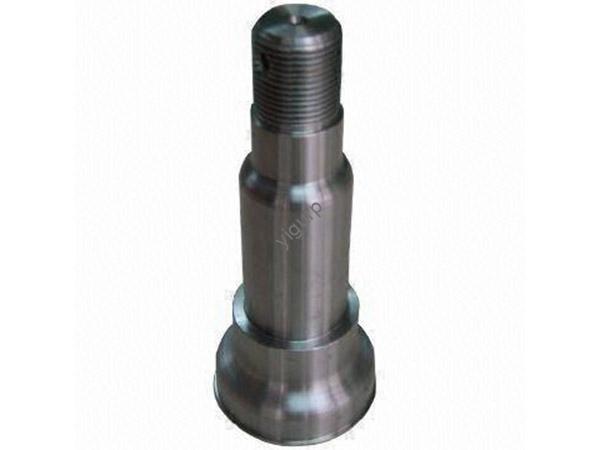
Si vous êtes dans la construction, ingénierie, ou fabrication, choisir le bon acier est important.Acier de construction EN1A se distingue par sa polyvalence et sa maniabilité, mais qu'est-ce qui en fait exactement un premier choix? Ce guide détaille ses principales caractéristiques, applications du monde réel, et comment il se compare à d'autres matériaux, afin que vous puissiez prendre des décisions intelligentes pour vos projets.
1. Propriétés matérielles de l'acier de construction EN1A
La popularité de l’EN1A vient de ses propriétés complètes. Vous trouverez ci-dessous un aperçu détaillé de son produit chimique, physique, mécanique, et d'autres caractéristiques clés.
1.1 Composition chimique
Lecomposition chimique de la norme EN1A est soigneusement contrôlée pour garantir sa cohérence. Voici une gamme typique (selon la norme EN):
| Élément | Gamme de contenu (%) | Rôle clé |
|---|---|---|
| Carbone (C) | 0.08 – 0.13 | Maintient l'acier ductile et facile à usiner |
| Manganèse (Mn) | 0.30 – 0.60 | Augmente la force sans perdre en flexibilité |
| Silicium (Et) | 0.10 – 0.35 | Améliore la résistance à la chaleur pendant la fabrication |
| Soufre (S) | 0.04 – 0.09 | Améliore l'usinabilité (acier appelé « usinage libre ») |
| Phosphore (P.) | ≤ 0.045 | Contrôlé pour éviter la fragilité |
| Autres éléments d'alliage | Des traces (par ex., cuivre) | Impact minimal sur les propriétés principales |
1.2 Propriétés physiques
EN1Apropriétés physiques faciliter le travail dans tous les environnements:
- Densité: 7.85 g/cm³ (identique à la plupart des aciers de construction courants)
- Point de fusion: 1450 – 1510°C
- Conductivité thermique: 49 Avec(m·K) à 20°C (bon pour la répartition de la chaleur)
- Capacité thermique spécifique: 470 J/(kg·K)
- Coefficient de dilatation thermique: 13.2 × 10⁻⁶/°C (20 – 100°C, suffisamment bas pour des structures stables)
1.3 Propriétés mécaniques
Ces caractéristiques rendent l'EN1A idéal pour les travaux de structure légers à moyens.:
- Résistance à la traction: 340 – 450 MPa
- Limite d'élasticité: ≥ 210 MPa
- Élongation: ≥ 28% (haute ductilité – idéal pour le pliage et le formage)
- Dureté: 100 – 130 HB (Échelle Brinell, facile à usiner)
- Résistance aux chocs: ≥ 35 J à 20°C (supporte les chocs légers)
- Résistance à la fatigue: ~170 MPa (convient aux pièces soumises à des charges légères et répétées)
1.4 Autres propriétés
- Résistance à la corrosion: Modéré (nécessite des revêtements comme de la peinture ou de la galvanisation pour une utilisation en extérieur)
- Soudabilité: Bien (aucun préchauffage nécessaire pour les sections minces, réduit le temps de fabrication)
- Usinabilité: Excellent (le soufre ajouté permet une coupe en douceur, ce qui permet d'économiser sur l'usure des outils)
- Propriétés magnétiques: Ferromagnétique (fonctionne avec des outils de test magnétique)
- Ductilité: Haut (peut être plié dans des formes complexes sans se fissurer)
2. Applications de l'acier de construction EN1A
La maniabilité et la résistance modérée de l’EN1A en font un incontournable pour de nombreuses industries. Voici ses utilisations les plus courantes:
- Construction générale: Utilisé pour les faisceaux lumineux, parenthèses, et charpente dans les petits bâtiments commerciaux (par ex., commerces ou bureaux locaux). Un constructeur basé au Royaume-Uni a utilisé EN1A pour les cadres de support intérieurs d'un centre commercial de 2 étages..
- Cadres structurels: Idéal pour les structures temporaires comme les échafaudages de construction ou les scènes événementielles. Une société événementielle européenne s'appuie sur EN1A pour ses cadres de scène portables, grâce à sa légèreté et sa ductilité.
- Composants mécaniques: Fait des engrenages, boulons, et petits puits pour appareils électroménagers (par ex., machines à laver). Une grande marque d'électroménager utilise EN1A pour ses arbres de tambour de lave-linge.
- Équipement industriel: Crée des cadres de bandes transporteuses et de petites pièces de machines dans les usines. Une usine de transformation alimentaire a utilisé EN1A pour ses supports de convoyeurs, car il est facile à nettoyer et à usiner.
- Pièces automobiles: Utilisé pour les composants légers comme les charnières de porte, supports de siège, et clips de conduite de carburant.
- Construction navale: Fabrique de petites pièces internes (par ex., cadres d'armoires) dans les bateaux et yachts.
- Structures ferroviaires: Utilisé pour les composants mineurs tels que les supports de signal et les bords de plate-forme.
- Applications architecturales: Crée des éléments décoratifs (par ex., garde-corps, panneaux muraux) dans les maisons modernes.
- Projets d'infrastructures: Utilisé pour les petites couvertures de drainage et les bordures de trottoirs dans les projets de rénovation urbaine.
3. Techniques de fabrication de l'acier de construction EN1A
Transformer l'acier brut en produits EN1A utilisables implique quatre étapes clés:
3.1 Processus de roulement
- Laminage à chaud: La méthode la plus courante. L'acier est chauffé à 1100 – 1250°C et pressé en forme de barres, assiettes, ou angles. L'EN1A laminé à chaud a une surface légèrement rugueuse mais est rentable.
- Laminage à froid: Réalisé à température ambiante pour des feuilles plus fines ou des formes précises (par ex., petites parenthèses). EN1A laminé à froid a une finition lisse et une tolérance dimensionnelle plus stricte.
3.2 Traitement thermique
Le traitement thermique ajuste les propriétés de l’EN1A pour des utilisations spécifiques:
- Recuit: Chauffé à 800 – 850°C, détenu, puis refroidi lentement. Réduit la dureté et rend l'usinage encore plus facile.
- Normalisation: Chauffé à 850 – 900°C, puis refroidi à l'air. Améliore légèrement la résistance tout en gardant la ductilité.
- Trempe: Rarement utilisé pour EN1A (puisqu'il est faible en carbone), mais cela peut être fait à 500 – 600°C si des ajustements mineurs de dureté sont nécessaires.
3.3 Méthodes de fabrication
- Coupe: Utilisations coupage au plasma (rapide pour les sections épaisses) ou oxycoupage (abordable pour les formes basiques). La faible teneur en carbone de l’EN1A empêche une fusion excessive.
- Techniques de soudage: Soudage à l'arc (le plus courant pour le travail sur site) et soudage au laser (précision pour petites pièces). Aucun préchauffage n'est nécessaire pour les sections de moins de 10 mm d'épaisseur.
- Pliage et formage: Facile à réaliser avec des presses plieuses ou des rouleaux. L’allongement élevé de l’EN1A signifie qu’il peut être plié à des angles de 90 degrés sans se fissurer.
3.4 Contrôle de qualité
- Méthodes de contrôle: Tests par ultrasons (vérifie les défauts internes) et inspection par magnétoscopie (trouve des fissures en surface).
- Normes de certification: Doit se rencontrer OIN 683-1 (aciers de construction) et FR 10087 (aciers d'usinage libre) pour assurer la qualité.
4. Études de cas: EN1A dans les projets réels
4.1 Construction: Un centre communautaire en France
Un petit centre communautaire de Lyon a utilisé EN1A pour ses fermes de toit et ses colonnes intérieures. Les ingénieurs ont choisi EN1A parce queusinabilité laissez-les couper rapidement les supports personnalisés, et sonductilité autorisé pour les supports de toit incurvés. Le projet a été achevé 2 semaines plus tôt, grâce à une fabrication facile.
4.2 Industriel: Une usine d'emballage en Allemagne
Une usine d'emballage a utilisé EN1A pour construire ses châssis de bandes transporteuses. Les cadres devaient être légers (pour une installation facile) et facile à modifier (pour les futures mises à niveau). EN1Arésistance à la traction (340 – 450 MPa) était suffisant pour supporter le poids du convoyeur, et sonsoudabilité laisser les travailleurs ajouter de nouvelles sections en une journée.
5. Analyse comparative: EN1A contre. Autres matériaux
Comment EN1A se compare-t-il aux alternatives courantes? Comparons:
5.1 contre. Autres types d'acier
| Fonctionnalité | Acier de construction EN1A | Acier au carbone (A36) | Acier allié (EN19) |
|---|---|---|---|
| Résistance à la traction | 340 – 450 MPa | 400 – 550 MPa | 620 – 780 MPa |
| Usinabilité | Excellent | Bien | Bien |
| Coût (per ton) | $700 – $900 | $600 – $800 | $800 – $1,000 |
5.2 contre. Matériaux non métalliques
- Béton: EN1A est plus léger (7.85 g/cm³ contre. du béton 2.4 g/cm³) et plus facile à fabriquer. Mais le béton est moins cher pour les fondations. Par exemple, un petit bâtiment peut utiliser du béton pour sa base et EN1A pour la charpente supérieure.
- Matériaux composites (par ex., fibre de verre): Les composites sont résistants à la corrosion mais 2x plus chers. EN1A est meilleur pour les projets économiques.
5.3 contre. Autres matériaux métalliques
- Alliages d'aluminium: L'aluminium est plus léger mais a une résistance à la traction inférieure (200 – 300 MPa). EN1A est meilleur pour les pièces qui nécessitent plus de résistance (par ex., petites poutres).
- Acier inoxydable: L'acier inoxydable résiste à la corrosion mais coûte 3 fois plus cher. EN1A est un meilleur choix pour une utilisation en intérieur ou en extérieur avec revêtement.
5.4 Coût & Impact environnemental
- Analyse des coûts: Le coût du matériau EN1A est légèrement supérieur à celui de l'acier au carbone (A36) mais inférieur à l'acier allié (EN19). C'est coût de fabrication est inférieur, cependant, car il est facile à usiner et à souder.
- Impact environnemental: EN1A est 100% recyclable (enregistre 75% énergie contre. fabriquer du nouvel acier). Sa production consomme moins d'énergie que l'acier inoxydable ou l'aluminium.
6. Le point de vue de Yigu Technology sur l'acier de construction EN1A
Chez Yigu Technologie, nous recommandons EN1A pour les projets légers à moyens où la maniabilité et l'équilibre des coûts sont importants. C'estexcellente usinabilité réduit le temps de fabrication, et sonbonne soudabilité simplifie les ajustements sur site – parfait pour les petits travaux de construction ou industriels. Nous associons souvent EN1A à nos revêtements anticorrosion pour une utilisation en extérieur, prolongeant sa durée de vie en 5+ années. Pour les clients qui recherchent un prix abordable sans sacrifier la qualité, EN1A est un choix fiable.
FAQ sur l'acier de construction EN1A
- L’acier de construction EN1A peut-il être utilisé à l’extérieur?
Oui, mais il a besoin de protection (comme la galvanisation ou la peinture). C'est résistance à la corrosion est modéré, donc l'EN1A non revêtu peut rouiller dans des environnements humides ou salés. - L'EN1A est-il difficile à usiner?
Non, l'EN1A est l'un des aciers les plus faciles à usiner. C'est ajouté soufre le rend coupé en douceur, réduction de l'usure des outils et gain de temps. - Quelle est la charge maximale que EN1A peut supporter?
Pour une poutre EN1A de 50 mm x 50 mm (1m de long), il peut supporter en toute sécurité jusqu'à 1 tonne de charge statique. Pour charges dynamiques (par ex., équipement de déménagement), réduisez-le à 500 kg pour une utilisation à long terme.