
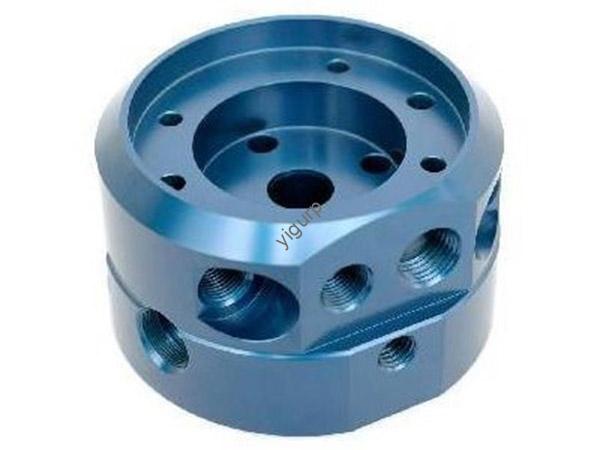
Si vous travaillez dans des secteurs comme l'automobile ou l'aérospatiale, you know how critical it is to choose the right steel for high-stress parts.EN 40NiCrMo22 alloy steel stands out for its excellent strength and toughness, ce qui en fait un premier choix pour les composants exigeants. Ce guide détaille tout ce que vous devez savoir, de sa composition chimique aux utilisations réelles, pour vous aider à prendre des décisions éclairées..
1. Material Properties of EN 40NiCrMo22 Alloy Steel
Understanding the properties ofEN 40NiCrMo22 is key to knowing where it works best. Vous trouverez ci-dessous une ventilation détaillée de son produit chimique, physique, mécanique, et d'autres traits clés.
1.1 Composition chimique
The elements inEN 40NiCrMo22 give it its unique strength. The table below shows the standard composition range (selon la norme EN):
| Élément | Symbole | Composition Range (%) | Role in the Alloy |
|---|---|---|---|
| Carbone (C) | C | 0.37 – 0.45 | Augmente la dureté et la résistance à la traction |
| Nickel (Dans) | Dans | 1.60 – 2.00 | Improves toughness and impact resistance |
| Chrome (Cr) | Cr | 0.80 – 1.20 | Enhances corrosion resistance and wear resistance |
| Molybdène (Mo) | Mo | 0.15 – 0.30 | Augmente la résistance à haute température et la résistance à la fatigue |
| Manganèse (Mn) | Mn | 0.60 – 0.90 | Improves machinability and hardenability |
| Silicium (Et) | Et | 0.15 – 0.35 | Aids in deoxidation during manufacturing |
| Soufre (S) | S | ≤ 0.035 | Kept low to avoid brittleness |
| Phosphore (P.) | P. | ≤ 0.035 | Limited to prevent cracking in welded parts |
1.2 Propriétés physiques
These traits affect howEN 40NiCrMo22 behaves in different environments:
- Densité: 7.85 g/cm³ (comme la plupart des aciers au carbone, making it easy to integrate into existing designs)
- Point de fusion: 1420 – 1450°C (high enough for high-temperature applications like engine parts)
- Conductivité thermique: 45 Avec(m·K) à 20°C (lower than aluminum, so it retains heat well)
- Capacité thermique spécifique: 460 J/(kg·K) à 20°C (efficient for parts that need stable temperature performance)
- Coefficient de dilatation thermique: 12.5 µm/(m·K) (minimizes warping when heated/cooled)
- Propriétés magnétiques: Ferromagnétique (attire les aimants, which is useful for certain industrial tools)
1.3 Propriétés mécaniques
EN 40NiCrMo22’s mechanical strength is why it’s used for high-stress parts. All values below are for the alloy after heat treatment (quenched and tempered):
| Propriété | Valeur | Norme d'essai |
|---|---|---|
| Résistance à la traction | ≥ 1000 MPa | EN ISO 6892-1 |
| Limite d'élasticité | ≥ 800 MPa | EN ISO 6892-1 |
| Élongation | ≥ 12% | EN ISO 6892-1 |
| Dureté (Brinell) | 280 – 320 HB | EN ISO 6506-1 |
| Dureté (Rockwell C.) | 29 – 34 CRH | EN ISO 6508-1 |
| Résistance aux chocs | ≥ 60 J. | EN ISO 148-1 |
| Résistance à la fatigue | ~500 MPa | EN ISO 13003 |
1.4 Autres propriétés
- Résistance à la corrosion: Modéré (resists mild acids and moisture but needs coating for marine or chemical environments)
- Résistance à l'usure: Bien (grâce à chrome (Cr) et traitement thermique, it works well for moving parts like gears)
- Usinabilité: Équitable (it’s harder than carbon steel, so use high-speed steel (HSS) or carbide tools with cutting fluid)
- Soudabilité: Acceptable (préchauffer à 200 – 300°C and post-weld heat treat to avoid cracking)
2. Applications of EN 40NiCrMo22 Alloy Steel
EN 40NiCrMo22’s mix of strength and toughness makes it ideal for parts that face heavy loads or impacts. Voici ses principales utilisations, avec des exemples concrets:
2.1 Industrie automobile
Cars and trucks need parts that handle constant stress.EN 40NiCrMo22 est utilisé pour:
- Essieux: Supports the vehicle’s weight and torque. A leading European automaker uses it for heavy-duty truck axles, reducing failure rates by 30% compared to carbon steel.
- Engrenages: Transmits power in transmissions. A luxury car brand uses it for manual gearbox gears because of its résistance à la fatigue (resists wear from repeated use).
- Arbres: Connects engines to wheels. A pickup truck manufacturer chose it for drive shafts, as it withstands off-road vibrations better than stainless steel.
2.2 Aerospace Engineering
Aerospace parts need to be strong but not too heavy.EN 40NiCrMo22 est utilisé pour:
- Composants du train d'atterrissage: Handles the impact of landing. A small aircraft maker uses it for landing gear struts, as its résistance aux chocs (≥60 J) prevents bending on rough runways.
- Pièces de moteur: Tolerates high temperatures. It’s used for turbine shafts in small jet engines, grâce à son point de fusion (1420 – 1450°C).
- Cadres structurels: Supports the aircraft’s body. A drone company uses it for heavy-lift drone frames, as its densité (7.85 g/cm³) keeps the drone light enough to fly.
2.3 Mécanique & Machinerie lourde
Industrial machines need parts that last.EN 40NiCrMo22 est utilisé pour:
- Roulements: Reduces friction in rotating parts. A manufacturing plant uses it for conveyor belt bearings, as its résistance à l'usure cuts maintenance costs by 25%.
- Rouleaux: Presses materials in factories. A steel mill uses it for rolling mill rollers, as its dureté (280 – 320 HB) resists deformation from heavy metal sheets.
- Vilebrequins: Converts linear motion to rotational motion. A tractor maker uses it for crankshafts, as its résistance à la traction (≥1000 MPa) handles the stress of plowing.
3. Manufacturing Techniques for EN 40NiCrMo22 Alloy Steel
Making high-qualityEN 40NiCrMo22 parts requires specific processes. Vous trouverez ci-dessous une ventilation étape par étape:
3.1 Processus de fabrication de l'acier
D'abord, the alloy is made in a furnace:
- Four à arc électrique (AEP): Most common for EN 40NiCrMo22. Scrap steel is melted with electrodes, alors nickel (Dans), chrome (Cr), et molybdène (Mo) are added to reach the right composition. EAF is flexible and reduces waste.
- Four à oxygène de base (BOF): Utilisé pour les gros lots. Molten iron is mixed with oxygen to remove impurities, puis des éléments d'alliage sont ajoutés. BOF is faster but less precise than EAF.
3.2 Traitement thermique
Heat treatment is critical to unlockEN 40NiCrMo22la force. Le processus standard est:
- Recuit: Chauffer à 820 – 850°C, cool slowly. Adoucit l'acier pour l'usinage.
- Normalisation: Chauffer à 850 – 880°C, cool in air. Improves uniformity.
- Trempe: Chauffer à 840 – 860°C, cool in oil. Hardens the steel.
- Trempe: Chauffer à 550 – 600°C, cool in air. Reduces brittleness while keeping strength.
3.3 Processus de formage
The alloy is shaped into parts using:
- Roulement: Passed through rollers to make sheets or bars. Used for basic shapes like shafts.
- Forgeage: Hammered or pressed at high temperature. Creates strong parts like gears (forging aligns the metal’s grain, stimuler résistance à la traction).
- Extrusion: Pushed through a die to make complex shapes. Used for aerospace components like landing gear struts.
3.4 Machining Processes
Après avoir formé, parts are finished with:
- Tournant: Uses a lathe to make cylindrical parts (par ex., essieux). Use cutting fluid to prevent overheating.
- Fraisage: Uses a rotating cutter to make flat or curved surfaces (par ex., dents d'engrenage). Carbide tools work best.
- Forage: Creates holes for bolts (par ex., in structural frames). Use high-speed drills to avoid wear.
- Affûtage: Smooths surfaces to meet tight tolerances (par ex., courses de roulements). Améliore résistance à l'usure.
4. Étude de cas: EN 40NiCrMo22 in Heavy-Duty Truck Axles
A European truck manufacturer faced a problem: their carbon steel axles kept failing in cold weather (due to lowrésistance aux chocs). Ils sont passés àEN 40NiCrMo22 and saw big improvements.
4.1 Défi
The company’s trucks operated in Scandinavia, where temperatures drop to -20°C. Carbon steel axles hadrésistance aux chocs of only 30 J at low temperatures, leading to cracks.
4.2 Solution
Ils sont passés àEN 40NiCrMo22 essieux, heat-treated to haverésistance aux chocs de 70 J. (well above the required 60 J.). The axles were also forged (not just rolled) to boost grain alignment.
4.3 Résultats
- Failure rate: Supprimé de 8% à 1% dans 2 années.
- Économies de coûts: Reduced maintenance costs by €150,000 per year.
- Performance: Axles handled cold weather and heavy loads (jusqu'à 20 tonnes) sans problèmes.
5. Analyse comparative: EN 40NiCrMo22 vs. Autres matériaux
CommentEN 40NiCrMo22 stack up against other common metals? The table below compares key traits:
| Matériel | Force (Traction) | Résistance à la corrosion | Poids (Densité) | Coût (contre. EN 40NiCrMo22) | Idéal pour |
|---|---|---|---|---|---|
| EN 40NiCrMo22 | ≥1000 MPa | Modéré | 7.85 g/cm³ | 100% (base) | Pièces très sollicitées (essieux, engrenages) |
| Acier inoxydable (304) | 515 MPa | Excellent | 7.93 g/cm³ | 150% | Food/chemical equipment |
| Acier au carbone (A36) | 400 MPa | Faible | 7.85 g/cm³ | 50% | Pièces à faible contrainte (cadres) |
| Acier allié (4140) | 950 MPa | Modéré | 7.85 g/cm³ | 80% | General machinery parts |
| Aluminium (6061) | 310 MPa | Bien | 2.70 g/cm³ | 120% | Pièces légères (aircraft bodies) |
À retenir: EN 40NiCrMo22 is stronger than carbon steel and 4140 acier allié, making it better for high-stress uses. It’s cheaper than stainless steel but has lowerrésistance à la corrosion (so coat it for harsh environments).
Yigu Technology’s Perspective on EN 40NiCrMo22 Alloy Steel
Chez Yigu Technologie, nous avons travaillé avecEN 40NiCrMo22 for automotive and machinery parts for over a decade. Son solde derésistance à la traction, résistance aux chocs, and machinability makes it a reliable choice for clients needing durable components. We often recommend it for heavy-duty axles and gears, as it reduces maintenance costs and extends part life. For clients in corrosive environments, we pair it with zinc plating or powder coating to boostrésistance à la corrosion. Moving forward, we see it remaining a top alloy for high-stress applications, especially as industries demand more durable, long-lasting parts.
FAQ About EN 40NiCrMo22 Alloy Steel
1. Can EN 40NiCrMo22 be used in marine environments?
It has moderaterésistance à la corrosion, so it’s not ideal for marine use alone. To use it in saltwater, add a protective coating (like chrome plating) or pair it with stainless steel components to prevent rust.
2. What heat treatment is best for EN 40NiCrMo22?
Le processus standard esttrempe (840 – 860°C in oil) suivi detrempe (550 – 600°C in air). This gives it the best mix ofdureté (280 – 320 HB) etdureté (≥60 J) pour pièces soumises à de fortes contraintes.
3. How does EN 40NiCrMo22 compare to 4140 acier allié?
EN 40NiCrMo22 has higherrésistance à la traction (≥1000 MPa vs. 950 MPa pour 4140) etnickel (Dans) contenu (1.60 – 2.00% contre. 0.15% pour 4140), making it tougher. 4140 is cheaper but less suitable for extremely heavy loads. ChoisirEN 40NiCrMo22 for parts like axles or landing gear, et 4140 pour machines générales.