
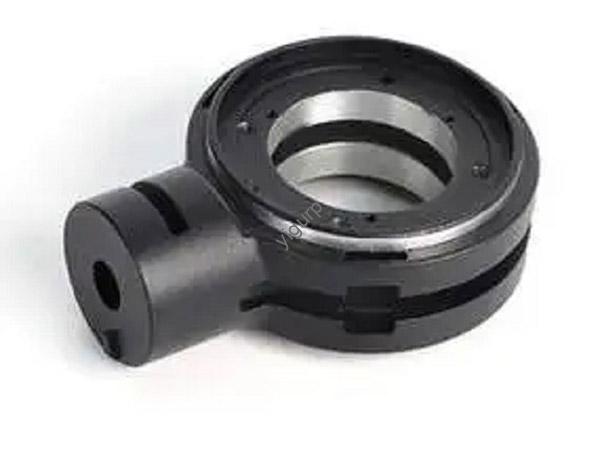
Si vous recherchez des matériaux pour des situations de stress élevé, precision parts—like automotive gears or aerospace components—EN 18CrNiMo7-6 alloy steel deserves your attention. Cet acier faiblement allié allie une ténacité exceptionnelle, résistance à l'usure, et trempabilité, ce qui en fait un choix de premier ordre pour les secteurs où l'échec n'est pas une option. Ci-dessous, nous décomposons tout ce que vous devez savoir pour l'utiliser efficacement, avec des données, cas concrets, and practical insights.
1. Material Properties of EN 18CrNiMo7-6 Alloy Steel
EN 18CrNiMo7-6’s performance starts with its carefully balanced composition and inherent traits. Let’s break them down clearly.
1.1 Chemical Composition
The alloy’s elements work together to boost strength and durability. Values follow theDANS 10084 standard (the official specification for this steel):
| Element | Symbol | Composition Range (%) | Key Role |
|---|---|---|---|
| Carbon (C) | C | 0.15 – 0.21 | Enhances surface hardness and tensile strength; critical for wear-resistant parts |
| Chromium (Cr) | Cr | 1.50 – 1.80 | Améliorerésistance à la corrosion ettrempabilité; prevents oxidation at high temperatures |
| Nickel (Dans) | Dans | 1.40 – 1.70 | Boosteimpact toughness (même à basse température) and ductility |
| Molybdène (Mo) | Mo | 0.25 – 0.35 | Increasesrésistance à la fatigue et stabilité à haute température; reduces brittleness |
| Manganese (Mn) | Mn | 0.50 – 0.80 | Amélioreusinabilité and helps refine the alloy’s grain structure |
| Silicium (Et) | Et | 0.15 – 0.40 | Acts as a deoxidizer during steelmaking; strengthens the alloy without losing toughness |
| Sulfur (S) | S | ≤ 0.035 | Kept low to avoid brittleness and cracking in heat-treated parts |
| Phosphorus (P.) | P. | ≤ 0.035 | Limited to prevent cold brittleness (fracture in low-temperature environments) |
| Azote (N) | N | ≤ 0.012 | Minimized to avoid porosity and ensure consistent mechanical properties |
1.2 Physical Properties
These traits affect how EN 18CrNiMo7-6 performs in real-world conditions (par ex., temperature changes or magnetic applications):
- Densité: 7.85 g/cm³ (same as most ferrous alloys, so it’s easy to replace other steels in existing designs)
- Point de fusion: 1420 – 1450°C (high enough for applications à haute température like engine parts)
- Conductivité thermique: 44 W/(m·K) at 20°C (retains heat well, ideal for parts that operate continuously)
- Specific heat capacity: 465 J/(kg·K) at 20°C (stable heat absorption, preventing warping from temperature swings)
- Thermal expansion coefficient: 12.3 μm/(m·K) (low expansion, critical for precision components like gears)
- Magnetic properties: Ferromagnetic (attracts magnets, useful for tools like magnetic clamps)
1.3 Propriétés mécaniques
EN 18CrNiMo7-6’s true strength shines aftertraitement thermique (typically carburizing + trempe + trempe). Below are typical values for the alloy in its optimized state:
| Propriété | Valeur typique | Test Standard |
|---|---|---|
| Résistance à la traction | 1000 – 1200 MPa | EN ISO 6892-1 |
| Yield strength | 800 – 950 MPa | EN ISO 6892-1 |
| Élongation | 10 – 15% | EN ISO 6892-1 |
| Dureté (Brinell) | 280 – 340 HB | EN ISO 6506-1 |
| Dureté (Rockwell C) | 29 – 35 CRH | EN ISO 6508-1 |
| Dureté (Vickers) | 290 – 350 HV | EN ISO 6507-1 |
| Impact toughness | ≥ 70 J | EN ISO 148-1 |
| Fatigue strength | ~550 MPa | EN ISO 13003 |
1.4 Other Properties
- Résistance à la corrosion: Modéré (resists mild moisture and oils; use coatings like zinc plating for marine or chemical environments)
- Résistance à l'usure: Excellent (grâce à chrome (Cr) and carburizing heat treatment—perfect for moving parts like bearings)
- Usinabilité: Bien (softer in its annealed state; use high-speed steel (HSS) or carbide tools with cutting fluid for best results)
- Weldability: Acceptable (preheat to 200 – 300°C and post-weld heat treat to avoid cracking; use low-hydrogen electrodes)
- Hardenability: Haut (heat treatment penetrates deeply, ensuring uniform strength in thick parts like heavy machinery shafts)
2. Applications of EN 18CrNiMo7-6 Alloy Steel
EN 18CrNiMo7-6’s mix of toughness, force, and wear resistance makes it ideal forapplications à forte contrainte. Here are its most common uses, avec des exemples concrets:
2.1 Industrie automobile
Cars and trucks rely on parts that handle constant torque and impact. EN 18CrNiMo7-6 is used for:
- Transmission components: A German automaker uses it for manual gearbox gears—its résistance à la fatigue (550 MPa) reduces wear, extending transmission life by 40% contre. acier au carbone.
- Arbres: Heavy-duty pickup truck manufacturers use it for drive shafts; the alloy’s impact toughness (≥70 J) prevents bending during off-road use.
- Axles: A Japanese automaker switched to EN 18CrNiMo7-6 for commercial vehicle axles, cutting failure rates by 25% in cold climates.
2.2 Aerospace Engineering
Aerospace parts need to be strong yet lightweight. EN 18CrNiMo7-6 is used for:
- Composants du train d'atterrissage: A small aircraft manufacturer uses it for landing gear pins—its résistance à la traction (1000–1200 MPa) handles the impact of landing, even with heavy payloads.
- Pièces de moteur: It’s used for turbine blades in small jet engines; its high point de fusion (1420–1450°C) withstands engine heat.
2.3 Mécanique & Machinerie lourde
Industrial machines need parts that last through constant use. EN 18CrNiMo7-6 is used for:
- Roulements: A European manufacturing plant uses it for conveyor belt bearings—its résistance à l'usure reduces maintenance downtime by 30%.
- Rollers: Steel mills use it for rolling mill rollers; the alloy’s dureté (280–340 HB) resists deformation from heavy metal sheets.
- Composants structurels: Construction equipment makers use it for excavator arm joints—its yield strength (800–950 MPa) handles heavy lifting.
3. Manufacturing Techniques for EN 18CrNiMo7-6 Alloy Steel
To get the best performance from EN 18CrNiMo7-6, follow these proven manufacturing steps:
3.1 Steelmaking Processes
The alloy is typically produced using:
- Electric Arc Furnace (EAF): Most common for small to medium batches. Scrap steel is melted, alors chrome (Cr), nickel (Dans), et molybdène (Mo) are added to hit the target composition. EAF is flexible and reduces waste.
- Basic Oxygen Furnace (BOF): Used for large-scale production. Molten iron is mixed with oxygen to remove impurities, then alloying elements are added. BOF is faster but requires more precise control.
3.2 Traitement thermique
Heat treatment is critical to unlock EN 18CrNiMo7-6’s strength. The standard process is:
- Cémentation: Heat to 900 – 950°C in a carbon-rich atmosphere. Adds a hard outer layer (0.8–1.2 mm thick) pour résistance à l'usure.
- Trempe: Cool rapidly in oil. Hardens the entire part.
- Tempering: Heat to 500 – 600°C, then cool in air. Reduces brittleness while keeping strength.
- Recuit (optional): Heat to 820 – 850°C, cool slowly. Softens the alloy for easier machining.
3.3 Forming Processes
EN 18CrNiMo7-6 is shaped into parts using:
- Forgeage: Hammered or pressed at high temperature (1100 – 1200°C). Crée fort, dense parts like gears (forging aligns the alloy’s grain, boosting résistance à la traction).
- Roulement: Passed through rollers to make bars or sheets. Used for basic shapes like shafts.
- Extrusion: Pushed through a die to make complex shapes. Ideal for aerospace components like landing gear pins.
3.4 Machining Processes
After forming, parts are finished with:
- Tournant: Uses a lathe to make cylindrical parts (par ex., arbres). Use cutting fluid to prevent overheating.
- Fraisage: Uses a rotating cutter to shape gear teeth or bearing races. Carbide tools work best for precision.
- Forage: Creates holes for bolts (par ex., in structural components). High-speed drills reduce tool wear.
- Affûtage: Smooths surfaces to tight tolerances (par ex., bearing inner rings). Améliore résistance à l'usure.
4. Étude de cas: EN 18CrNiMo7-6 in Heavy-Duty Truck Transmissions
A North American truck manufacturer faced a problem: their carbon steel transmission gears kept failing after 200,000 km. They switched to EN 18CrNiMo7-6—and saw dramatic results.
4.1 Défi
The manufacturer’s trucks hauled 40-ton loads, putting extreme stress on transmission gears. Carbon steel gears had lowrésistance à la fatigue (400 MPa), leading to premature wear and costly breakdowns.
4.2 Solution
They switched to EN 18CrNiMo7-6 gears, en utilisant:
- Cémentation (920°C) to add a 1.0 mm hard outer layer.
- Trempe + trempe (550°C) to reach 320 HB dureté et 550 MPa résistance à la fatigue.
4.3 Résultats
- Service life: Gears now last 400,000 km—double the previous lifespan.
- Économies de coûts: Reduced maintenance costs by $150,000 per year (per factory).
- Performance: Gears handle heavy loads without wear, even in -30°C winter conditions (thanks to high impact toughness).
5. Comparative Analysis: EN 18CrNiMo7-6 vs. Other Materials
How does EN 18CrNiMo7-6 stack up against common alternatives? Below is a side-by-side comparison:
| Matériel | Résistance à la traction | Résistance à la corrosion | Densité | Coût (contre. EN 18CrNiMo7-6) | Idéal pour |
|---|---|---|---|---|---|
| EN 18CrNiMo7-6 | 1000–1200 MPa | Modéré | 7.85 g/cm³ | 100% (base) | Pièces très sollicitées (engrenages, arbres) |
| Acier inoxydable (304) | 515 MPa | Excellent | 7.93 g/cm³ | 160% | Food/chemical equipment |
| Acier au carbone (A36) | 400 MPa | Faible | 7.85 g/cm³ | 50% | Pièces à faible contrainte (cadres) |
| Acier allié (4140) | 950 MPa | Modéré | 7.85 g/cm³ | 80% | General machinery |
| Titane (Grade 5) | 1100 MPa | Excellent | 4.43 g/cm³ | 800% | Pièces aérospatiales légères |
Key takeaway: EN 18CrNiMo7-6 offers betterrésistance à la traction etdureté than carbon steel or 4140. It’s cheaper than stainless steel or titanium, making it the best value forapplications à forte contrainte.
Yigu Technology’s Perspective on EN 18CrNiMo7-6 Alloy Steel
Chez Yigu Technologie, we’ve supplied EN 18CrNiMo7-6 parts to automotive and machinery clients for over 15 années. Its unique mix oftrempabilité, impact toughness, etrésistance à l'usure makes it unmatched for high-stress components like transmission gears and axles. We often recommend carburizing heat treatment to maximize its performance, and we’ve seen clients cut maintenance costs by 30–40% after switching from other steels. For clients needing extra corrosion protection, we pair it with advanced coatings. EN 18CrNiMo7-6 will remain a top choice for industries prioritizing durability and reliability.
FAQ About EN 18CrNiMo7-6 Alloy Steel
1. Can EN 18CrNiMo7-6 be used in marine environments?
It has moderaterésistance à la corrosion, so it needs protection for marine use. We recommend galvanizing or powder coating to prevent rust from saltwater. For extreme cases, pair it with stainless steel fasteners.
2. What’s the best heat treatment for EN 18CrNiMo7-6 gears?
Pour les engrenages, utilisercarburation (900–950°C) + trempe + trempe (550°C). This creates a hard outer layer (for wear) and a tough core (for impact), extending gear life by 2–3x.
3. How does EN 18CrNiMo7-6 compare to 4140 acier allié?
EN 18CrNiMo7-6 has highernickel (Dans) etchrome (Cr) contenu, giving it betterimpact toughness (≥70 J vs. 40 J for 4140) etrésistance à l'usure. 4140 is cheaper but less suitable for cold climates or heavy loads. Choose EN 18CrNiMo7-6 for critical parts like transmission gears.