
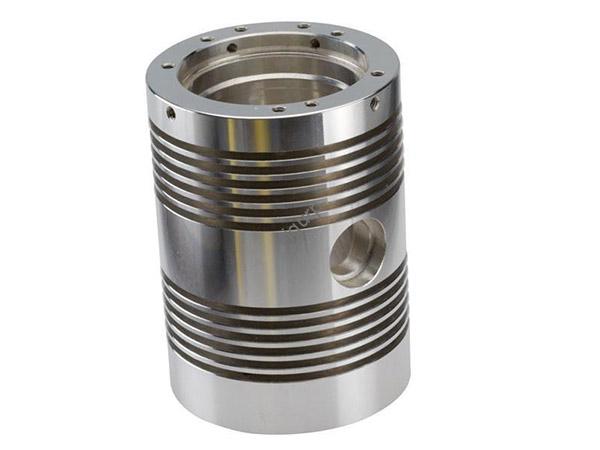
Si vous travaillez sur des moules qui doivent supporter la chaleur, offrir des finitions lisses, and last through high production cycles—DANS 1.2312 mold steel is a solution worth exploring. This versatile alloy stands out for its blend ofhot hardness, excellente usinabilité, et polissabilité miroir, ce qui le rend idéal pour tout, des moules d'injection plastique aux systèmes à canaux chauds. Dans ce guide, nous allons décomposer ses propriétés clés, applications du monde réel, étapes de fabrication, and how it compares to other mold materials. À la fin, you’ll know if it’s the right fit for your most challenging mold projects.
1. Material Properties of EN 1.2312 Acier de moule
EN 1.2312’s performance is rooted in its carefully balanced composition and well-rounded properties. Let’s break this into four critical areas:
1.1 Composition chimique
The elements in EN 1.2312 work together to enhance heat resistance, polissabilité, et durabilité. Below is its typical composition (per EN standards):
| Élément | Gamme de contenu (%) | Key Role |
|---|---|---|
| Carbone (C) | 0.38 – 0.45 | Provides hardness while maintaining machinability for mold shaping. |
| Manganèse (Mn) | 0.80 – 1.10 | Improves hardenability and reduces brittleness during heat treatment. |
| Silicium (Et) | 0.20 – 0.40 | Boosts strength and resistance to oxidation at high temperatures. |
| Chrome (Cr) | 1.70 – 2.00 | Enhancesrésistance à l'usure etrésistance à la corrosion; supports carbide formation for durability. |
| Nickel (Dans) | 1.00 – 1.30 | Improves toughness and ductility, preventing mold cracking under stress. |
| Molybdène (Mo) | 0.25 – 0.35 | Increaseshot hardness (retains strength at high temps) – critical forsystèmes à canaux chauds. |
| Vanadium (V) | 0.10 – 0.20 | Refines grain structure, boosting polishability and fatigue strength. |
| Soufre (S) | ≤ 0.030 | Minimized to avoid surface defects in molds (par ex., pits or lines). |
| Phosphore (P.) | ≤ 0.030 | Kept low to prevent brittleness, especially in cold or high-heat conditions. |
1.2 Propriétés physiques
These properties determine how EN 1.2312 behaves during manufacturing and mold use—like heat transfer or dimensional stability. All values are measured at room temperature unless stated:
- Densité: 7.85 g/cm³ (consistent with most mold steels, making it easy to calculate mold weight and design).
- Point de fusion: 1460 – 1520 °C (high enough to withstand forging and heat treatment without deformation).
- Conductivité thermique: 31 Avec(m·K) (good heat transfer, ensuring plastic parts cool evenly in injection molds).
- Coefficient de dilatation thermique: 12.0 × 10⁻⁶/°C (depuis 20 à 600 °C; low expansion means molds retain their shape during heating/cooling cycles).
- Specific Heat Capacity: 465 J/(kg·K) (efficient at absorbing and releasing heat, reducing production cycle times for plastic molds).
1.3 Propriétés mécaniques
DANS 1.2312 is often suppliedpre-hardened (ready for machining without extra heat treatment), making it a time-saver for mold makers. Below are its typical pre-hardened properties:
| Propriété | Valeur typique | Test Standard | Pourquoi c'est important |
|---|---|---|---|
| Dureté (CRH) | 30 – 35 | EN ISO 6508 | Balanced hardness—hard enough for durability, soft enough for easy machining. |
| Résistance à la traction | ≥ 1100 MPa | EN ISO 6892 | Handles the pressure of plastic injection or die casting without deformation. |
| Limite d'élasticité | ≥ 900 MPa | EN ISO 6892 | Resists permanent damage, keeping molds dimensionally stable for thousands of cycles. |
| Élongation | ≥ 12% | EN ISO 6892 | High ductility reduces the risk of cracking when molds are clamped or stressed. |
| Résistance aux chocs (Charpy V-notch) | ≥ 50 J. (à 20 °C) | EN ISO 148-1 | Excellent toughness—prevents mold failure from sudden impacts (par ex., part jams). |
| Fatigue Strength | ~480 MPa (10⁷ cycles) | EN ISO 13003 | Resists wear from repeated use (key for high-cycle molds like packaging molds). |
1.4 Autres propriétés
- Résistance à la corrosion: Bien. Chromium content protects against rust in workshop environments and mild chemical exposure (par ex., plastic additives or die casting lubricants).
- Résistance à l'usure: Very Good. Chromium and vanadium form hard carbides that resist abrasive wear—ideal for molds used with glass-filled plastics or metal die casting.
- Usinabilité: Excellent. Its pre-hardened hardness (HRC 30–35) and low sulfur content make it easy to mill, percer, and turn—reducing machining time by 25–30% vs. harder mold steels.
- Trempabilité: Excellent. It hardens evenly across thick sections (jusqu'à 100 mm), so large molds (par ex., automotive bumper molds) have consistent performance.
- Mirror Polishability: Outstanding. Fine grain structure and low impurity content let it achieve mirror finishes (Ra ≤ 0.01 µm)—critical for consumer product molds (par ex., bouteilles cosmétiques) or automotive exterior parts.
- Hot Hardness: Fort. It retains hardness at temperatures up to 450 °C—perfect for systèmes à canaux chauds (which stay heated to keep plastic molten) or high-temperature plastic molds.
2. Applications of EN 1.2312 Acier de moule
EN 1.2312’s mix of heat resistance, polissabilité, and toughness makes it versatile for diverse mold types. Voici ses utilisations les plus courantes, avec des exemples concrets:
2.1 Plastic Injection Molds
- Exemples: Molds for high-temperature plastics (par ex., nylon, COUP D'OEIL) or parts like automotive engine covers, connecteurs électriques, or laptop casings.
- Why it works: Hot hardness resists heat from molten plastic, while mirror polishability delivers smooth part surfaces. A Taiwanese plastic manufacturer used EN 1.2312 for nylon connector molds—mold life increased from 100,000 à 250,000 parties.
2.2 Moules de moulage sous pression
- Exemples: Molds for die casting non-ferrous metals like zinc (par ex., pièces de jouets) ou du magnésium (par ex., lightweight automotive components).
- Why it works: Toughness handles the pressure of die casting, and wear resistance stands up to metal flow. A U.K. die caster used EN 1.2312 for zinc toy molds—maintenance costs dropped by 40% (fewer mold repairs).
2.3 Blow Molding Tools
- Exemples: Tools for blow molding large plastic parts like water tanks, bouteilles de détergent, or automotive air ducts.
- Why it works: Dimensional stability keeps part shapes consistent, and machinability lets you create complex tool geometries. Un États-Unis. packaging company used EN 1.2312 for 5-gallon water jug molds—part defect rates fell by 30%.
2.4 Automotive Molds
- Exemples: Molds for automotive exterior parts (par ex., fenders, grille inserts) or under-hood components (par ex., boîtiers de capteurs).
- Why it works: Meets automotive industry standards for durability and heat resistance. A German automotive supplier used EN 1.2312 for sensor housing molds—cycle time reduced by 20% (thanks to easy machining).
2.5 Hot Runner Systems
- Exemples: Heated components in plastic injection molds that keep plastic molten (par ex., buses, collecteurs).
- Why it works: Hot hardness retains strength at 400–450 °C, preventing deformation. A Chinese hot runner manufacturer used EN 1.2312 for nozzles—system life doubled vs. using alloy steel.
2.6 Consumer Product Molds
- Exemples: Molds for cosmetic containers (par ex., lipstick tubes), ustensiles de cuisine (par ex., plastic spatulas), or electronic device casings.
- Why it works: Mirror polishability delivers the high-gloss finishes consumers want. A French cosmetic brand used EN 1.2312 for lipstick tube molds—customer complaints about surface flaws dropped to zero.
3. Manufacturing Techniques for EN 1.2312 Acier de moule
Turning EN 1.2312 into high-performance molds requires a structured process. Voici une ventilation étape par étape:
- Fusion: Matières premières (iron, carbone, chrome, nickel, etc.) are melted in an electric arc furnace (AEP) at 1500–1600 °C. This ensures uniform mixing of elements (critical for consistent polishability and hot hardness).
- Fonderie: Molten steel is poured into ingot molds or continuous casters to form slabs or billets. Refroidissement lent (at 50–100 °C/hour) prevents internal cracks and refines grain structure.
- Forgeage: Slabs are heated to 1100–1200 °C and pressed/hammered into mold blanks (par ex., 600x600x300 mm for large injection molds). Forging improves toughness and eliminates internal defects.
- Traitement thermique: The standard cycle for pre-hardened EN 1.2312:
- Recuit: Heat to 820–860 °C, hold 2–4 hours, cool slowly. Softens steel to HRC 22–25 for initial machining.
- Trempe: Heat to 880–920 °C, hold 1–2 hours, tremper dans l'huile. Hardens steel to HRC 50–55.
- Trempe: Reheat to 580–620 °C, hold 2–3 hours, cool. Reduces brittleness and sets pre-hardened hardness (HRC 30–35).
- Usinage: Mold blanks are milled, drilled, or turned into mold cavities and cores. Carbide tools are recommended for best results—EN 1.2312’s machinability lets you achieve tight tolerances (±0,005mm).
- Polissage: Molds are polished to the desired finish. Start with 400-grit sandpaper, progress to 1000-grit, 3000-grincer, and finally diamond paste (for mirror finishes). This step takes 50% less time vs. stainless mold steel.
- Traitement de surface (Facultatif):
- Galvanoplastie: Add a chrome or nickel coating to boost wear resistance (for glass-filled plastic molds).
- Nitruration: Heat the mold to 500–550 °C in a nitrogen-rich environment. Creates a hard surface layer (HRC 60–65) for hot runner systems or die casting molds.
- Affûtage: Final grinding ensures mold dimensions are precise. CNC grinders are used to achieve flatness or cylindrical accuracy (critical for mold alignment).
4. Étude de cas: DANS 1.2312 in Hot Runner Systems for Plastic Injection
A European plastic injection mold maker faced a problem: their hot runner nozzles (made from alloy steel) were deforming at 420 °C, leading to plastic leakage and costly downtime. They switched to EN 1.2312, and here’s what happened:
- Processus: Nozzles were machined from pre-hardened EN 1.2312 (CRH 32), nitrided to HRC 62 (pour une résistance supplémentaire à l'usure), and polished to a smooth internal surface (Râ 0.05 µm) to prevent plastic buildup.
- Résultats:
- Nozzle life increased from 80,000 à 200,000 cycles (150% amélioration) thanks to EN 1.2312’s hot hardness.
- Plastic leakage dropped by 90% (no deformation at 420 °C).
- Maintenance time reduced by 35% (fewer nozzle replacements).
- Pourquoi ça a marché: Molybdenum in EN 1.2312 retained the steel’s strength at high temperatures, while nitriding boosted surface wear resistance—solving both deformation and leakage issues.
5. DANS 1.2312 contre. Other Mold Materials
How does EN 1.2312 stack up against common alternatives? Let’s compare key properties for mold-making:
| Matériel | Dureté (CRH) | Hot Hardness (450 °C) | Usinabilité | Mirror Polishability | Coût (contre. DANS 1.2312) | Idéal pour |
|---|---|---|---|---|---|---|
| DANS 1.2312 Acier de moule | 30 – 35 | Fort | Excellent | Outstanding | 100% | Hot runners, high-temp plastic molds |
| Pre-hardened Mold Steel (P20) | 28 – 32 | Weak | Excellent | Very Good | 85% | General plastic molds (no high-heat needs) |
| Stainless Mold Steel (S136) | 30 – 32 | Modéré | Équitable | Outstanding | 190% | Corrosion-prone molds (par ex., PVC) |
| Hot Work Tool Steel (DANS 1.2344) | 45 – 50 | Excellent | Pauvre | Pauvre | 160% | High-heat die casting (not for polishable parts) |
| Acier au carbone (1045) | 18 – 22 | Very Weak | Excellent | Pauvre | 50% | Low-cost prototype molds |
| Aluminum Mold Materials (7075) | 15 – 18 | Very Weak | Excellent | Bien | 130% | Faible volume, non-heat molds |
Key takeaway: DANS 1.2312 is the best all-around choice for molds that needhot hardness (par ex., hot runners) plus polishability. It’s cheaper than stainless steel (S136) and more machinable than hot work tool steel (DANS 1.2344), making it a cost-effective solution for demanding projects.
Yigu Technology’s View on EN 1.2312 Acier de moule
Chez Yigu Technologie, DANS 1.2312 is our top recommendation for clients with high-heat mold needs—like hot runners or high-temp plastic molds. Its unique mix of hot hardness and machinability solves two big pain points: production lente (from hard-to-machine steels) and frequent failures (from heat deformation). We often pair it with nitriding to boost wear resistance, helping clients extend mold life by 50–150%. For automotive and consumer product makers, DANS 1.2312 isn’t just a material—it’s a way to cut costs, accélérer la production, and deliver high-quality parts.
FAQ About EN 1.2312 Acier de moule
1. Can EN 1.2312 be used for molds that process corrosive plastics like PVC?
DANS 1.2312 has good corrosion resistance, but not as strong as stainless mold steel (S136). For PVC molds (which release corrosive gases), we recommend either adding a thick chrome electroplating layer to EN 1.2312 or switching to S136 if long-term corrosion resistance is critical.
2. What’s the difference between EN 1.2312 et FR 1.2311 mold steel?
DANS 1.2312 has higher molybdenum content (0.25–0.35% vs. 0.15–0.25% in EN 1.2311), giving it betterhot hardness (ideal for hot runners). DANS 1.2311 is better for low-heat applications (par ex., cold plastic molds) but can’t match EN 1.2312’s high-temperature performance.
3. Do I need to post-heat treat EN 1.2312 after machining?
No—EN 1.2312 is supplied pre-hardened to HRC 30–35,