
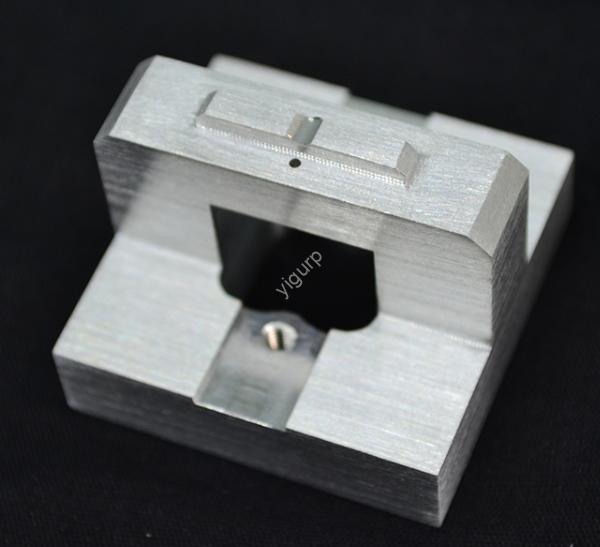
Quand il s'agit de CNC processing steel parts, le eat knives (également appelé volume de coupure) est l’un des paramètres les plus critiques que vous devrez maîtriser. Cela influence directement la rapidité avec laquelle vous pouvez usiner les pièces, la qualité de la pièce finale, et combien de temps durent vos outils. Pour les fabricants de secteurs comme l'automobile, machinerie, and construction—where steel parts are everywhere—getting the eat knives right can mean the difference between meeting deadlines and facing costly delays, or producing durable parts vs. faulty ones. Ce guide détaille tout ce que vous devez savoir sur eat knives for CNC processing steel parts, from basic definitions to real-world application examples.
1. What Is “Eat Knives” in CNC Processing Steel Parts?
D'abord, let’s clarify what eat knives means in the context of CNC processing steel parts. It’s not a complex concept, but understanding it correctly is key to making smart decisions.
Definition of Eat Knives
Eat knives refers to the depth or width of material that a CNC tool cuts into the steel workpiece during machining. It has two main components:
- Axial depth of cut (ap): The distance the tool cuts into the workpiece along the tool’s axis (think of it as “how deep” the tool goes into the steel).
- Radial depth of cut (ae): The distance the tool cuts into the workpiece perpendicular to the tool’s axis (this is “how wide” the tool’s cut is across the steel surface).
Why Eat Knives Matters
Choisir le bon eat knives isn’t just about cutting material—it’s about balancing three critical factors:
- Machining efficiency: A larger eat knives removes more material at once, speeding up the process (great for roughing stages).
- Workpiece quality: Too much eat knives can cause tool vibration, leading to rough surfaces or even dimensional errors in the steel part.
- Tool life: Excessive eat knives puts extra stress on the tool, causing it to break or wear out quickly—costing you money in tool replacements.
Par exemple, if you set the eat knives too high when machining a steel gear, the tool might vibrate, leaving uneven teeth on the gear. This gear would then fail to mesh properly with other components, leading to product defects.
2. Key Factors Influencing Eat Knives for CNC Processing Steel Parts
The ideal eat knives for your steel part isn’t a one-size-fits-all number—it depends on four main factors. Ignoring any of these can lead to poor results.
2.1 Steel Material Hardness
The harder the steel, the smaller the eat knives you should use. Hard steel resists cutting more, so a large eat knives would create excessive cutting force, damaging the tool or the workpiece.
| Steel Type | Dureté (CRH) | Recommended Max Axial Eat Knives (ap) |
| 45# Acier (carbone moyen) | 18 – 22 | 1.0 mm |
| Acier inoxydable 304 | 15 – 18 | 0.8 mm |
| High-Speed Steel (HSS) | 60 – 65 | 0.3 mm |
Exemple: Usinage 45# acier (CRH 20) with a 1.0mm eat knives works well, but if you try the same eat knives on high-speed steel (CRH 62), the tool will likely chip within 10 minutes of machining.
2.2 Tool Material and Shape
Not all CNC tools are built the same—their material and shape determine how much eat knives they can handle.
- Tool Material:
- Outils en carbure: Durable and heat-resistant, so they can handle larger eat knives (up to 1.0mm for 45# acier).
- Outils en céramique: Even harder than carbide, ideal for high-hardness steel (par ex., HSS) with small to medium eat knives (0.3 – 0.6mm).
- High-Speed Steel (HSS) outils: Softer than carbide or ceramic, limited to small eat knives (0.2 – 0.5mm for 45# acier).
- Tool Shape:
- Round nose knives: Their curved tip distributes cutting force evenly, allowing slightly larger eat knives than flat-end knives.
- Flat-end knives: Better for precise, shallow cuts (smaller eat knives) because their sharp edge can easily chip if force is too high.
2.3 CNC Machine Performance
Your machine’s power, rigidité, and accuracy play a big role in eat knives selection. A weak or wobbly machine can’t handle large eat knives—it will vibrate, ruining the part.
- Machine Power: Machines with higher spindle power (par ex., 15kW) can handle larger eat knives than low-power machines (par ex., 5kW). A 15kW machine can cut 45# steel with a 1.0mm eat knives, while a 5kW machine may struggle with 0.6mm.
- Machine Rigidity: Loose spindle bearings or unstable worktables cause vibration. A rigid machine (with heavy-duty frames) can maintain accuracy even with larger eat knives.
- Machine Accuracy: Modern machines with high-precision linear guides can handle smaller, more precise eat knives (par ex., 0.1mm for finishing), which old or poorly maintained machines can’t.
2.4 Processing Stage (Roughing vs. Finition)
The stage of machining—whether you’re roughing (removing excess material) or finishing (refining the part)—dictates the eat knives taille. This is one of the most important factors to consider.
3. Eat Knives Selection Principles for Different Processing Stages
The goal of each processing stage is different, so your eat knives should align with that goal. Below are the principles for roughing, semi-finishing, et finition.
3.1 Roughing Stage: Prioritize Efficiency
Roughing’s job is to quickly remove most of the excess material from the steel workpiece. Here, you want a large eat knives to save time—but not so large that you damage the tool or leave no room for finishing.
- Key Principle: Use the largest eat knives your tool and machine can handle, while leaving a machining allowance (extra material) for semi-finishing and finishing.
- Typical Allowance: 0.3 – 0.5mm on all sides of the workpiece.
Real-World Roughing Case:
When roughing 45# acier (a common medium-carbon steel) for a machine bracket:
- Tool: Φ20mm carbide disc cutter
- Axial eat knives (ap): 0.5 – 1.0mm
- Vitesse de broche (S): 1200 – 1500 RPM
- Vitesse d'alimentation (F): 1000 – 1500 mm/min
- Résultat: The bracket’s excess material (5mm total) is removed in just 2 passes, and a 0.3mm allowance is left for semi-finishing.
3.2 Semi-Finishing Stage: Balance Efficiency and Quality
Semi-finishing smooths out the rough surface left by roughing and prepares the workpiece for final finishing. Le eat knives here is smaller than roughing but larger than finishing.
- Key Principle: Réduire eat knives to improve surface quality, while still removing most of the remaining allowance.
Real-World Semi-Finishing Case:
Semi-finishing the same 45# steel machine bracket:
- Tool: Φ20mm carbide disc sleeve cutter
- Axial eat knives (ap): 0.3 – 0.5mm
- Vitesse de broche (S): 1500 – 1800 RPM (faster than roughing for smoother cuts)
- Vitesse d'alimentation (F): 800 – 1200 mm/min (slower than roughing to reduce vibration)
- Résultat: The bracket’s surface becomes smoother, and only 0.1mm allowance is left for finishing.
3.3 Finishing Stage: Prioritize Quality
Finishing’s goal is to achieve the part’s final dimensions and surface quality. Here, eat knives is the smallest—focused on precision, not speed.
- Key Principle: Use a small eat knives to minimize tool vibration and ensure dimensional accuracy.
Real-World Finishing Case:
Finishing the 45# steel machine bracket (final requirement: surface lisse, ±0.01mm dimensional accuracy):
- Tool: Φ20mm carbide disc sleeve cutter (sharpened for precision)
- Axial eat knives (ap): 0.1 – 0.2mm
- Vitesse de broche (S): 2000 – 2500 RPM (fastest speed for clean cuts)
- Vitesse d'alimentation (F): 500 – 800 mm/min (slowest feed to avoid surface marks)
- Résultat: The bracket meets all dimensional and surface quality standards, with no visible tool marks.
4. Practical Tips to Avoid Common Eat Knives Mistakes
Even with the right principles, mistakes can happen. Here are three tips to keep your eat knives on track:
- Test with Small Batches First: Before machining a large order, test your eat knives on 1–2 sample parts. Par exemple, if you’re unsure about using a 0.8mm eat knives pour l'acier inoxydable, try 0.6mm first—if the tool lasts and the part quality is good, you can increase it slightly.
- Monitor Tool Wear: A worn tool can’t handle the same eat knives as a new one. Check your tool every 30 minutes during machining—if you see chips or dull edges, reduce the eat knives or replace the tool.
- Adjust for Machine Vibration: If your machine starts vibrating during machining, it’s a sign the eat knives is too large. Reduce the eat knives by 0.2mm and test again—vibration should stop, and surface quality will improve.
Yigu Technology’s View on Eat Knives for CNC Processing Steel Parts
Chez Yigu Technologie, we know eat knives for CNC processing steel parts is the backbone of efficient, fabrication de haute qualité. Sur 10 années, we’ve helped 300+ clients—from auto parts makers to machinery manufacturers—optimize their eat knives paramètres. We start by analyzing the steel’s hardness and tool material, then tailor eat knives to each processing stage (par ex., 1.0mm for 45# steel roughing, 0.1mm for finishing). Our team also provides on-site testing to ensure parameters work with clients’ machines, cutting tool replacement costs by 25% and improving production efficiency by 30%. For us, getting eat knives right isn’t just about numbers—it’s about solving clients’ real-world challenges.
FAQ
Q1: Can I use the same eat knives for different types of steel?
UN: Non. Harder steel (par ex., acier rapide) needs smaller eat knives than softer steel (par ex., 45# acier). Using the same eat knives for both will either damage the tool (on hard steel) or waste time (on soft steel, where you could use a larger eat knives).
Q2: What happens if I set the eat knives too small?
UN: A too-small eat knives won’t damage tools or parts, but it will slow down machining. Par exemple, roughing 45# steel with a 0.2mm eat knives instead of 1.0mm would take 5x longer to remove the same amount of material—missing production deadlines.
Q3: Do I need to adjust eat knives if I switch from a carbide tool to an HSS tool?
UN: Oui. HSS tools are softer than carbide, so you’ll need to reduce the eat knives by 40–50%. Par exemple, if you used 1.0mm eat knives with a carbide tool on 45# acier, switch to 0.4–0.5mm with an HSS tool to avoid tool wear.