
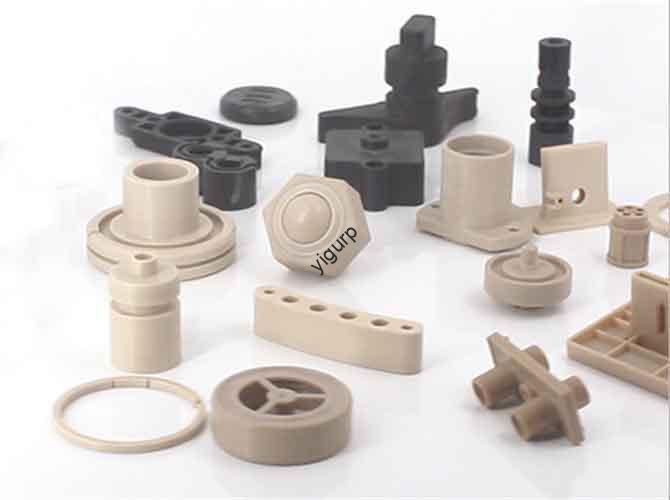
SLS (Frittage sélectif au laser) et GDT (Fusion laser sélective) are two leading powder-based 3D printing technologies, mais ils diffèrent radicalement dans la manière dont ils traitent les matériaux et fournissent les performances des pièces.. Comprendre ces différences est essentiel pour choisir la bonne méthode, que vous fassiez des prototypes., composants industriels, ou implants médicaux. Cet article décompose core differences between SLS and SLM technology across 7 key areas, plus guidance on when to use each.
1. Core Difference 1: Forming Principle (Sintering vs. Fusion)
The fundamental divide between SLS and SLM lies in how they interact with powder materials—a contrast that defines every other aspect of their performance.
| Technologie | Forming Principle | Comment ça marche | Simple Analogy |
| SLS | Selective Sintering | Uses an infrared laser to heat powder particles to a temperature just below their melting point. This creates bonds between particles but leaves the powder not fully melted. Layers are stacked and sintered sequentially to form the final part. | Baking cookies: Dough particles stick together when heated (but don’t turn into a liquid) to form a solid cookie. |
| GDT | Selective Melting | Uses a high-power laser to fully melt metal powder particles into a liquid state. The liquid metal then cools and solidifies completely. Layers are melted and stacked to build the part with a dense, fully fused structure. | Melting metal in a foundry: Metal is heated until it’s liquid, poured into a mold, and cools to form a solid, dense component. |
2. Side-by-Side Comparison: SLS contre. SLM Across 6 Key Areas
To quickly assess which technology fits your needs, use this comprehensive table comparing their laser types, matériels, part performance, et plus.
| Comparison Category | SLS (Frittage sélectif au laser) | GDT (Fusion laser sélective) | Key Takeaway |
| Laser Type | – CO₂ lasers (wavelength: 9.2–10.8 microns)- Lower power density (focused on bonding, not melting). | – Short-wavelength lasers: Nd-YAG (1.064 microns) or fiber lasers (1.09 microns)- Higher power density (needed to fully melt metal). | SLM uses lasers optimized for metal absorption; SLS uses lasers for broader powder compatibility. |
| Materials Used | – Large gamme: Polymères (nylon, polystyrène), métaux (iron, alliages de titane), céramique, coated sand.- Metal printing requires binder powders (low-melting-point metals or organic resins) mixed with main metal powder. | – Limité à pure metal powders: Alliages d'aluminium, alliages de titane, acier inoxydable, cobalt-chromium alloys.- No binders needed—pure metal is melted directly. | SLS offers more material versatility; SLM is specialized for high-performance pure metals. |
| Performances des pièces | – Porosity: Contains small gaps (porous structure).- Mechanical properties: Lower strength, poor corrosion/wear resistance.- Précision: Modéré (rugosité de la surface: Ra 10–20 μm).- Requires post-processing (par ex., hot isostatic pressing) to improve density. | – Porosity: No gaps (fully dense structure, >99% densité).- Mechanical properties: Haute résistance, excellent corrosion/wear resistance (matches forged metals).- Précision: Haut (rugosité de la surface: Ra 5–10 μm).- Minimal post-processing needed for functional use. | SLM produces industrial-grade, pièces performantes; SLS parts need upgrades for demanding applications. |
| Structures de soutien | – No additional supports needed. Unsintered powder acts as a “natural support” for cavities and cantilevers. | – Requires support structures for complex designs (par ex., surplombs >45°). Supports prevent deformation/collapse during melting. | SLS simplifies design (no support constraints); SLM needs extra design steps for supports. |
| Qualité des surfaces | – Grainy texture with visible layer lines.- Requires post-processing (polissage, sablage, revêtement) pour améliorer l'apparence. | – Smoother than SLS, but still has minor layer lines.- May need light polishing for high-aesthetic requirements (par ex., implants médicaux). | SLM has better out-of-the-box surface quality; both may need finishing for cosmetic use. |
| Application Fields | – Prototypage (rapide, low-cost models), mold manufacturing, biens de consommation (par ex., custom cases), dispositifs médicaux (par ex., exoskeletons).- Metal use: Pièces non critiques (par ex., composants intérieurs aérospatiaux, supports automobiles). | – Des pièces performantes: Aérospatial (composants du moteur, pales de turbine), médical (implants orthopédiques, couronnes dentaires), automobile (pièces structurelles légères), mold manufacturing (complex runners). | SLS excels at prototypes and low-stress parts; SLM dominates high-performance, safety-critical applications. |
3. When to Choose SLS vs. GDT? (Step-by-Step Decision Guide)
Use this linear, question-driven process to match the technology to your project’s goals:
Étape 1: Ask About Material Needs
- Need polymers, céramique, or mixed materials? Choisir SLS—it’s the only option for non-metal powder printing. Par exemple, SLS is ideal for nylon prototypes or ceramic molds.
- Need pure, high-strength metals? Choisir GDT—it processes aluminum, titane, and stainless steel into dense, pièces durables. Par exemple, SLM is used for titanium medical implants.
Étape 2: Ask About Part Performance Requirements
- Low-stress applications (par ex., display prototypes, non-critical brackets)? Choisir SLS—its porous parts are cost-effective and sufficient for light use.
- High-stress or safety-critical applications (par ex., pièces de moteurs aérospatiaux, implants médicaux)? Choisir GDT—its fully dense structure ensures strength and reliability.
Étape 3: Ask About Cost & Design Complexity
- Tight budget or complex designs with overhangs? Choisir SLS—no supports reduce design time, and material costs are lower (par ex., nylon powder is cheaper than titanium powder).
- Willing to invest in quality for functional parts? Choisir GDT—while more expensive, it eliminates the need for costly post-processing (par ex., hot isostatic pressing for SLS metals).
4. Yigu Technology’s Perspective on SLS vs. GDT
Chez Yigu Technologie, we see SLS and SLM as complementary tools for different stages of product development. Many clients overspecify SLM for prototypes—for example, using SLM to make a metal display model when SLS (with metal-polymer powder) would be 40–50% cheaper. We recommend SLS for initial prototyping (rapide, flexible, rentable) and SLM for final production of high-performance parts. For clients transitioning from prototypes to production, we also help optimize designs: For SLS, we simplify overhangs to avoid post-processing; for SLM, we minimize supports to reduce material waste. The key is to align the technology with your performance needs and budget—not to choose a “better” option.
FAQ: Common Questions About SLS and SLM Technology
- Q: Can SLS produce metal parts that match SLM’s performance with post-processing?
UN: Non. Even with hot isostatic pressing, SLS metal parts only reach ~95% density (contre. >99% for SLM), leading to lower strength and corrosion resistance. SLM is still required for safety-critical metal parts.
- Q: Is SLM more expensive than SLS?
UN: Oui. SLM machines cost 2–3x more than SLS machines, and pure metal powders (par ex., titane) are 5–10x pricier than SLS materials (par ex., nylon). Cependant, SLM eliminates post-processing costs for metal parts, balancing expenses for high-volume projects.
- Q: Can SLS or SLM print large parts?
UN: Both have size limits, but SLS typically handles larger parts (up to 1m³) because unsintered powder supports bigger structures. SLM is limited to smaller parts (généralement <50cm³) due to the need for precise heat control during melting—larger SLM parts risk warping.