
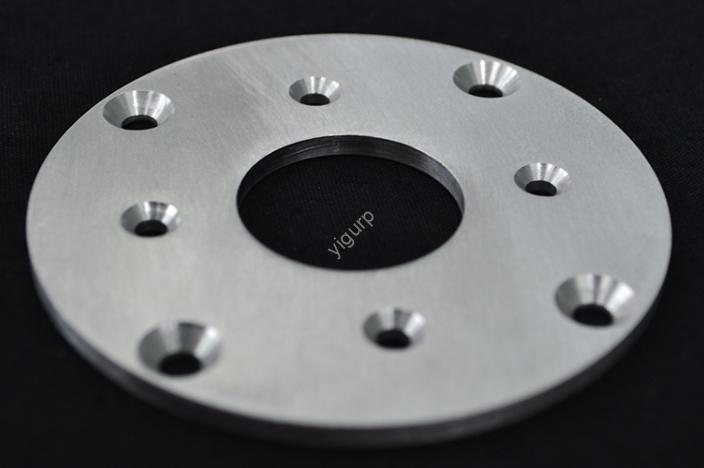
CNC sheet processing process is the backbone of creating high-quality, pièces de tôle cohérentes pour des industries comme l'automobile, électronique, et construction. Contrairement au travail manuel traditionnel de la tôlerie, ce processus contrôlé par ordinateur élimine les erreurs humaines, augmente l'efficacité, et garantit que les pièces répondent à des normes de conception strictes. Que vous fabriquiez un petit boîtier électronique ou un grand panneau automobile, understanding each step of the CNC sheet processing process is key to avoiding delays, réduire les déchets, and delivering top-notch products. Ce guide décompose l'ensemble du flux de travail, with real-world examples and data to help you master every detail.
1. Pré-traitement: Lay the Groundwork with Design & Sélection des matériaux
Before the CNC machine starts cutting, two critical steps set the stage for success: CAD/CAM programming et material choice. Skipping or rushing these steps often leads to costly rework later.
1.1 Conception CAO & Programmation FAO: The Digital Blueprint
The first step in the CNC sheet processing process is turning your part idea into a digital plan:
- GOUJAT (Conception Assistée par Ordinateur): Use software like SolidWorks, AutoCAD, or Fusion 360 to create a 3D model of the sheet metal part. You’ll define every detail—from hole positions and bend angles to edge radii. Par exemple, a prototype for a laptop chassis needs precise cutouts for ports, so the CAD model must mark these with ±0.05mm accuracy.
- CAME (Fabrication assistée par ordinateur): Convert the CAD model into machine-readable code (Code G). The CAM software optimizes key parameters like machining path, vitesse de coupe, et sélection d'outils to avoid collisions (par ex., the tool hitting the machine’s fixture) and ensure efficiency.
Why This Matters: A well-written CAM program can reduce machining time by 20–30%. Par exemple, a furniture manufacturer cut the time to make aluminum table frames from 45 minutes pour 30 minutes by optimizing the tool path in CAM.
1.2 Sélection des matériaux: Match the Sheet to Your Needs
Choosing the right sheet material directly impacts the part’s performance, coût, et facilité de traitement. Below’s a breakdown of common options and their best uses:
| Type de matériau | Plage d'épaisseur | Propriétés clés | Applications idéales | Coût (USD/sq.ft) |
| Alliage d'aluminium 6061 | 0.5mm – 6 mm | Léger, résistant à la corrosion | Boîtiers électroniques, panneaux automobiles | \(2.0 – \)5.5 |
| Acier inoxydable 304 | 0.3mm – 10 mm | Durable, antirouille | Matériel médical, food industry parts | \(3.5 – \)8.0 |
| Cold-Rolled Steel | 0.2mm – 8 mm | Haute résistance, faible coût | Supports structurels, pièces d'appareils | \(1.5 – \)4.0 |
| Plastic Sheets (ABS) | 1.0mm – 12mm | Léger, facile à couper | Consumer product casings | \(1.0 – \)3.0 |
Real-World Example: A medical device company needed a sheet metal part for a surgical cart. They chose acier inoxydable 304 for its rust resistance (critical for sterilization) and 1.5mm thickness for strength. The part passed all durability tests and met medical industry standards.
2. Configuration de la machine: Prepare Tools & Equipment for Processing
Once the design and material are finalized, the next step in the CNC sheet processing process is setting up the machine and tools. This ensures the CNC system runs smoothly and accurately.
2.1 Choose the Right CNC Machine
Not all CNC machines work for every sheet processing task. The most common types include:
- CNC Laser Cutters: Best for precise, complex cuts (par ex., intricate patterns in thin aluminum sheets). They cut cleanly without leaving burrs and work well with materials up to 20mm thick.
- CNC Punch Presses: Ideal for high-volume production of parts with repeated holes (par ex., electrical junction boxes). They’re faster than laser cutters for simple shapes—able to punch 50+ holes per minute.
- CNC Press Brakes: Used to bend sheets into angles or curves (par ex., a 90° bend for a metal shelf). They ensure consistent bend angles with ±0.1° accuracy.
2.2 Sélection d'outils & Configuration des paramètres
The right tool and settings prevent damage to the sheet and machine:
- Outils: Pour la découpe laser, use a fiber laser for metals (aluminium, acier) and a CO₂ laser for plastics. For punch presses, select punches and dies that match the hole size (par ex., a 5mm punch for 5mm holes).
- Parameters: Set vitesse de coupe (100–500 mm/min for aluminum), vitesse d'avance (50–200 mm/min for steel), et puissance laser (1–5 kW) basé sur l'épaisseur du matériau. Par exemple, cutting a 2mm aluminum sheet with a 3kW fiber laser at 300 mm/min produces a smooth edge.
Common Mistake to Avoid: Using a dull punch for stainless steel sheets. This causes rough hole edges and may require post-processing to fix—adding 10–15 minutes per part.
3. Core Processing: Roughing, Finition & Strategy Planning
The heart of the CNC sheet processing process is the actual machining. This phase includes roughing (removing excess material), finition (refining the part), and strategic planning to prevent issues like sheet deformation.
3.1 Roughing: Speed Up Material Removal
Roughing’s goal is to quickly remove extra material from the sheet while leaving enough allowance for finishing. Par exemple:
- When making a 100x100mm aluminum bracket from a 150x150mm sheet, roughing cuts off the 50mm excess on all sides.
- Key settings: Use a larger depth of cut (1–3mm for aluminum) and higher feed rate to save time. A CNC laser cutter can rough a 3mm aluminum sheet in 2–3 minutes.
3.2 Finition: Ensure Precision & Qualité
Finishing refines the part to meet final design specs. This step focuses on:
- Précision dimensionnelle: Trim the sheet to exact sizes (par ex., from 102x102mm after roughing to 100x100mm final size).
- Qualité des surfaces: Remove any tool marks or burrs. Par exemple, a CNC press brake can smooth bend edges to avoid sharp corners on consumer products.
Data Point: Finishing typically takes 20–30% of total processing time but improves part quality by 40–50%, reducing the risk of customer returns.
3.3 Processing Strategy: Prevent Deformation & Vibration
Thin sheets (≤1mm) are prone to deformation during machining. To avoid this:
- Clamp Securely: Use multiple clamps to hold the sheet flat—loose clamps cause vibration, leading to uneven cuts.
- Optimize Cutting Path: Start cutting from the center of the sheet and move outward. This distributes stress evenly, empêcher la déformation.
- Use Coolant: For metal sheets, apply coolant to reduce heat (which can bend the sheet). Water-soluble coolant works best for aluminum and steel.
Étude de cas: An electronics manufacturer was struggling with warped aluminum enclosures (0.8mm d'épaisseur). By switching to a center-out cutting path and adding coolant, they reduced deformation by 70%—all enclosures now meet flatness standards.
4. Post-traitement & Contrôle de qualité: Finalize the Part
Le CNC sheet processing process doesn’t end when the machine stops. Post-processing and quality control ensure the part is ready for use.
4.1 Étapes de post-traitement
Après usinage, finish the part with these steps:
- Cleaning: Wipe off coolant, huile, or metal chips with a solvent (par ex., alcool isopropylique) pour éviter les contaminations.
- Ébavurage: Use a deburring tool or sandpaper to remove sharp edges—critical for parts that people will handle (par ex., toolboxes).
- Traitement de surface: Add coatings to improve performance or appearance:
- Anodisation: Pour pièces en aluminium (adds scratch resistance).
- Revêtement en poudre: For steel parts (adds color and rust protection).
- Anti-Rust Treatment: Pour les pièces extérieures (par ex., galvanizing steel brackets).
4.2 Contrôle de qualité: Check for Accuracy
Regular checks ensure the part meets design requirements:
- Dimensional Checks: Use calipers or a coordinate measuring machine (MMT) to verify size (par ex., diamètre du trou, bend angle). Par exemple, a CMM can measure a part’s dimensions with ±0.001mm accuracy.
- Platitude & Verticality Tests: Use a straightedge to check if the sheet is flat—any gap >0.1mm means the part is defective.
- Inspection visuelle: Look for scratches, dents, or uneven edges—these are common issues that can be fixed with minor rework.
Quality Control Tip: Test 10% of parts from each batch. If one fails, test 50%—this balances efficiency and thoroughness.
Yigu Technology’s View on CNC Sheet Processing Process
Chez Yigu Technologie, we see the CNC sheet processing process as a blend of precision and strategy. Sur 12 années, we’ve refined our workflow to deliver consistent results: we use CAD/CAM software to optimize tool paths (cutting time by 25%), select materials based on client needs (par ex., stainless steel for medical parts), and apply strict quality control (99.5% of parts pass first inspection). We also prioritize environmental safety—recycling 80% of cutting waste and using eco-friendly coolants. For us, a smooth CNC sheet processing process isn’t just about making parts—it’s about helping clients build reliable, long-lasting products.
FAQ
Q1: How long does the CNC sheet processing process take for a single part?
UN: It depends on size and complexity. A small aluminum enclosure (100x100mm) takes 15–20 minutes (de la conception au post-traitement). A large steel panel (1000x500mm) with complex cuts takes 1–2 hours.
Q2: Can the CNC sheet processing process handle custom designs?
UN: Oui! The process is highly flexible—just provide a CAD model of your custom part. Whether it’s a one-of-a-kind prototype or small-batch production (50–100 pièces), CNC machines can bring your design to life with high accuracy.
Q3: What’s the most common mistake in the CNC sheet processing process?
UN: Poor material selection. Choosing a sheet that’s too thin (for heavy-use parts) or too thick (pour les pièces délicates) leads to performance issues. Always match the material to the part’s function—our team can help with this if you’re unsure!