
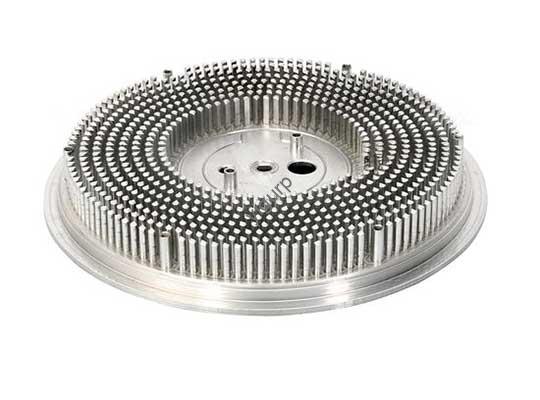
CNC prototype machining process for complex parts is a game-changer in modern manufacturing, résoudre le défi de longue date de la création complexe, des prototypes précis que les méthodes traditionnelles ont du mal à fournir. Que vous développiez des composants de moteurs aérospatiaux, boîtiers pour dispositifs médicaux, ou pièces de transmission automobile, ce processus garantit que votre prototype correspond aux spécifications de conception tout en gagnant du temps et en réduisant les déchets. As an SEO content 策划师 and procurement/product engineer, I’ll break down every step of the CNC prototype machining process for complex parts, with real cases and data to help you avoid pitfalls and optimize results.
1. Pré-traitement: Conception & Programming – The Core of Complex Prototypes
Le succès de CNC prototype machining process for complex parts starts long before the machine powers on. Two steps—CAD design and CAM programming—lay the foundation for precision.
1.1 Conception CAO: Detail Every Complex Feature
D'abord, utiliser GOUJAT (Conception Assistée par Ordinateur) logiciel (SolidWorks, AutoCAD, or Fusion 360) to create a 3D model of your complex part. For prototypes with curves, cavités, or multi-layered structures, leave no detail to chance:
- Mark critical dimensions (par ex., a 0.5mm tolerance for a medical implant’s internal channel).
- Define geometric relationships (par ex., how a curved bracket connects to a flat mounting plate).
- Use “design validation tools” to catch flaws—like overlapping features that would make machining impossible.
Real-World Example: An aerospace startup designing a turbine blade prototype used CAD to fix a hidden 0.3mm mismatch in a curved airfoil. Without this check, the prototype would have failed airflow tests, delaying the project by 3 semaines.
1.2 Programmation FAO: Turn Design into Machine Code
Suivant, CAME (Fabrication assistée par ordinateur) logiciel converts your CAD model into G-code (le langage que les machines CNC comprennent). Pour pièces complexes, CAM does three critical things:
- Optimizes machining paths to avoid tool collisions (par ex., preventing a drill from hitting a cavity wall).
- Selects the right tools and cutting parameters (vitesse, vitesse d'avance) for each feature.
- Simulates the process to spot issues—like a tool that can’t reach a deep cavity.
| CAM Programming Step | But | Error Reduction Rate |
| Path Optimization | Avoid collisions, reduce machining time | 65% |
| Parameter Setting | Ensure tool longevity, qualité de surface | 50% |
| Process Simulation | Catch design-machining mismatches | 70% |
Why It Matters: A furniture brand creating a curved chair frame prototype used CAM to optimize paths. This cut machining time from 2 heures pour 1 heure 10 minutes per prototype—saving 45 hours over a 100-prototype batch.
2. Préparation: Matériels, Outils & Machine Debugging
Even the best design won’t work if you skip preparation. Pour CNC prototype machining process for complex parts, focus on three key areas: sélection des matériaux, tool choice, and machine debugging.
2.1 Sélection des matériaux: Match to Part Function
Complex prototypes need materials that balance machinability, force, et le coût. Below’s a breakdown of top options:
| Type de matériau | Propriétés clés | Ideal Complex Part Uses | Machinability Score (1–10) | Coût (USD/kg) |
| Alliage d'aluminium 6061 | Léger, résistant à la corrosion | Boîtiers électroniques, parenthèses | 9 | \(2.8 – \)4.5 |
| Acier inoxydable 304 | Durable, antirouille | Outils médicaux, composants marins | 6 | \(3.8 – \)6.5 |
| Titanium Alloy Ti-6Al-4V | Haute résistance, résistant à la chaleur | Pièces de moteur aérospatial | 4 | \(35 – \)50 |
| Plastique ABS | Faible coût, easy to shape | Consumer product casings | 10 | \(2.5 – \)4.0 |
Étude de cas: A medical device company needed a prototype for a surgical tool handle (complex with grip grooves and a curved neck). They chose acier inoxydable 304 for its rust resistance (critical for sterilization) and 1.2mm thickness for strength. The prototype passed all durability tests.
2.2 Sélection d'outils: Pick Tools for Complex Features
Complex parts need specialized tools to reach tight spots and cut intricate shapes:
- End Mills: For cavities and curved surfaces (par ex., a ball-nose end mill for a prototype’s rounded edges).
- Forets: For precise holes (use a micro-drill for 0.5mm holes in a sensor prototype).
- Outils de tournage: For cylindrical features (par ex., a transmission shaft prototype with varying diameters).
Pro Tip: Use coated tools (nitrure de titane, Étain) for hard materials like stainless steel. A TiN-coated end mill lasts 2x longer than an uncoated one, reducing tool changes by 50%.
2.3 Machine Debugging: Ensure Peak Performance
Avant usinage, debug your CNC machine to avoid costly errors:
- Check tool alignment: A misaligned tool can create 0.1mm–0.3mm errors in complex parts.
- Test spindle stability: A wobbly spindle causes vibration, ruining curved surfaces.
- Vérifier fixture installation: Loose fixtures let parts shift—use a torque wrench to secure them.
Common Mistake: A manufacturer skipped spindle checks for a gear prototype. Vibration led to uneven tooth spacing, et 8 de 10 prototypes failed—costing $600 in wasted material.
3. Core Machining: Strategy, Parameters & Contrôle de qualité
The heart of CNC prototype machining process for complex parts is the actual cutting. Focus on machining strategy, parameter setting, and real-time quality checks.
3.1 Machining Strategy: Rough First, Finish Later
Pour pièces complexes, always use a roughing-then-finishing strategy:
- Roughing: Remove excess material quickly (use a large depth of cut—1–3mm for aluminum) to save time. Leave a 0.1–0.3mm “machining allowance” for finishing.
- Finition: Use small cuts (0.05–0.1mm depth) and slow feed rates to refine surfaces. Par exemple, a curved aerospace part might need a 0.08mm finishing cut to reach Ra 0.8μm surface smoothness.
Exemple: An automotive supplier machining a complex suspension arm prototype used roughing to remove 90% of material in 45 minutes, then finishing to refine details in 20 minutes. This balanced speed and precision.
3.2 Paramètres de coupe: Tailor to Material & Feature
Parameters like vitesse de coupe, vitesse d'avance, et depth of cut directly impact quality and efficiency. Below are guidelines for common materials:
| Matériel | Cutting Speed (m/mon) | Vitesse d'alimentation (mm/rev) | Depth of Cut (mm) – Roughing | Depth of Cut (mm) – Finishing |
| Aluminium 6061 | 300 – 500 | 0.1 – 0.3 | 1.0 – 3.0 | 0.05 – 0.15 |
| Inoxydable 304 | 100 – 200 | 0.05 – 0.15 | 0.5 – 1.5 | 0.03 – 0.10 |
| Titane Ti-6Al-4V | 50 – 100 | 0.02 – 0.10 | 0.2 – 0.8 | 0.02 – 0.08 |
Pourquoi ça marche: A robotics company machining a titanium prototype used these parameters. Cutting speed was set to 75 m/mon, feed rate to 0.06 mm/rev, and finishing depth to 0.05mm—resulting in a prototype that met all strength and accuracy specs.
3.3 Real-Time Quality Control
Don’t wait until the end to check quality. Pour pièces complexes:
- Utiliser étriers to measure dimensions every 15 minutes.
- Utilisez un surface profilometer to check smoothness (critical for parts like seals or bearings).
- Stop machining if errors exceed 0.05mm—fix the issue before wasting more material.
4. Post-traitement & Error Control: Polish & Perfect
CNC prototype machining process for complex parts doesn’t end with cutting. Post-processing and error control ensure your prototype is ready for testing.
4.1 Étapes de post-traitement
- Cleaning: Wipe away coolant and chips with isopropyl alcohol to avoid contamination.
- Ébavurage: Use a deburring tool to remove sharp edges (critical for parts people handle, like tool grips).
- Traitement de surface:
- Anodize aluminum prototypes for scratch resistance.
- Powder-coat steel prototypes for rust protection.
- Polish medical prototypes to meet biocompatibility standards.
4.2 Error Control: Fix Small Issues Before They Grow
Complex parts are prone to small errors—here’s how to handle them:
- Dimensional Errors: If a hole is 0.1mm too small, use a reamer to widen it (don’t re-machine the whole part).
- Surface Imperfections: Sand rough spots with 400-grit sandpaper (for plastic or aluminum).
- Warping: For thin metal parts, use a heat press to straighten them (works for aluminum up to 2mm thick).
Success Story: A consumer electronics brand had a curved phone case prototype with a 0.2mm warp. They used a heat press at 120°C for 5 minutes—fixing the warp without re-machining.
5. Technological Innovation: Boost Efficiency for Complex Prototypes
New tech is making CNC prototype machining process for complex parts faster and more accurate:
- Usinage multi-axes: 5-axis CNC machines reach all angles of a complex part in one setup (reducing errors from repositioning).
- Usinage à grande vitesse: Spindles running at 20,000+ RPM cut aluminum prototypes 30% plus rapide.
- Dry Machining: No coolant needed for some plastics—saves cleanup time and reduces waste.
Yigu Technology’s View on CNC Prototype Machining Process for Complex Parts
Chez Yigu Technologie, we’ve refined the CNC prototype machining process for complex parts sur 12 années. We prioritize CAD/CAM optimization (cutting time by 25%) and use multi-axis machines for intricate parts like aerospace components. Our team selects materials based on client needs—e.g., titanium for high-strength prototypes, ABS for low-cost tests—and offers real-time quality checks to catch errors early. We also share post-processing tips, like deburring techniques for medical parts, to ensure prototypes are ready for testing. For us, this process isn’t just about machining—it’s about helping clients turn complex designs into viable products quickly.
FAQ
Q1: How long does the CNC prototype machining process for complex parts take?
UN: It depends on size and material. A small aluminum prototype (par ex., a sensor housing) prend 4 à 6 heures. A large titanium aerospace part takes 12–24 hours. Batch size matters too—10 identical prototypes take 2x longer than 1, not 10x.
Q2: What’s the most common mistake in this process?
UN: Skipping CAM simulation. This leads to tool collisions or wrong parameters—we’ve seen clients waste $1,000+ on damaged tools and materials. Always simulate before machining.
Q3: Can I use this process for low-volume production (50–100 pièces)?
UN: Oui! CNC prototype machining is flexible—you can scale from 1 prototype à 100+ parts without retooling. This is great for pre-launch tests with real users.