
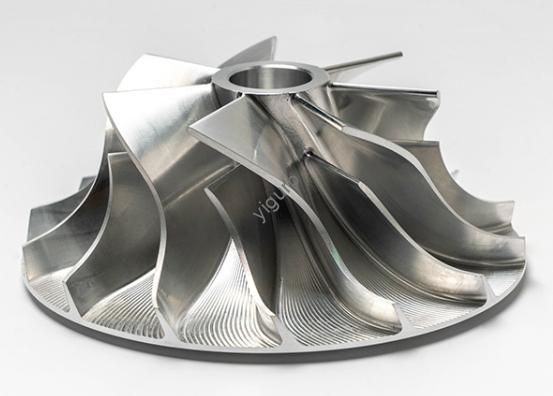
CNC prototypes are critical for testing designs before full production—butCNC prototype costs can quickly add up if you’re not careful. Des tolérances serrées aux finitions inutiles, de petits choix de conception ou de matériaux peuvent doubler votre budget. Ce guide détaille ce qui détermine les coûts des prototypes CNC, partage des conseils pratiques pour réduire les dépenses sans sacrifier la qualité, and uses real-world examples to show how these strategies work. Whether you’re a startup testing a new product or an engineer refining a part, you’ll learn to get the most value from your CNC prototype budget.
What Drives CNC Prototype Costs? (Key Factors to Know)
Before you can reduce costs, you need to understand what’s causing them. CNC prototype costs aren’t random—they’re determined by 5 facteurs fondamentaux. Knowing these helps you target savings where they matter most.
1. Material Choice (The Biggest Variable)
The metal or plastic you pick has a huge impact on cost. Common CNC materials range from affordable aluminum to expensive titanium, and prices can vary by 10x or more.
| Type de matériau | Example Alloy | Cost per kg (USD) | Idéal pour |
|---|---|---|---|
| Aluminium | 6061 | $2–$5 | General prototypes, pièces légères |
| Acier | 1018 | $0.80–$3 | Fort, low-cost metal prototypes |
| Acier inoxydable | 304 | $4–$8 | Corrosion-resistant parts (par ex., outils médicaux) |
| Titane | Ti6Al4V | $30–50$ | Haute résistance, high-temperature parts (par ex., aérospatial) |
| Plastique | Acétal | $5–10$ | Low-friction, durable plastic prototypes |
Exemple: A 100g prototype made with aluminum 6061 costs ~$0.50 in material. The same part in titanium costs ~$4—8x more. Only use expensive materials if your prototypebesoins their unique properties (par ex., titanium’s strength for a jet engine part).
2. Tolerance Requirements (Tighter = More Expensive)
Tolerance is how close the finished part is to your CAD design. CNC machines can hit ultra-tight tolerances (±0,005mm), but this precision comes with a price. Most prototypes don’t need perfection—default tolerances are often enough.
| Niveau de tolérance | Gamme typique | Cost Impact | Idéal pour |
|---|---|---|---|
| Default | ±0.025–0.1 mm | Base cost | Functional testing, fit checks |
| Serré | ±0.005–0.02 mm | +20–50% cost | Parts that need to mate with production components |
| Ultra-Tight | ±0.001–0.005 mm | +100–200% cost | Implants médicaux, high-precision aerospace parts |
Why the Cost Jump?: Tighter tolerances require slower machining, specialized tools, and extra quality checks. Par exemple, a prototype with ±0.005 mm tolerance takes 2x longer to make than one with ±0.1 mm tolerance—doubling labor costs.
3. Design Complexity (Simple = Cheaper)
Conceptions complexes (par ex., intérieurs creux, draft angles, tiny features) force CNC machines to work harder, adding time and cost. Simple designs with flat surfaces, standard holes, and minimal features are faster to machine.
Common Complex Features That Raise Costs:
- Draft angles: A 3-degree draft needs “overlay milling” (petit, slow tool movements), which doubles machining time.
- Cavités internes: Holes or hollows that the tool can’t reach easily require extra setups.
- Tiny features: Parts smaller than 2mm (par ex., micro-trous) need special tools and slower speeds.
Exemple: A prototype bracket with a simple flat design costs $30. Adding a 3-degree draft angle and a tiny 1mm hole raises the cost to $65—117% more.
4. Quantity (Batch Savings Start Small)
CNC prototypes have upfront setup costs (sélection d'outils, programmation, machine calibration)—usually $50–$200. Making 2–3 extra prototypes spreads these costs, lowering the per-part price.
| Quantity | Setup Cost (USD) | Per-Part Machining Cost (USD) | Total Cost (USD) | Coût par pièce (USD) |
|---|---|---|---|---|
| 1 | $100 | $50 | $150 | $150 |
| 2 | $100 | $50×2 = $100 | $200 | $100 |
| 3 | $100 | $50×3 = $150 | $250 | $83.33 |
Key Takeaway: Making 2 extra prototypes saves 44% par pièce. These spares are useful for testing different designs or replacing broken parts—no need to pay setup costs again.
5. Post-traitement & Finishes (Omit the Unnecessary)
Finishes like laser engraving, anodisation, or polishing add cost—especially for small batches. Most prototypes only need functional finishes (par ex., supprimer les arêtes vives), not cosmetic ones.
| Finish Type | Cost per Prototype (USD) | When to Use It |
|---|---|---|
| No Finish (As-Machined) | $0 | Functional testing, internal parts |
| Ponçage (Smooth Edges) | $5–10$ | Parts that need to be handled safely |
| Anodisation (Aluminium) | $15–$30 | Cosmetic prototypes, résistance à la corrosion |
| Gravure Laser | $20–40$ | Branding or part numbering (rarely needed for testing) |
Exemple: A prototype without any finish costs $40. Adding anodizing and laser engraving raises the cost to $85—112% more. If you’re only testing fit, skip these steps.
4 Proven Tips to Reduce CNC Prototype Costs
Now that you know what drives costs, here are actionable strategies to save money—backed by real examples and data.
Tip 1: Prioritize “Needs” Over “Wishes” (Cut Scope Creep)
Scope creep is the #1 cost killer—adding “nice-to-have” features to your prototype. Ask yourself (or your team): “Does this feature help me test the part’s core function?» If not, omit it.
Questions to Filter Features:
- Do I need tight tolerance, or will the default work? Default tolerances (±0,025 mm) are enough for 90% of prototype tests.
- Do I need a cosmetic finish, or is functional enough? Anodizing looks nice but doesn’t affect how the part works.
- Do I need the final material, or can I use a cheaper alternative? Aluminium 6061 works for most prototypes—save titanium for production.
Étude de cas: A startup wanted a titanium prototype for a drone frame (coût: $200). They switched to aluminum 6061 ($30) and used default tolerances. The aluminum prototype tested the frame’s fit and strength just as well—saving $170.
Tip 2: Simplify Your Design (Remove Costly Features)
Small design tweaks eliminate expensive machining steps. Focus on these changes:
- Remove draft angles: Die casting needs drafts, but CNC machining doesn’t. A flat surface is faster and cheaper.
- Use standard sizes: Trous, fils de discussion, or part dimensions that match standard tool sizes (par ex., 3mm, 5trous mm) cut machining time.
- Avoid internal cavities: If you need a hollow part, split it into two simple parts that can be glued together (cheaper than one complex part).
Exemple: A medical device team redesigned a prototype with a 3-degree draft angle and a 1mm micro-hole. Removing the draft and enlarging the hole to 3mm cut the cost from $75 to $40—47% savings.
Tip 3: Use Batch Savings (Order 1–2 Extra Prototypes)
As we saw earlier, setup costs make 1 prototype expensive—but 2–3 prototypes are much cheaper per unit. These extra parts are useful for:
- Testing different versions (par ex., one with a hole, one without).
- Replacing parts that break during testing (no reordering fees).
- Sharing with team members for feedback.
Real-World Example: An engineer ordered 1 prototype bracket for $150. It broke during stress testing, so they ordered a second—another $150 (total $300). If they’d ordered 2 upfront, they’d have paid $200 total—saving $100.
Tip 4: Choose the Right Service Provider (Leverage On-Demand Networks)
On-demand CNC services (like Xometry) have networks of manufacturers that specialize in low-volume prototypes. They offer:
- Lower costs: Competition between manufacturers drives down prices.
- Des délais de livraison plus rapides: No waiting for in-house machines to be free.
- Transparent pricing: Real-time quote engines let you compare material and tolerance costs.
Comparaison des coûts: An in-house CNC prototype costs $180 (travail + matériel). The same part from an on-demand service costs $120—33% cheaper.
Real-World CNC Prototype Cost Case Study
Let’s put these tips into action with a real example: a small electronics company needing a plastic prototype housing for a sensor.
Original Design (Coût: $110)
- Matériel: Titane (unnecessary—sensor doesn’t need high strength)
- Tolérance: ±0,005mm (overkill for a housing)
- Caractéristiques: 3-degree draft angle, laser engraving
- Quantity: 1
Optimized Design (Coût: $35)
- Matériel: Switched to Acetal plastic ($5 contre. $50 pour le titane)
- Tolérance: Used default ±0.1 mm ($0 extra vs. $20 for tight tolerance)
- Caractéristiques: Removed draft angle and engraving ($0 extra vs. $30)
- Quantity: Ordered 2 (total $70, $35 per part—vs. $50 pour 1)
Total Savings: $75 (68% moins) — and the optimized prototype worked just as well for testing the sensor’s fit.
Yigu Technology’s Perspective on CNC Prototype Costs
Chez Yigu Technologie, we help clients cut CNC prototype costs by focusing on “value over perfection.” We start by asking: What do you need to test? This lets us eliminate unnecessary features—like tight tolerances or expensive materials—without hurting functionality. We also recommend batch orders (2–3 prototypes) to spread setup costs and use our network of specialized manufacturers for low-volume jobs. Our real-time quoting tool shows how changes (par ex., aluminum vs. titane) affect cost, so you make informed choices. For us, the goal isn’t just to save money—it’s to get you a prototype that validates your design, rapide.
FAQ About CNC Prototype Costs
1. Is it always cheaper to use aluminum 6061 for CNC prototypes?
Yes—for most cases. Aluminium 6061 is affordable, facile à usiner (délais de livraison rapides), and strong enough for functional testing. Only switch to expensive materials (like titanium) if your prototype needs unique properties (par ex., resistance to 600°C heat) that aluminum can’t provide.
2. How much does a typical CNC prototype cost?
A simple CNC prototype (aluminium 6061, default tolerance, no finish) costs $50–$100. Prototypes complexes (titane, tolérance stricte, finitions) can cost $200–$500. Using the tips in this guide (simplify design, batch orders) can cut this by 30–70%.
3. Can I reduce CNC prototype costs without changing my design?
Yes—focus on quantity and service providers. Ordering 2–3 prototypes instead of 1 cuts per-part cost by 40%+. Using an on-demand service (contre. in-house) enregistre 30% due to manufacturer competition. You can also skip non-essential finishes (par ex., anodisation) to save $15–$30 per part.