
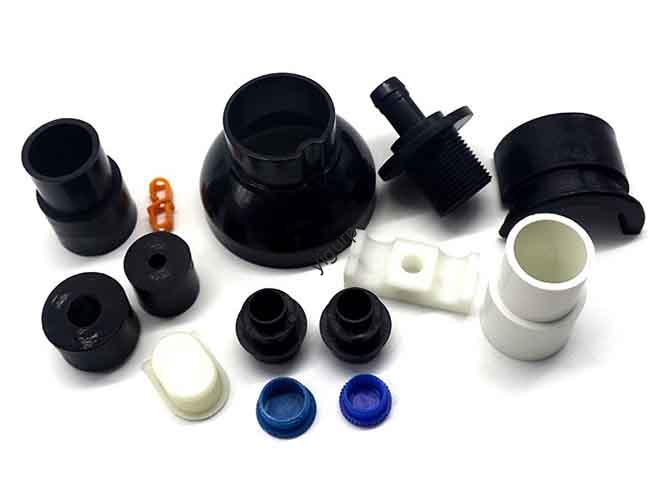
Dans des secteurs comme l'électronique, automobile, et biens de consommation, creating high-precision plastic parts is non-negotiable—and CNC plastic machining stands out as the most reliable solution. Contrairement à l'usinage manuel traditionnel, CNC (Commande numérique par ordinateur) utilise des programmes automatisés pour garantir une précision constante, même pour les conceptions complexes. This article breaks down the full CNC plastic machining process, from pre-production planning to final inspection, helping you understand how to optimize your projects for quality and efficiency.
1. Le 7 Core Stages of the CNC Plastic Machining Process
Every successful CNC plastic part goes through a linear, flux de travail étape par étape. Skipping or rushing any stage can lead to defects (par ex., dimensional errors, surface burrs). Below is a detailed breakdown of each step, with key goals and best practices.
| Stage | Key Goal | Tools/Software Needed | Défis communs & Solutions |
| 1. Programmation | Translate 3D models into machine-readable code | GOUJAT (SolidWorks, AutoCAD), CAME (Mastercam, Fusion 360) | Défi: Poor tool path design causes tool wear. Solution: Use CAM software to simulate paths before machining. |
| 2. Sélection des matériaux | Pick plastics that match part performance needs | Material sample kits, tensile strength testers | Défi: Choosing the wrong material (par ex., brittle plastic for load-bearing parts). Solution: Refer to material property charts (voir la rubrique 2). |
| 3. Clamping | Secure plastic to the worktable without deformation | Vises, clamps, vacuum chucks | Défi: Over-clamping bends thin plastic sheets. Solution: Use soft-jaw vises to distribute pressure evenly. |
| 4. Usinage grossier | Remove 80-90% of excess material quickly | Fraises en bout (10-20mm diamètre), acier rapide (HSS) outils | Défi: High cutting speed melts plastic. Solution: Adjust feed rate to 500-1000 mm/min for thermoplastics like ABS. |
| 5. Finition | Achieve tight dimensional tolerance and smooth surfaces | Ball-end mills (2-5mm diamètre), carbide tools | Défi: Surface scratches from dull tools. Solution: Replace tools after 50-100 parties (depending on material hardness). |
| 6. Affûtage & Polissage | Eliminate burrs and improve appearance | Sandpaper (400-1200 grincer), abrasive paste, meules de polissage | Défi: Over-polishing reduces part thickness. Solution: Use a micrometer to check thickness during polishing. |
| 7. Inspection | Verify part meets design specifications | Étriers, machines à mesurer tridimensionnelles (MMT), surface roughness testers | Défi: Missing hidden defects (par ex., internal cracks). Solution: Combine visual checks with CMM scans for 3D accuracy. |
2. How to Choose the Right Plastic Material for CNC Machining
Not all plastics are equal—each has unique properties that impact machining difficulty and part performance. The table below compares the most common CNC-friendly plastics, their best uses, and machining tips.
2.1 Common CNC Plastic Materials: Propriétés & Applications
| Plastic Type | Key Physical Properties | Applications idéales | Machining Tips |
| ABS (Acrylonitrile Butadiène Styrène) | Haute résistance aux chocs, good heat stability (80-100°C) | Pièces intérieures d'automobile, boîtiers électroniques | Use coolant to prevent melting; avoid high cutting speeds (maximum 800 mm/min). |
| PC (Polycarbonate) | Transparent, haute résistance à la traction (65 MPa) | Safety goggles, couvertures d'affichage | Use sharp carbide tools to avoid chipping; polish with 800-grit sandpaper for clarity. |
| PMMA (Acrylique) | Excellente transparence (92% transmission de la lumière), rigide | Signalisation, composants optiques | Machining produces fine dust—use a vacuum system to keep the workspace clean. |
| Pennsylvanie (Nylon) | Résistant à l'usure, low friction coefficient | Engrenages, roulements, attaches | Use lubricants (par ex., mineral oil) to reduce tool friction; rough machine at 600 mm/min. |
| POM (Acétal) | High dimensional stability, faible absorption d'humidité | Engrenages de précision, pièces de pompe | Avoid excessive heat—use air cooling instead of liquid coolant to prevent warping. |
| PP (Polypropylène) | Flexible, résistant aux produits chimiques | Medical containers, emballage alimentaire | Clamp lightly (PP is soft); use a 45° end mill for clean edges. |
3. Critical Factors That Impact CNC Plastic Machining Quality
Even with a perfect workflow, ignoring these three factors can ruin your parts. Think of them as “quality checkpoints” to address before starting production.
3.1 Sélection d'outils: The Foundation of Accurate Machining
- Tool Material: Carbide tools are better than HSS for hard plastics (par ex., PC, POM) because they stay sharp longer. HSS tools work for softer plastics (par ex., PP, ABS) and are more affordable.
- Tool Geometry: Ball-end mills are ideal for curved surfaces (par ex., a rounded electronics enclosure), while flat-end mills excel at straight edges (par ex., a rectangular ABS bracket).
- Exemple: A manufacturer switched from HSS to carbide tools for machining PMMA—tool changes dropped from 3x per shift to 1x, and surface defects decreased by 40%.
3.2 Paramètres de coupe: Avoid Melting, Chipping, or Warping
Plastics are more heat-sensitive than metals, so adjusting speed, vitesse d'avance, and depth of cut is critical:
- Vitesse: For thermoplastics (par ex., ABS), keep spindle speed between 10,000-15,000 RPM. Higher speeds generate too much heat; lower speeds cause rough cuts.
- Vitesse d'alimentation: Faster feed rates (800-1200 mm/min) reduce heat buildup but may leave burrs. Slower rates (400-600 mm/min) improve surface finish but increase production time.
- Depth of Cut: For roughing, use 2-5mm depth; pour finir, stick to 0.1-0.5mm to avoid tool vibration.
3.3 Post-traitement: Don’t Overlook Grinding & Polissage
- Affûtage: Utiliser 400-600 grit sandpaper for initial burr removal—focus on edges where the tool exited the material (this is where burrs form most often).
- Polissage: For transparent plastics (par ex., PMMA), utiliser 800-1200 grit sandpaper followed by abrasive paste. Buff with a cotton wheel to restore clarity.
- Warning: Over-polishing PA or POM can remove critical material—stop and measure thickness every 2-3 minutes with a caliper.
4. Yigu Technology’s Perspective on CNC Plastic Machining
Chez Yigu Technologie, we see CNC plastic machining as a balance of precision and practicality. For small-batch projects (10-50 parties), we recommend optimizing programming with our in-house CAM software— it reduces tool path errors by 30% compared to generic tools. Pour une production en grand volume, our automated clamping systems cut setup time by 50% while preventing plastic deformation. We also advise clients to test material samples first: our material lab offers free tensile and heat resistance tests to ensure the plastic matches their part’s needs. As CNC machines become more intelligent, we’re integrating AI-driven defect detection to catch issues (like surface scratches) in real time—helping clients reduce rework costs.
5. FAQ: Common Questions About CNC Plastic Machining
Q1: How long does the CNC plastic machining process take for a single part?
It depends on part size and complexity. Un petit, simple part (par ex., a 50x50mm ABS bracket) takes 10-15 minutes (5 min roughing + 3 min finishing + 2 min polishing). A large, complex part (par ex., a 300x200mm PC display cover) can take 1-2 heures.
Q2: Can CNC plastic machining produce parts with tight tolerances (par ex., ±0,01mm)?
Oui, but it requires the right tools and setup. Utiliser des outils en carbure, a high-precision CNC machine (with ±0.005mm repeatability), and finishing cuts with 0.1mm depth. Materials like POM and PMMA are easier to machine to tight tolerances than flexible plastics like PP.
Q3: What’s the difference between rough machining and finishing in CNC plastic work?
Rough machining prioritizes speed—it removes most excess material with large tools and fast feed rates, but leaves a rough surface (Râ 5-10 µm). Finishing prioritizes quality—it uses small tools and slow feed rates to achieve smooth surfaces (Râ 0.8-1.6 µm) and tight dimensions (±0.05mm or better). Skipping rough machining would make finishing too slow and costly.