
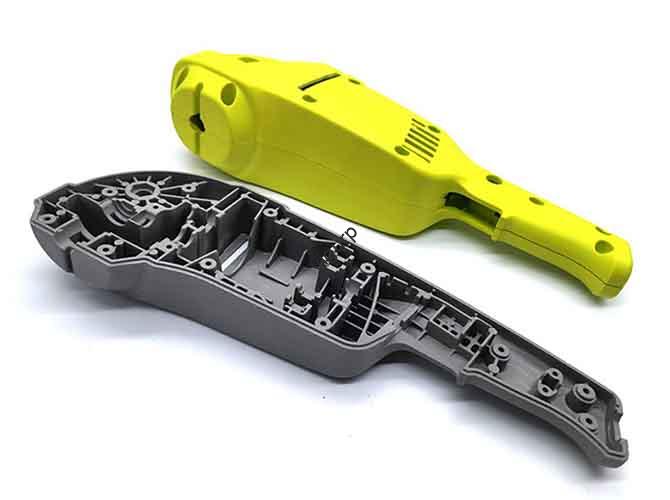
Avez-vous déjà été confronté à des problèmes tels que des dimensions de pièces incohérentes, faible efficacité de production, ou échec de l'usinage de composants en plastique complexes? These problems often stem from a lack of understanding of the CNC plastic machining process. Ce guide détaille les principaux avantages du processus, flux de travail étape par étape, choix du matériau/de l'outil, and real-world applications to help you avoid common pitfalls and achieve high-quality results.
1. Core Advantages of CNC Plastic Machining Process
What makes the CNC plastic machining process stand out from traditional manual machining? Its four key advantages directly solve the most frustrating challenges in plastic part manufacturing. The table below clarifies their value:
| Avantage | Description | Problem It Solves |
| Haute précision & Stability | Controlled by computer programs, with dimensional accuracy ranging from ±0.025mm to ±0.125mm and consistent repeatability. | Eliminates human error that causes inconsistent part sizes, critical for high-precision parts like medical device components. |
| High Automation Degree | Except for blank clamping, all processes (tool movement, parameter adjustment) are automated by CNC machines. | Reduces manual labor intensity, cuts production time by 30–50%, and avoids mistakes from manual operation. |
| Strong Object Adaptability | By changing tools and modifying programs, it can machine plastic parts of different shapes, tailles, et matériaux. | Meets the needs of small-batch, multi-variety production—no need to reconfigure entire production lines for new parts. |
| Excellent Complex Shaping Ability | Easily processes 3D curved surfaces, special-shaped structures, and internal cavities that are hard to achieve manually. | Enables the production of complex parts like aerospace plastic brackets or electronic device housings with intricate designs. |
2. Step-by-Step Workflow of CNC Plastic Machining Process
Following a standardized workflow is key to avoiding errors. The CNC plastic machining process has six sequential steps—skip or rush any, and you risk part defects. Here’s the detailed breakdown:
2.1 Programmation & Conception (Foundation of Precision)
D'abord, utiliser CAD/CAM software (par ex., AutoCAD, SolidWorks) to design the 3D model of the plastic part. Alors, generate toolpaths and machining programs based on the part’s shape, taille, and accuracy requirements.
Why it’s critical: A flawed program leads to wrong tool movements. Par exemple, a missing curve in the program once caused a batch of PC plastic lenses to have uneven edges—wasting 50+ pièces et 8 hours of production time.
2.2 Sélection des matériaux (Match Performance & Coût)
Choose plastic materials based on the part’s usage and budget. Les options courantes incluent:
- ABS: Faible coût, good impact resistance—ideal for automotive interior parts.
- PC: High transparency and heat resistance—suitable for electronic device casings.
- PMMA: Excellent light transmission (92% like glass)—perfect for display covers.
- COUP D'OEIL: High temperature and chemical resistance—used in aerospace and medical implants.
Question: How to balance performance and cost? If a part doesn’t need extreme durability, ABS (coût: \(2–)5/kilos) is better than PEEK (coût: \(80–)120/kilos).
2.3 Sélection d'outils (Fit Material & Processus)
The right tool ensures smooth cutting and long tool life. Select tools based on plastic properties and machining needs:
| Tool Type | Suitable Plastic Materials | Machining Purpose | Tool Material Recommendation |
| Fraises | ABS, PC, PMMA (soft to medium-hard plastics) | Shaping surfaces, cutting grooves | Carbure (high hardness, résistant à l'usure) |
| Forets | All plastics | Drilling holes | Acier rapide (HSS) pour les petits trous; carbide for large holes |
| Outils de tournage | Cylindrical plastic parts (par ex., PEEK rods) | Turning outer circles, chamfering | Cemented carbide (stable cutting for tough plastics) |
2.4 Equipment Debugging (Avoid Startup Failures)
Input the machining program into the CNC machine and debug key parameters:
- Install tools correctly and calibrate tool length.
- Set the coordinate system to ensure the tool aligns with the part’s origin.
- Adjust vitesse de broche (1000–5000 RPM for most plastics) et feed speed (50–200 mm/min) — too high a speed may melt plastics; too low reduces efficiency.
Exemple: When machining PMMA, a spindle speed of 3000 RPM and feed speed of 100 mm/min prevents melting and ensures a smooth surface.
2.5 Machining Process Monitoring (Catch Issues Early)
Pendant l'usinage, closely monitor three things:
- Tool wear: Dull tools cause rough surfaces—replace tools when you see burrs.
- Cutting force changes: Sudden force spikes mean tool jams or material defects.
- Machining quality: Check dimensions with calipers every 10–15 parts to ensure accuracy.
2.6 Post-traitement (Improve Part Quality)
Après usinage, perform three essential steps:
- Ébavurage: Remove sharp edges with a file or deburring tool to prevent injury and improve assembly.
- Cleaning: Wipe parts with alcohol to remove cutting fluid residues.
- Sanding/Polishing: Use 400–800 grit sandpaper for PMMA or PC parts to enhance transparency and smoothness.
3. Key Applications of CNC Plastic Machining Process
The CNC plastic machining process is widely used in four high-demand industries, solving unique production challenges:
- Aérospatial: Fabrique des produits légers, high-precision plastic brackets and sensor housings—its stability ensures parts meet strict aviation standards.
- Automobile: Produces interior parts like ABS dashboard components and PC light covers—high automation meets large-batch production needs.
- Équipement médical: Makes biocompatible plastic parts (par ex., PEEK surgical forceps handles)—high precision ensures compatibility with other medical devices.
- Électronique: Creates custom PMMA display frames and PC connector shells—complex shaping ability handles intricate electronic part designs.
4. Yigu Technology’s Perspective
Chez Yigu Technologie, we’ve seen clients optimize production by mastering the CNC plastic machining process. The biggest mistake we notice is neglecting pre-machining debugging—this leads to 40% of early-stage failures. We advise clients to prioritize program simulation (à l'aide d'un logiciel CAO/FAO) and test runs with sample materials. Pour pièces complexes, we recommend combining our customized tool selection service with real-time process monitoring. The CNC plastic machining process isn’t just a workflow; it’s a way to turn plastic materials into high-value, pièces fiables.
FAQ
- What’s the difference between CNC plastic machining and 3D printing for plastic parts?
CNC machining is better for high-precision, pièces à haute résistance (par ex., outils médicaux) with faster production for small batches. 3D printing is ideal for complex prototypes but has lower precision and slower speed for large quantities.
- How long does a typical CNC plastic machining process take for a single part?
It depends on part complexity: A simple ABS bracket takes 5–10 minutes, while a complex PEEK part with 3D curves may take 30–60 minutes. Programming and debugging add 1–2 hours for a new part.
- Can CNC plastic machining process handle all types of plastics?
It works for most thermoplastics (ABS, PC, PMMA, COUP D'OEIL) but not for very soft plastics (par ex., TPU with shore hardness below 60A) — these may deform during clamping or cutting.