
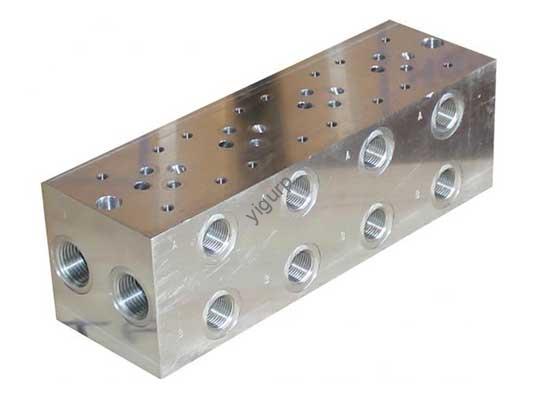
Choisir le bon processus de fabrication est essentiel au succès du produit, que vous prototypiez un nouveau design ou que vous augmentiez la production. Two popular methods—Usinage CNC et Moulage par injection et réaction (JANTE)—offrent des avantages distincts selon les besoins de votre projet. Ce guide détaille leurs différences dans les processus, performance, frais, et des applications pour vous aider à prendre des décisions éclairées.
Understanding the Core Manufacturing Processes
The fundamental difference between CNC machining and RIM lies in how they shape materials to create parts.
How CNC Machining Works
Usinage CNC is a subtractive manufacturing process that starts with a solid block of material—such as metal, plastique, or composite—and removes excess material using computer-controlled cutting tools. The process follows these steps:
- A CAD (Conception Assistée par Ordinateur) file is created to define the part’s dimensions.
- CAME (Fabrication assistée par ordinateur) software converts the design into machine-readable code (Code G).
- The CNC machine uses tools like end mills and drills to cut, percer, and shape the material according to the code.
- Finishing processes like grinding or polishing may be added to achieve the desired surface quality.
This method is ideal for creating precise, complex parts with tight tolerances, making it a staple in industries like aerospace and medical device manufacturing.
How Reaction Injection Molding (JANTE) Works
Moulage par injection et réaction (JANTE) is an additive process that relies on chemical reactions to form parts. The steps are:
- Two liquid components—typically polyols and isocyanates—are mixed under low pressure.
- The mixture is injected into a mold cavity where it undergoes a chemical reaction, expanding and solidifying.
- Après durcissement, le moule s'ouvre, and the finished part is ejected.
- Minimal post-processing is usually required, especially for parts with simple geometries.
RIM is primarily used for producing plastic and polyurethane parts, offering advantages in creating large, composants légers.
Performance Comparison: Précision, Force, and Versatility
When evaluating manufacturing processes, performance characteristics directly impact part quality and suitability for specific applications.
CNC Machining Performance Highlights
- Tolérances strictes: CNC machining achieves tolerances as tight as ±0.001 inches (0.025 mm), making it ideal for critical components where precision is non-negotiable.
- Polyvalence des matériaux: It works with a wide range of materials, y compris les métaux (aluminium, acier, laiton), plastiques (ABS, nylon), et composites.
- Géométries complexes: The subtractive process excels at creating intricate external features and detailed surface textures.
- Finition de surface: Produces high-quality surface finishes (Ra 0,8–3,2 μm) with minimal post-processing required.
RIM Performance Highlights
- Tolérances: RIM typically achieves tolerances of ±0.005 inches (0.127 mm), suitable for many industrial applications but not ultra-precision parts.
- Propriétés des matériaux: Creates lightweight parts with good durability and chemical resistance, particularly in polyurethane formulations.
- Large Part Production: Ideal for manufacturing large components (up to several feet in size) with consistent wall thickness.
- Flexibilité de conception: Allows for complex internal cavities and undercuts that may be challenging with CNC machining.
Cost Analysis: Initial Investment vs. Long-Term Savings
Cost considerations play a significant role in choosing between CNC machining and RIM, with each process offering different cost structures based on production volume.
CNC Machining Cost Factors
- Tooling Costs: Lower upfront tooling costs (\(500–)5,000) compared to molding processes, as it primarily requires fixtures and cutting tools.
- Per-Part Costs: Higher per-part costs (\(5–)50+) due to longer cycle times and material waste from subtractive manufacturing.
- Economies of Scale: Less cost-effective for high-volume production (10,000+ unités) as per-part costs remain relatively stable.
- Temps d'installation: Faster setup times (1–3 jours) reduce initial production delays.
RIM Cost Factors
- Tooling Costs: Moderate tooling costs (\(5,000–)50,000) for mold creation, which are lower than traditional injection molding but higher than CNC machining.
- Per-Part Costs: Lower per-part costs (\(1–)10) for high-volume runs due to faster cycle times and material efficiency.
- Economies of Scale: Becomes more cost-effective than CNC machining for production volumes exceeding 1,000 unités.
- Temps d'installation: Longer initial setup (2–6 semaines) due to mold design and fabrication.
| Volume de production | CNC Machining Total Cost | RIM Total Cost |
| 100 unités | \(5,000–)15,000 | \(10,000–)30,000 |
| 1,000 unités | \(20,000–)60,000 | \(15,000–)40,000 |
| 10,000 unités | \(150,000–)500,000 | \(30,000–)150,000 |
Feature Comparison: Matériels, Conception, and Production Capabilities
The unique features of each process determine their suitability for different project requirements.
Capacités matérielles
- Usinage CNC: Supports metals (aluminium, acier, titane), plastiques (PE, PP, COUP D'OEIL), composites, and even wood. This versatility makes it ideal for projects requiring material-specific properties like high strength or heat resistance.
- JANTE: Limited to plastic and polyurethane materials, including flexible and rigid formulations. While restricted, these materials offer excellent impact resistance and insulation properties.
Flexibilité de conception
- Usinage CNC: Easily accommodates design changes with minimal cost, as modifications only require updating the CAD file and machine program. This makes it perfect for prototyping and iterative design processes.
- JANTE: Design changes require mold modifications, which can be costly and time-consuming. It’s better suited for finalized designs with stable requirements.
Production Volume and Speed
- Usinage CNC: Best for low to medium volumes (1–1 000 unités) with longer per-part cycle times (minutes to hours).
- JANTE: Excels at medium to high volumes (1,000–100,000+ units) with faster cycle times (seconds to minutes per part).
Application Scenarios: Choosing the Right Process
Understanding which process works best for specific applications helps optimize production efficiency and part quality.
Ideal Applications for CNC Machining
- Prototypage: Quick turnaround for design validation without expensive tooling.
- High-Precision Parts: Composants aérospatiaux, dispositifs médicaux, and automotive sensors requiring tight tolerances.
- Production en faible volume: Custom machinery parts or specialized industrial components with small production runs.
- Composants métalliques: Parts requiring the strength and durability of metals like stainless steel or titanium.
Ideal Applications for RIM
- Large Plastic Parts: Pare-chocs automobiles, enceintes industrielles, and recreational equipment housings.
- Lightweight Components: Parts where weight reduction is critical, such as drones or portable equipment.
- Consistent High-Volume Production: Consumer goods and appliance parts needing uniform quality at scale.
- Elastic or Flexible Parts: Joints, scellés, and ergonomic components requiring specific material elasticity.
Yigu Technology’s Perspective
Chez Yigu Technologie, we believe the choice between CNC machining and RIM depends on balancing precision, volume, and material needs. For prototypes or high-precision metal parts, CNC machining delivers unbeatable accuracy. For large-volume plastic components, RIM offers cost efficiency and scalability. Our engineering team works closely with clients to select the optimal process, ensuring each project meets performance goals and budget requirements.
Frequently Asked Questions (FAQ)
- When should I choose CNC machining over RIM?
Choose CNC machining for low-volume production, pièces de haute précision, metal components, or projects requiring frequent design changes. Its lower upfront costs and material versatility make it ideal for prototyping and specialized applications.
- Is RIM more cost-effective than CNC machining for large production runs?
Oui, RIM becomes more cost-effective for production volumes over 1,000 unités. While RIM has higher initial tooling costs, its lower per-part costs and faster cycle times create significant savings at scale compared to CNC machining.
- Can RIM produce parts with the same precision as CNC machining?
Non, RIM typically achieves tolerances of ±0.005 inches, while CNC machining can reach ±0.001 inches. For applications requiring ultra-tight tolerances or complex geometric details, CNC machining is the better choice despite its higher per-part costs.