
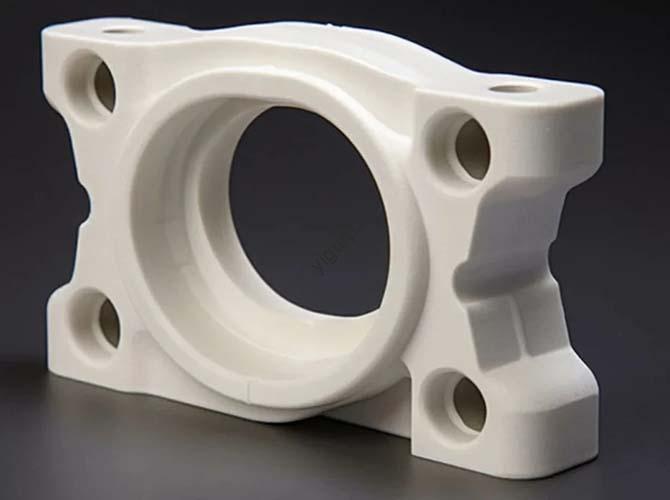
Vous êtes-vous déjà demandé pourquoi certains projets d'usinage CNC livrent des pièces impeccables à temps ?, tandis que d'autres sont aux prises avec des pannes d'outils et des tolérances manquées? The answer often lies in CNC machining tools. Ces héros méconnus font ou défont l’efficacité, précision, et la qualité des produits, en particulier à grande vitesse, fabrication automatisée. Ci-dessous, nous décomposons ce qui fait un excellent outil CNC, comment choisir le bon, and how to keep it performing at its best.
1. Non-Negotiable Requirements for CNC Machining Tools
CNC machining’s high-speed, automated nature demands outils that go beyond basic functionality. The table below outlines the 7 core requirements and why they matter for your workflow:
| Requirement Category | Key Standard | Real-World Impact |
| High Reliability | Withstand 8+ hours of continuous high-speed operation (10,000+ RPM) without damage | Reduces unplanned downtime—critical for meeting tight production deadlines. |
| High-Performance Materials | Use of polycrystalline diamond (PCD) or polycrystalline cubic boron nitride (PCBN) | PCD tools last 50x longer than traditional carbide when cutting non-ferrous metals (par ex., aluminium). |
| Extreme Precision | Tool diameter tolerance of ±0.001mm; runout ≤0.0005mm | Ensures machined parts meet strict specs (par ex., aerospace components with ±0.005mm size limits). |
| Quick Changeability | Tool change time ≤30 seconds (with compatible tool holders) | Supports small-batch, multi-variety production—cuts setup time by 40% contre. slow manual changes. |
| Standardized Serialization | Conformité à l'ISO 13399 (tool dimension standards) | Simplifies inventory management: one standard tool fits multiple CNC machines. |
| Multi-Functional Compounding | Ability to drill, moulin, and tap in a single clamping | Reduces part handling—cuts process time for complex parts (par ex., automotive engine blocks) par 25%. |
| Effective Chip Control | Built-in chip breakers; smooth flute design for chip evacuation | Prevents chip entanglement (which scratches workpieces) and tool overheating. |
2. How to Choose the Right CNC Machining Tool: Un guide étape par étape
Selecting CNC machining tools isn’t guesswork—it’s a data-driven process. Suivez-les 4 steps to match tools to your project’s needs:
- Define Your Material:
- Cutting aluminum or plastic? Choose PCD tools for long life and smooth finishes.
- Machining hardened steel (CRH 50+)? Opt for PCBN tools—they resist heat up to 1,200°C.
- Working with composites (par ex., fibre de carbone)? Use diamond-coated tools to avoid fraying the material.
- Match Tool to Operation:
- Drilling deep holes (≥5x tool diameter)? Pick a twist drill with internal coolant holes to prevent overheating.
- Milling complex 3D surfaces? Go for a ball-end mill with multi-flutes (4–6 flutes) for faster, smoother cuts.
- Prioritize Compatibility:
Ensure the tool fits your CNC machine’s tool holder system (par ex., CAT40, BT30). Mismatched tools cause runout, ruining precision.
- Test for Small Batches First:
Avant la pleine production, run 5–10 test parts with the tool. Check for wear, qualité de finition, and dimensional accuracy—this avoids costly mistakes later.
3. Real-World Case: How a Aerospace Supplier Fixed Delays with Better Tools
A leading aerospace parts manufacturer was struggling with:
- Frequent tool failures (3+ per week) when machining titanium alloy components.
- Parts failing inspection due to poor surface finish (caused by chip scratches).
Their solution? Upgrading to CNC machining tools that met strict requirements:
- Switched to PCBN tools (for titanium’s high hardness).
- Added tools with built-in chip breakers (to solve scratch issues).
- Adopted standardized tool holders (to cut changeover time).
Résultat: Tool failures dropped to 1 per month, inspection pass rates jumped from 75% à 99%, and production output increased by 30%.
4. Maintenance Tips to Extend CNC Machining Tool Life
Even the best CNC machining tools degrade over time—unless you care for them. Use this checklist to maximize tool lifespan:
- ✅ Clean After Every Shift: Wipe tools with a lint-free cloth and remove chips from flutes (use compressed air for hard-to-reach areas).
- ✅ Store Properly: Keep tools in a climate-controlled cabinet (18–24°C, 40–60% humidity) to prevent rust or material warping.
- ✅ Monitor Wear: Use tool length sensors to check for wear (replace when wear exceeds 0.01mm—this avoids part defects).
- ✅ Use Coolant Wisely: Match coolant type to the tool and material (par ex., oil-based coolant for PCBN tools cutting steel) pour réduire les frottements.
5. Yigu Technology’s Perspective
Chez Yigu Technologie, we believe CNC machining tools are the backbone of modern manufacturing. We work with clients to select tools that balance performance and cost—for example, pairing PCD tools with our AI-powered tool monitoring software (which alerts users to wear in real time). We also advocate for standardized tooling to simplify workflows: our clients report 35% faster setup times after adopting our ISO-compliant tool kits. The goal isn’t just to sell tools—it’s to solve your biggest pain points: downtime, défauts, and inefficiency.
FAQ
- How often should I replace my CNC machining tools?
It depends on material and usage: PCD tools for aluminum last 500–1,000 parts; PCBN tools for steel last 200–500 parts. Replace immediately if you notice wear (par ex., chipped edges) or declining part quality.
- Can I use non-standard CNC tools to save money?
It’s risky. Non-standard tools may not fit your machine (causing runout) and lack durability—you’ll end up replacing them more often, costing more long-term. Stick to ISO-standard tools for reliability.
- What’s the biggest mistake people make with CNC machining tools?
Skipping maintenance. A dirty or poorly stored tool can fail unexpectedly, ruining expensive workpieces. Even 5 minutes of daily cleaning can double a tool’s lifespan.