
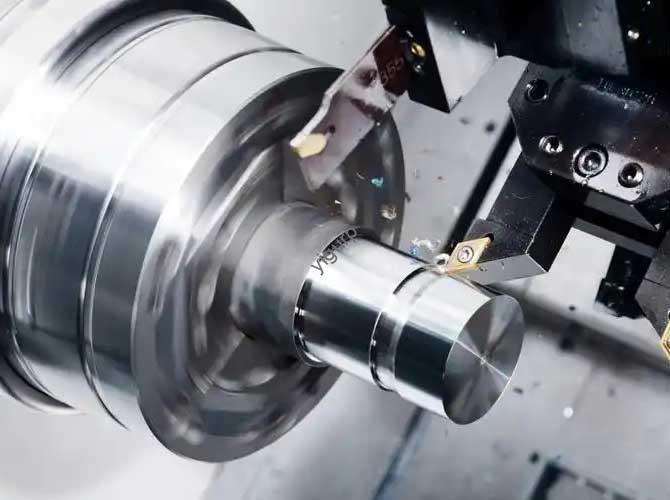
In subtractive manufacturing—especially Usinage CNC—tolerance standards are the backbone of consistent, pièces fonctionnelles. Imaginez concevoir un boulon trop gros pour son trou, ou un engrenage qui vacille parce que son centre n'est pas aligné: ces erreurs se produisent lorsque les normes de tolérance sont ignorées ou mal comprises. Pour les concepteurs et les fabricants, savoir quelle norme utiliser (et pourquoi) fait gagner du temps, cuts rework costs, and ensures parts fit right the first time. This guide breaks down the most critical tolerance standards for CNC subtractive manufacturing—OIN 2768 et OIN 286—explains how to apply them, and uses real-world examples to avoid common pitfalls.
Why Tolerance Standards Matter for CNC Subtractive Manufacturing
Subtractive manufacturing removes material (par fraisage, tournant, ou perçage) to shape a part—unlike 3D printing, which adds material. This process relies on precision, but “precision” doesn’t mean “as tight as possible.” Tolerance standards solve three big problems:
1. They Simplify Design Work
Designing a part with 50 caractéristiques? You don’t need to calculate tolerances for each one. Standards like ISO 2768 et ISO 286 predefine acceptable variation for common dimensions (par ex., longueur, angles, shaft diameters). A designer at a furniture company once spent 8 hours calculating custom tolerances for a table leg—until they switched to ISO 2768-M. They cut design time by 70% and still got perfect-fitting parts.
2. They Align Designers and Manufacturers
A designer’s “tight tolerance” might mean ±0.01 mm to them, but ±0.05 mm to a manufacturer. Standards eliminate guesswork. When a medical device designer specifies “ISO 286-Class 6” for a surgical tool, the CNC shop knows exactly what precision to aim for—no back-and-forth.
3. They Balance Quality and Cost
Tighter tolerances cost more: a part with ISO 286-Class 6 (±0.006 mm) can cost 2–3x more than one with ISO 286-Class 8 (±0.014 mm). Standards help you pick the loosest tolerance that still works. Par exemple, a decorative CNC-machined sign only needs ISO 2768-M (±0.1 mm for small dimensions)—using a tighter standard would waste money for no benefit.
The Two Core ISO Tolerance Standards for CNC Subtractive Manufacturing
Nearly every CNC shop worldwide uses ISO standards for subtractive manufacturing. The two most common are ISO 2768 (for general dimensions) et ISO 286 (for mating parts like shafts and holes). Let’s break each down with clear tables and use cases.
1. OIN 2768: General Tolerances for Linear, Angular, and Rounded Features
OIN 2768 is for “unannotated” features—dimensions where you don’t need a custom tolerance. It covers three key areas: linear dimensions (par ex., longueur, largeur), rounding radii (par ex., a curved edge on a bracket), and angular dimensions (par ex., a 45° angle on a frame).
It has two main grades to choose from:
- OIN 2768-F (Precision Grade): For parts that need tighter control (par ex., composants électroniques).
- ISO 2768-M (Medium Grade): The “default” for most CNC parts (par ex., meubles, general machinery).
OIN 2768 Linear Dimension Tolerances (mm)
| Rated Dimension Range (mm) | OIN 2768-F (Précision) Tolérance | ISO 2768-M (Moyen) Tolérance |
| 0.5 – 3 | ±0,05 | ±0,1 |
| 3 – 6 | ±0,05 | ±0,1 |
| 6 – 30 | ±0,1 | ±0,2 |
| 30 – 120 | ±0,15 | ±0,3 |
| 120 – 400 | ±0,2 | ±0,5 |
| 400 – 1000 | ±0,3 | ±0.8 |
| 1000 – 2000 | ±0,5 | ±1.2 |
| 2000 – 4000 | — (Not Recommended) | ±2.0 |
OIN 2768 Rounding Radius & Chamfer Height Tolerances (mm)
| Rated Dimension Range (mm) | ISO 2768-F Tolerance | ISO 2768-M Tolerance |
| 0.5 – 3 | ±0,2 | ±0,2 |
| 3 – 6 | ±0,5 | ±0,5 |
| > 6 | ±1.0 | ±1.0 |
OIN 2768 Angular Dimension Tolerances (°/’)
| Rated Length Range (mm) | ISO 2768-F Tolerance | ISO 2768-M Tolerance |
| < 10 | ±1° | ±1° |
| 10 – 50 | ±0°30′ | ±0°30′ |
| 50 – 120 | ±0°20′ | ±0°20′ |
| 120 – 400 | ±0°10′ | ±0°10′ |
| > 400 | ±0°5′ | ±0°5′ |
Real-World Example: A CNC shop made 100 aluminum brackets for a shelf. The designer specified ISO 2768-M for the 20 mm longueur (tolerance ±0.2 mm) and 90° angle (tolerance ±0°30′). All brackets fit the shelf’s slots perfectly—only 2 were rejected (pour un 2% taux de défauts), which is well within industry norms.
2. OIN 286: Tolerances for Mating Parts (Arbres & Trous)
OIN 286 is for parts that need to fit together—like a shaft (male part) and a hole (female part) in a motor. It defines “IT grades” (International Tolerance grades) for linear dimensions, with lower numbers meaning tighter tolerances. For CNC subtractive manufacturing, the most common grades are:
- ISO 286-Class 6 (IT6): Ultra-tight (par ex., outils chirurgicaux, composants aérospatiaux).
- ISO 286-Class 7 (IT7): Serré (par ex., pièces de moteur, engrenages de précision).
- ISO 286-Class 8 (IT8): Modéré (par ex., composants de vélo, general machinery).
OIN 286 Tolerances for Key Dimension Ranges (mm)
| Rated Dimension Range (mm) | ISO 286-Class 6 (IT6) Tolérance | ISO 286-Class 7 (IT7) Tolérance | ISO 286-Class 8 (IT8) Tolérance |
| < 3 | 0.006 | 0.010 | 0.014 |
| 3 – 6 | 0.008 | 0.012 | 0.018 |
| 6 – 10 | 0.009 | 0.015 | 0.022 |
| 10 – 18 | 0.011 | 0.018 | 0.027 |
| 18 – 30 | 0.013 | 0.021 | 0.033 |
| 30 – 50 | 0.016 | 0.025 | 0.039 |
| 2500 – 3150 | 0.135 | 0.210 | 0.330 |
Key Terms to Know:
- Rated Dimension: The size on your drawing (par ex., un 10 mm shaft).
- Upper Limit Size: The largest allowed size (par ex., 10.015 mm for a 10 mm shaft with IT7).
- Lower Limit Size: The smallest allowed size (par ex., 9.985 mm for the same shaft).
- Tolérance: The difference between upper and lower limits (par ex., 0.03 mm for IT7 here).
Étude de cas: A bike manufacturer used ISO 286-Class 8 for their pedal shafts (15 mm rated dimension). The tolerance was 0.027 mm, so shafts could be 14.973–15.027 mm. All shafts fit the pedal holes without wobbling, and the cost was 30% lower than if they’d used Class 7.
How to Choose Between ISO 2768 et ISO 286
The biggest question designers ask is: “Which standard do I use?» Follow this simple flow:
Étape 1: Does the Part Have Mating Features?
- Oui (par ex., a bolt that goes through a hole, a gear on a shaft): Utiliser OIN 286. Pick the grade based on how tight the fit needs to be:
- Ultra-tight fit (no movement): Classe 6.
- Tight fit (minimal movement): Classe 7.
- Loose fit (some movement): Classe 8.
- Non (par ex., a decorative sign, a standalone bracket): Utiliser OIN 2768. Pick F for precision parts, M for most others.
Étape 2: Check the Dimension Range
Make sure your dimension falls within the standard’s range. Par exemple:
- ISO 2768-F isn’t recommended for dimensions over 2000 mm (it’s too hard to achieve).
- ISO 286-Class 6 works best for small dimensions (sous 50 mm)—larger dimensions (sur 1000 mm) often use Class 8.
Étape 3: Confirm CNC Machine Capability
A standard CNC mill can usually hit ISO 2768-M and ISO 286-Class 8. To get Class 6 ou 7, you need a high-precision machine (which costs more). A small shop once tried to make ISO 286-Class 6 parts on a standard mill—they had a 25% rejection rate and had to upgrade their machine.
ISO vs. ASME: What About American Standards?
If you work with U.S. clients, you might encounter ASME standards (instead of ISO). The good news is they map to ISO standards—so you don’t need to learn a whole new system. Here’s the key correspondence:
| ISO Standard | Equivalent ASME Standard |
| OIN 2768-F (Précision) | No direct match—use custom specs |
| ISO 2768-M (Moyen) | No direct match—use custom specs |
| ISO 286-Class 6 (IT6) | ASME B4.1 Grade 6 |
| ISO 286-Class 7 (IT7) | ASME B4.1 Grade 7 |
| ISO 286-Class 8 (IT8) | ASME B4.1 Grade 8 |
Pro Tip: If a U.S. client asks for “ASME B4.1 Grade 7,” just use ISO 286-Class 7—they’re nearly identical in tolerance ranges.
Yigu Technology’s Perspective on CNC Subtractive Tolerance Standards
Chez Yigu Technologie, we see OIN 2768 et ISO 286 as essential tools for making CNC subtractive manufacturing efficient. Trop souvent, clients overspecify tolerances (par ex., using ISO 286-Class 6 for a non-critical bracket) and end up paying more. We help them align standards with function: Par exemple, a client making industrial valves switched from Class 6 to Class 7 (still meeting safety norms) and cut costs by 25%. We also share our CNC machine capabilities upfront—so designers know exactly what’s possible. Tolerance standards aren’t just rules—they’re a way to build trust and deliver parts that work, dans les délais et dans les limites du budget.
FAQ
- Can I use ISO 2768 et ISO 286 on the same part?
Oui! Par exemple, a CNC-machined gear might use ISO 286-Class 7 for its center hole (a mating feature) and ISO 2768-M for its outer diameter (a non-mating feature). Just make sure to note both standards on your drawing.
- Is ISO 286-Class 6 always better than Class 8?
No—better depends on function. Classe 6 is tighter, but it’s more expensive and harder to achieve. Par exemple, a toy car’s axle only needs Class 8 (it doesn’t need precision), but a jet engine’s shaft needs Class 6 (any wobble could be dangerous). Always pick the loosest class that works.
- What if my dimension is outside ISO 2768/286 ranges (par ex., 5000 mm)?
For dimensions over the standard ranges (par ex., ISO 2768-M stops at 4000 mm), create a custom tolerance. Work with your CNC shop to set a range they can achieve—for a 5000 mm beam, a tolerance of ±3 mm is usually realistic and cost-effective.