
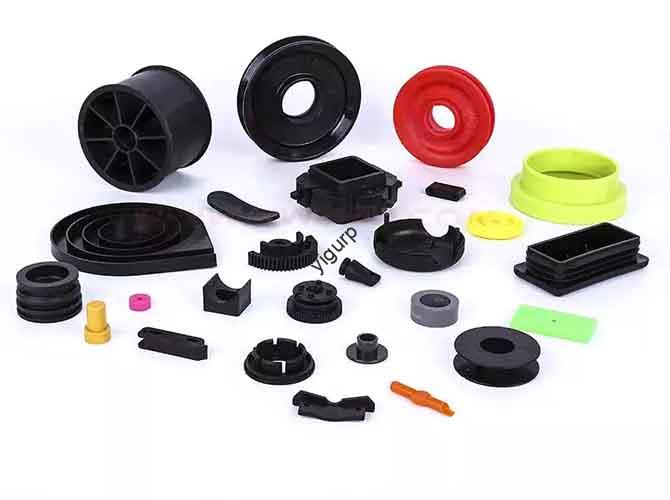
PP (polypropylène) est un thermoplastique largement utilisé dans des industries comme l'emballage, automobile, et médical - grâce à sa stabilité chimique et sa transformabilité. But achieving high-quality results with CNC machining PP materials requires addressing unique challenges, tels que des points de fusion bas et des risques de déformation. Ce guide résout ces problèmes en décomposant les propriétés du PP, sélection d'outils, process steps, and troubleshooting tips—helping you master Usinage CNC of PP.
1. Key Properties of PP Materials for CNC Machining
Understanding PP’s traits is the first step to avoiding machining errors. The table below highlights critical properties and their impact on processing:
| Property Category | Key Characteristics | Impact on CNC Machining | Practical Tips |
| Processabilité | Thermoplastic; facile à couper, percer, et forme; compatible with injection molding and direct machining | Enables fast production of complex parts (par ex., curved enclosures) | Use sharp tools to maintain smooth cuts; avoid over-processing |
| Point de fusion | Faible (160–170°C); prone to melting if overheated | Risk of material deformation or sticking to tools during high-speed machining | Control cutting temperature; use cooling methods |
| Chemical Stability | Résiste aux acides, alcalis, et la plupart des solvants; pas de corrosion | Ideal for parts in chemical environments (par ex., lab containers) | No special anti-corrosion treatments needed post-machining |
| Résistance mécanique | Moderate tensile strength (30–40MPa); bonne résistance aux chocs (especially copolymer PP) | Suitable for non-load-bearing parts (par ex., automotive interior panels) | Avoid excessive clamping force (causes permanent deformation) |
| Densité | Faible (0.90–0.91g/cm³); léger | Reduces stress on CNC machine components; easy to handle/load | No need for heavy-duty clamping equipment |
Exemple: When machining PP for a chemical lab beaker, its chemical stability means you don’t have to worry about corrosion from acidic solutions—but you must control cutting speed to avoid melting the beaker’s thin walls.
2. Matériaux PP d'usinage CNC: Équipement & Sélection d'outils
Using mismatched equipment or tools leads to 70% of PP machining failures (par ex., rough surfaces, usure des outils). Follow this guide to choose the right setup.
2.1 CNC Machine Selection: Match to Part Requirements
Not all CNC machines work for every PP project. Use this table to decide:
| CNC Machine Type | Idéal pour | Avantages clés | Example PP Parts |
| Vertical Machining Center | Small-to-medium PP parts (≤500mm); flat/3D shapes | Haute précision (±0,01mm); easy to operate | PP electrical connectors, small enclosures |
| CNC Router | Large flat PP parts (par ex., feuilles, panels) | Fast cutting speed; handles large dimensions | PP packaging trays, automotive dash panels |
| Tour CNC | Cylindrical PP parts (par ex., tubes, tiges) | Creates smooth circular surfaces | PP pipes, lab sample tubes |
2.2 Sélection d'outils de coupe: Avoid Melting & Porter
PP’s softness requires tools that cut cleanly without generating excess heat. The table below simplifies selection:
| Tool Type | Recommended Material | Tool Features | Ideal Machining Tasks for PP |
| End Mills | High-Speed Steel (HSS), Carbure | Sharp cutting edges; low friction design | Milling slots, poches, or complex 3D shapes in PP sheets |
| Forets | HSS (pour les petits trous), Carbure (for large holes) | Pointed tip; spiral flutes to clear chips | Drilling holes in PP enclosures or panels |
| Spiral Mills | Carbure | Multiple flutes; efficient chip removal | Roughing large PP parts (reduces heat buildup) |
Critical Rule: Avoid dull tools—they rub against PP instead of cutting, generating heat that melts the material. Replace HSS tools after 100–150 PP parts and carbide tools after 300–400 parts.
3. Step-by-Step CNC Machining Process for PP Materials
Skipping steps or cutting corners ruins PP parts. Follow this structured workflow for consistent results:
3.1 Pre-Machining Preparation
- CAD/CAM Programming:
- Use CAD software (par ex., SolidWorks) to design the PP part (par ex., a 100×50×5mm enclosure).
- Convert the design to G-code via CAM software (par ex., Mastercam), optimizing the tool path to:
- Minimize continuous cuts (reduces heat).
- Nest small parts closely on PP sheets (cuts material waste by 15–20%).
- Material Inspection & Préparation:
- Check PP sheets for defects (par ex., gauchissement, bulles)—even a 1mm warp causes machining errors.
- Clean PP surfaces to remove dust (prevents static adsorption during machining).
Étude de cas: A manufacturer once skipped cleaning PP sheets before machining. Static dust stuck to the material, conduisant à 20 scrapped enclosures—costing $100 in material and 2 hours of rework.
3.2 Exécution de l'usinage: Key Controls
| Étape du processus | Critical Actions | Why It Matters |
| Clamping | Use low clamping force (5–10N); use soft jaws (rubber or plastic) | Excessive force deforms PP; soft jaws prevent surface scratches |
| Paramètres de coupe | Set speed: 1,500–3 000 tr/min (HSS tools); 2,000–3 500 tr/min (carbide tools); Vitesse d'alimentation: 100–250 mm/min; Cutting depth: 1–3 mm per pass | High speed = melting; low feed rate = slow production; deep cuts = deformation |
| Refroidissement | Use air cooling (pour petites pièces) or water-based coolant (pour les grandes pièces) | Reduces tool temperature by 30–40%; prevents PP melting |
3.3 Post-Machining Steps
- Ébavurage: Remove sharp edges with 400–800 mesh sandpaper (prevents user injury for PP products like packaging).
- Cleaning: Wipe parts with isopropyl alcohol to remove coolant or dust.
- Inspection: Vérifier les dimensions (par ex., use calipers to verify a 5mm hole is 5±0.1mm) et finition de surface (Ra ≤ 3.2μm for visible parts).
4. Problèmes courants & Troubleshooting for CNC Machining PP
Even with proper setup, problems can occur. Use this checklist to fix them:
| Issue | Root Cause | Step-by-Step Solution |
| PP melting during machining | Cutting speed too high; insufficient cooling | 1. Reduce speed by 500–1,000 RPM; 2. Increase air/coolant flow; 3. Check tool sharpness (replace if dull) |
| Part deformation | Excessive clamping force; deep cutting passes | 1. Lower clamping force by 2–3N; 2. Reduce cutting depth to 0.5–1mm per pass; 3. Let parts cool before removing from the machine |
| Static dust on parts | PP’s electrostatic properties; dirty workspace | 1. Use an anti-static spray on PP sheets before machining; 2. Clean the worktable with a static-free cloth; 3. Install an ionizer in the workspace |
5. Yigu Technology’s Perspective
Chez Yigu Technologie, we see CNC machining PP materials as a cost-effective solution for lightweight, pièces résistantes aux produits chimiques. Many clients struggle with melting or deformation—our advice is to prioritize air cooling for small parts, use carbide tools for long runs, and start with mid-range cutting speeds (2,000–2,500 RPM). We’re integrating PP-specific parameter presets into our CNC software, cutting setup time by 40% and reducing defects by 35%. As demand for sustainable, lightweight plastics grows, CNC machining PP will become more critical—and we’re committed to making it simple for every user.
6. FAQ: Answers to Common Questions
Q1: Can I machine thin PP sheets (≤1mm) with CNC?
A1: Yes—use a CNC router with a 2mm carbide end mill, low clamping force (3–5N), and slow feed rate (80–100 mm/min). Use air cooling to avoid melting, and secure the sheet with double-sided tape (prevents shifting).
Q2: How do I prevent PP parts from sticking to the tool?
A2: Apply a light coat of dry lubricant (par ex., graphite powder) to the tool before machining. Also, increase the feed rate by 10–15% (reduces tool contact time with PP) and use spiral flutes to clear chips quickly.
Q3: Is CNC machining PP more cost-effective than injection molding for small batches?
A3: Yes—for 1–100 parts, CNC machining avoids mold costs (\(2,000–)20,000 pour moules à injection). Pour 1,000+ parties, injection molding is cheaper—but CNC offers faster turnaround (1–2 days vs. 2–4 weeks for mold production).