
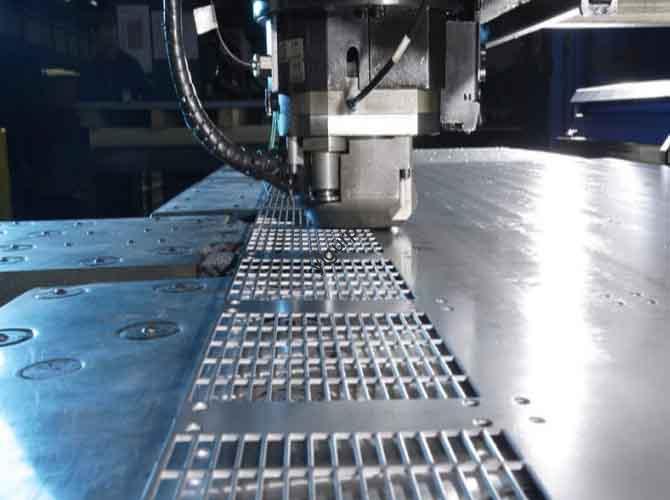
Si vous recherchez un produit fiable, services d'usinage CNC de haute précision, Le Portugal devrait être en tête de votre liste. This small European nation has emerged as a powerhouse in fabrication de précision, alliant des siècles de savoir-faire à une technologie de pointe. Dans 2023, Exportations de machines-outils du Portugal (croissance de 17% année après année, avec des machines CNC haut de gamme représentant 62% des exportations) solidifies its role as the EU’s southern precision manufacturing hub . Que vous ayez besoin de prototypage, production en faible volume, or complex aerospace parts, Portuguese CNC shops deliver accuracy, flexibilité, and competitive pricing—let’s break down why this market stands out.
Why Portugal Leads in European CNC Machining
Portugal’s success in CNC machining isn’t accidental; it’s built on three unshakable pillars: strategic advantages, soutien du gouvernement, and technical expertise. These factors work together to create a manufacturing ecosystem that outperforms many larger nations.
Strategic Location & Supply Chain Efficiency
Sitting at Europe’s western gateway, Portugal offers unparalleled logistical benefits. Lisbon Port’s proximity to major EU markets reduces shipping costs by 35% compared to routes through the Suez Canal . This “bridge” position lets CNC shops source materials (like aluminum alloys from Spain or brass from Germany) quickly and deliver finished parts to Paris, Berlin, or London in 2–3 days. Par exemple, CNC Proto, based near Lisbon, leverages this to offer 24-hour quotes and 5-day turnaround for prototype parts to European clients .
Government & EU Support
The Portuguese government’s “工业 2025” plan provides 13% tax credits for CNC machining companies investing in technology, plus 专项研发补贴 that help push precision to the nanoscale . On top of that, EU funding (from programs like “地平线欧洲”) covers up to 30% of project costs for innovation. Take Unimec, a Portuguese firm that used EU grants to develop “绿色加工技术,” cutting machine energy use by 40% and winning the 2023 European Green Manufacturing Award . These incentives make it easier for shops to adopt advanced tools like 5-axis machines or digital 孪生 systems.
Skilled Workforce & Academic Partnerships
Portugal’s workforce combines technical training with a tradition of precision. Universities like the University of Porto and Lisbon Polytechnic run specialized CNC machining programs, partnering directly with companies to train students on live projects . This “产学研” link ensures workers understand both machine operation and design for manufacturing (DFM). AGS Machining, a 43-year-old firm in Oporto, attributes its 0.005mm tolerance capabilities to this skilled labor pool—critical for their medical and aerospace clients .
Core Capabilities of Portuguese CNC Shops
Portuguese CNC machining isn’t one-size-fits-all. Shops specialize in diverse services, matériels, and industries, making the market flexible enough for startups and Fortune 500 companies alike.
Key Services Offered
Most top shops provide a full suite of services to avoid outsourcing (and maintain quality control):
- Fraisage CNC: 3-axis to 5-axis capabilities for complex geometries. Machinedia’s 5-axis machines use a patented “动态平衡系统” to hold tolerances of ±0.002mm—ideal for aerospace parts .
- Tournage CNC: 2-axis to multi-axis turning for cylindrical parts. Fagor’s turning centers use their own FGM-80 数控系统 to achieve ±0.0005mm accuracy .
- Finition: Anodisation, placage, revêtement en poudre, and painting. AGS Machining offers in-house finishing to protect parts from corrosion and improve aesthetics .
- Assistance à la conception: DFM optimization and 3D modeling. Many shops, comme AGS, will refine your 3D models or sketches to make production faster and cheaper .
Materials Expertise
Portuguese shops work with nearly every machinable material, with deep expertise in high-demand options:
- Métaux: Aluminium (6000/7000 série), acier inoxydable, laiton, and copper—used heavily in automotive and energy industries .
- Plastiques: POM, UHMW-OR, COUP D'OEIL, and polyamides—critical for medical devices and food industry parts .
- Matériaux spécialisés: Composites and exotic alloys for aerospace and defense .
CNC Proto specializes in aluminum and engineering plastics, optimizing their tooling to offer lower prices for these materials while maintaining precision . This focus makes them a go-to for startups needing low-volume plastic parts.
Target Industries
Portuguese CNC machining serves a global client base across key sectors:
- Aérospatial: Machinedia’s 5-axis machines produce Airbus engine blades, réduisant le temps de production en 30% .
- Automobile: Fagor’s systems help Volkswagen’s electric vehicle lines achieve 99.7% battery 壳体加工合格率 .
- Médical: Mecanix’s “加工 – 测量一体化” technology makes orthopedic implants with 0.02% 不良率 .
- Énergie & Chemin de fer: Ancor Precision supplies custom parts to wind turbine and train manufacturers .
Top CNC Machining Companies in Portugal: A Comparative Overview
Choosing the right partner depends on your project’s size, complexité, and industry. Below is a breakdown of leading firms to match your needs:
| Company | Specialization | Key Technology/Strength | Idéal pour | Price Range (单机) |
| Machinedia | 5-fraisage d'axe | Dynamic Balance System (±0,002mm) | Aérospatial, pièces complexes | €500k–€2M |
| Fagor | Tournage CNC & control systems | FGM-80 数控系统 (±0,0005mm) | Automobile, production en grand volume | €300k–€1.5M |
| CNC Proto | Prototypage & faible volume | 24-hour quotes, 5-retournement de journée | Startups, makers, R.&D | N / A (service-based) |
| AGS Machining | Full-service machining | 43 années d'expérience, Prise en charge du DFM | Médical, pièces industrielles | N / A (service-based) |
| Unimec | Automated manufacturing | Adaptive Fixture System | Aérospatial, large components | €700k–€2.5M |
*Data sources: *
How to Work with a Portuguese CNC Machining Partner: Un guide étape par étape
Working with a Portuguese shop is straightforward, but following these steps ensures a smooth process:
1. Define Your Project Requirements
Be clear about:
- Designs: Share 3D CAD files (preferred) or detailed 2D drawings with tolerances (par ex., OIN 2768 bien).
- Matériels: Specify the material type (par ex., 6061 aluminium) and any certifications needed (par ex., plastiques de qualité médicale).
- Volume: Prototypage (1–10 pièces), faible volume (10–100), or high-volume (100+).
- Chronologie: Include deadlines for quotes, samples, and final delivery.
2. Request Quotes from 2–3 Shops
Most shops, comme CNC Proto, offer free quotes within 24 heures . Ask for:
- A breakdown of costs (usinage, matériels, finition).
- Lead time estimates.
- Quality control processes (par ex., in-process measuring).
3. Validate Their Expertise
- Ask for case studies related to your industry (par ex., “Can you share examples of medical parts you’ve made?»).
- Check certifications (par ex., OIN 9001 for quality, OIN 13485 à usage médical).
- Request a sample part if your project is high-value (many shops offer this for a small fee).
4. Collaborate on Design Optimization
Leverage their DFM expertise: AGS Machining often suggests small design tweaks (like rounded corners) that reduce machining time by 20–30% . This step saves money and avoids production delays.
5. Monitor Production & Receive Delivery
Reputable shops provide updates (par ex., photos of in-progress parts) and share inspection reports. Thanks to Portugal’s logistics, European clients get parts in 2–5 days; global clients (par ex., NOUS., Asie) typically wait 1–2 weeks.
Future Trends Shaping CNC Machining in Portugal
The Portuguese CNC market is evolving fast, driven by three key trends:
1. Digital Twin Technology
Shops like Fagor are integrating digital 孪生 systems to simulate production and predict maintenance needs . This cuts downtime by 30%—critical for high-volume clients like Volkswagen.
2. Green Manufacturing
EU regulations and consumer demand are pushing shops to reduce waste. Unimec’s green machining technology uses 40% less energy, and many shops now recycle 95% of metal chips .
3. Advanced Automation
Collaborative robots (“cobots”) and lights-out manufacturing are becoming standard. Machinedia runs 24/7 production with cobots, augmenter la production de 50% without adding staff .
Yigu Technology’s Perspective
Portugal’s CNC machining sector excels at balancing precision, flexibilité, and cost—an increasingly rare combination in global manufacturing. What sets it apart is the ecosystem: government support removes barriers to innovation, academic partnerships ensure a skilled workforce, and strategic location makes it a logistical hub for Europe. For companies seeking high-quality parts without the premium of German or Swiss machining, Portugal is a smart choice. We’ve partnered with several Portuguese shops and consistently seen them meet tight tolerances and deadlines, especially in aerospace and automotive sectors. Their customer-centric approach—like 24-hour quotes and design support—also makes them easy to work with for both large enterprises and startups.
FAQ: Common Questions About CNC Machining in Portugal
1. What tolerances can Portuguese CNC shops achieve?
Most shops offer standard tolerances of ±0.10mm to ±0.05mm. Specialized firms like Machinedia et Fagor achieve ±0.002mm and ±0.0005mm, respectivement .
2. How long does it take to get parts from Portugal?
Prototypes: 3–7 jours (EU clients), 1–2 semaines (global). Production en grand volume: 2–4 semaines, en fonction de la complexité .
3. Are Portuguese CNC services more affordable than other European countries?
Yes—labor and operational costs are 20–30% lower than in Germany or Switzerland, while quality remains comparable .
4. Do shops offer international shipping and customs support?
Nearly all top shops (par ex., CNC Proto, Ancor Precision) handle shipping and provide documentation to simplify customs .
5. What certifications do Portuguese CNC shops hold?
Most have ISO 9001 (qualité) et ISO 14001 (environnemental) attestations. Medical-focused shops often have ISO 13485 .