
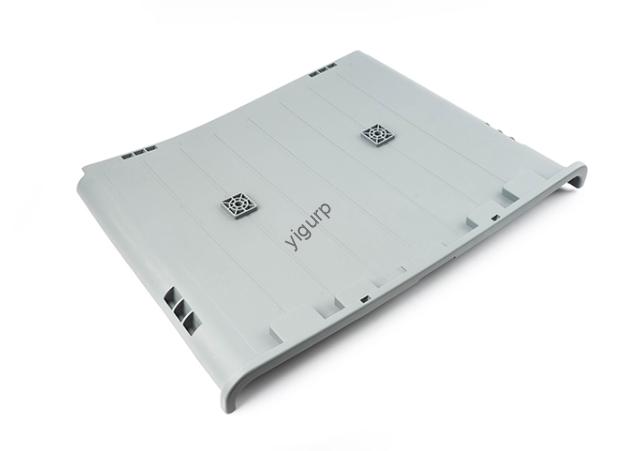
Lorsque les développeurs de produits et les ingénieurs ont besoin de pièces prototypes qui équilibrent la durabilité, clarté, et la rentabilité, CNC machining PET prototype parts emerge as a reliable solution. Polyéthylène téréphtalate (ANIMAL DE COMPAGNIE) est un thermoplastique polyvalent connu pour son excellente résistance mécanique et sa stabilité chimique, ce qui le rend idéal pour les prototypes dans des secteurs comme l'électronique grand public, dispositifs médicaux, et emballage. This guide walks you through everything from PET’s key benefits to real-world applications, helping you make informed decisions for your prototyping projects.
1. What Are CNC Machining PET Prototype Parts?
CNC machining PET prototype parts are physical prototypes crafted from PET plastic using Computer Numerical Control (CNC) technologie. Unlike additive methods like 3D printing, CNC machining uses a subtractive process: it carves the desired shape from a solid PET block, ensuring high precision and consistent quality.
Key Advantages of PET for Prototyping
PET stands out among prototyping materials for solving common challenges like cost, durabilité, et la convivialité. Here’s why it’s a top choice:
- Rentabilité: PET raw materials are more affordable than engineering plastics like PPS, making it ideal for low-budget prototype projects.
- Mechanical strength: Offers good tensile strength (jusqu'à 70 MPa) et résistance aux chocs, suitable for testing functional parts like gear prototypes.
- Clarity option: Clear PET variants allow visual inspection of internal structures—perfect for medical device prototypes (par ex., fluid flow components).
- Résistance chimique: Resists water, alcools, et acides doux, ensuring prototypes hold up in everyday testing environments.
- Ease of machining: PET’s low melting point (250-260°C) and machinability reduce tool wear, lowering production costs.
2. Step-by-Step Process for CNC Machining PET Prototype Parts
Creating CNC machining PET prototype parts requires a structured approach to avoid errors like material melting or dimensional inaccuracies. Ci-dessous un détail, actionable process with tools and tips:
| Étape | Detailed Actions | Tools/Software Used | Critical Tips for Success |
| Conception & Programmation | 1. Create a 3D model of the prototype using CAD software. 2. Convert the model to G-code (mode d'emploi de la machine) via un logiciel de FAO. | GOUJAT: SolidWorks, Autodesk Inventor CAM: Mastercam, Fusion 360 | Utiliser parametric design to quickly adjust dimensions if your team requests changes. |
| Configuration de la machine | 1. Select a CNC machine (3-axis for simple parts, 5-axis for complex shapes). 2. Secure the PET block to the worktable with clamps. | 3-axe CNC (par ex., Haas TM-1) 5-axe CNC (par ex., DMG MORI) | Utiliser soft-jaw clamps to avoid damaging PET’s surface—especially critical for clear PET. |
| Usinage grossier | Remove excess PET material at high feed rates to reach the near-final shape. | Large endmills (8-12mm) Vitesse d'alimentation: 600-900 mm/min | Keep cutting speed low (120-150 m/mon) to prevent PET from melting and gumming up tools. |
| Finition | Use small tools for precise cuts to meet dimensional and surface quality requirements. | Small endmills (2-5mm) Vitesse d'alimentation: 200-400 mm/min | Appliquer compressed air (instead of liquid coolant) to keep PET parts dry and clean. |
| Post-Treatment | 1. Clean parts with isopropyl alcohol to remove chips. 2. Polish surfaces with 600-800 grit sandpaper. 3. Inspect dimensions with a CMM. | Ultrasonic cleaner Coordinate Measuring Machine (MMT) | For clear PET, use a polishing compound to restore transparency after machining. |
| Contrôle de qualité & Livraison | 1. Visually inspect for cracks, rayures, or deformities. 2. Verify tolerances (typically ±0.02mm for PET). 3. Package parts for shipping. | Calipers Visual inspection checklist | Document inspection results to share with your team for design validation. |
3. Real-World Case Studies: Pièces de prototypes PET d'usinage CNC
To illustrate how CNC machining PET prototype parts solve real problems, here are two industry examples:
Cas 1: Consumer Electronics Charger Housing Prototype
A startup developing a wireless charger needed a prototype housing that was lightweight, durable, et rentable. They chose CNC machining PET prototype parts for these reasons:
- PET’s low cost fit their tight budget (5 prototypes cost under $200 total).
- CNC machining ensured the housing’s USB port cutout had precise tolerances (±0,01mm), so the port fit perfectly.
Résultat: The prototype passed drop tests (1.5m onto concrete) sans craquer. The startup used the design to secure funding and moved to mass production—saving 3 weeks of development time.
Cas 2: Medical Fluid Reservoir Prototype
A medical device company needed a clear prototype reservoir to test fluid flow for a new insulin pump. CNC machining PET prototype parts were the solution because:
- Clear PET allowed engineers to visualize fluid movement during testing.
- PET’s chemical resistance meant it didn’t react with insulin or cleaning solutions.
Résultat: The prototype met FDA guidelines for biocompatibility. The company used the data to optimize the reservoir’s shape, reducing fluid waste by 15%.
4. CNC Machining PET vs. Other Prototyping Methods
Choosing the right prototyping method depends on your project’s needs. Below is a comparison of CNC machining PET with 3D printing (FDM) et moulage par injection:
| Feature | CNC Machining PET | 3D Impression (FDM) | Moulage par injection (ANIMAL DE COMPAGNIE) |
| Délai de mise en œuvre | 1-2 jours | 4-8 heures | 2-3 semaines (tooling required) |
| Coût (1-5 Prototypes) | \(30-\)150 par pièce | \(20-\)80 par pièce | $800+ (coût de l'outillage) |
| Tolérance | ±0,02 mm (haute précision) | ±0,1mm (lower precision) | ±0,01mm (haut, but inflexible) |
| Finition de surface | Lisse (Râ 1.2-1.8 µm) | Layer lines (Râ 3.5-5.0 µm) | Lisse (Râ 0.8-1.2 µm) |
| Idéal pour | Functional, low-cost prototypes with tight tolerances | Rapide, simple prototypes (par ex., parenthèses) | Production de masse (1000+ parties) |
For most teams, CNC machining PET prototype parts strike the best balance between cost, précision, and usability—especially for functional testing.
5. Yigu Technology’s Perspective on CNC Machining PET Prototype Parts
Chez Yigu Technologie, we’ve helped 300+ clients (des startups à Fortune 500 entreprises) create CNC machining PET prototype parts. We recommend PET for projects where cost and speed matter without sacrificing quality. Our 3-axis CNC machines are optimized for PET: we use specialized endmills to prevent melting and offer 24-hour turnaround for urgent orders. For clear PET parts, our post-polishing process ensures transparency, critical for medical and electronics applications. Every PET prototype undergoes CMM inspection to meet your exact specifications—so you can trust the results for design validation.
FAQ
1. How much does CNC machining a PET prototype part cost?
Cost depends on size and complexity: petit, pièces simples (par ex., a 50x50mm bracket) coût \(30-\)50, while larger, pièces complexes (par ex., a 150x100mm medical reservoir) coût \(80-\)150. Quantity discounts apply for 10+ parties.
2. Can CNC machining PET prototype parts be used for food-contact applications?
Oui! Food-grade PET (conforme à la FDA 21 CFR 177.1310) is available. We use food-safe cutting tools and cleaning processes to ensure parts meet food-contact standards—ideal for packaging prototypes.
3. What is the maximum size of a CNC machining PET prototype part?
Our standard CNC machines handle PET blocks up to 800mm x 600mm x 400mm. Pour les pièces plus grandes (par ex., 1200mm x 800mm packaging prototypes), we offer custom setups with our 5-axis machines.