
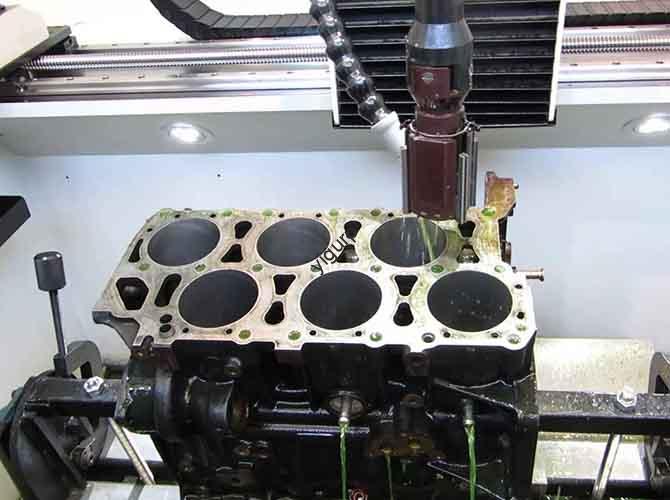
Dans Usinage CNC, pourquoi deux pièces d'apparence identique, dont une en alliage d'aluminium, un modèle en acier inoxydable – fonctionne de manière radicalement différente dans le monde réel? The answer lies in CNC machining materials—the foundation of every precision part. La sélection du mauvais matériau peut entraîner une défaillance prématurée, coûts gaspillés, ou objectifs de performance manqués. This article breaks down the most common CNC machining materials, leurs propriétés clés, applications industrielles, critères de sélection, et les tendances futures, helping you pick the perfect material for your project.
What Are CNC Machining Materials?
CNC machining materials refer to the diverse range of substances used in Computer Numerical Control (CNC) manufacturing to create precision parts. These materials are chosen based on the final product’s needs—whether it requires strength (pour composants aérospatiaux), résistance à la corrosion (pour dispositifs médicaux), or lightweight design (pour pièces automobiles).
Think of them as “building blocks with unique superpowers”: each material has a set of properties that make it ideal for specific tasks. Par exemple, titanium alloys are “strong yet light” (perfect for aircraft parts), while ceramics are “heat-resistant warriors” (great for high-temperature industrial tools).
A Complete Guide to Common CNC Machining Materials
CNC machining materials fall into four main categories: métallique, non-metallic, special, and composite. Below is a detailed breakdown of each category, with key properties and real-world uses:
1. Metallic Materials (Most Widely Used)
Metals dominate CNC machining due to their strength and durability. The table below highlights the top options:
| Matériel | Propriétés clés | Applications industrielles | Machinability Tips |
| Alliages d'aluminium (6061, 7075) | – Léger (densité: 2.7 g/cm³) – Bonne usinabilité – Moderate strength (6061: 276 Résistance à la traction MPa) | – Automobile: Wheel rims, pièces de moteur – Electronique grand public: Coques de téléphone, cadres d'ordinateurs portables – Aérospatial: Composants intérieurs | – Use high cutting speeds (150–200 m/min) – Avoid excessive force (causes deformation) |
| Acier inoxydable (304, 316) | – Excellente résistance à la corrosion – Haute résistance (304: 515 Résistance à la traction MPa) – Résistant à la chaleur (up to 870°C) | – Médical: Instruments chirurgicaux, pièces implantables – Food Industry: Equipment tanks, convoyeurs – Marin: Ship hull components | – Utiliser des outils en carbure (résiste à l'usure) – Apply coolant to reduce heat buildup |
| Alliages de titane | – Ultra-high strength-to-weight ratio – Résistant à la corrosion (même en eau salée) – Biocompatible | – Aérospatial: Ailes d'avion, rocket engine parts – Médical: Hip replacements, implants dentaires – Défense: Military vehicle armor | – Slow cutting speeds (50–80 m/min) – Use cermet tools (handles high heat) |
| Superalloys (Inconel, Hastelloy) | – Maintenir la résistance à des températures extrêmes (jusqu'à 1 200°C) – Resist oxidation and chemical corrosion | – Aérospatial: Gas turbine blades – Énergie: Nuclear reactor components – Chimique: High-temperature reaction vessels | – Utiliser des outils diamantés – Low feed rates (0.05–0.1 mm/rev) to prevent tool chipping |
2. Non-Metallic Materials (For Lightweight & Special Needs)
Non-metals are ideal for parts that don’t require heavy strength but need other properties (par ex., isolation, flexibilité). Here are the top choices:
- Plastiques techniques (ABS, PC, POM):
- Propriétés: ABS is tough and impact-resistant; PC has high heat resistance (jusqu'à 130°C); POM is wear-resistant (like metal but lighter).
- Applications: ABS for automotive dashboards; PC for safety goggles; POM for gears and bearings.
- Exemple: A consumer electronics firm uses PC to make laptop bezels—they withstand daily impacts and don’t warp in hot environments.
- Matériaux Céramiques (Zircone, Nitrure de Silicium):
- Propriétés: Haute dureté (HV 1,200–1,500), résistance à la chaleur (jusqu'à 1 600°C), and electrical insulation.
- Applications: Zirconia for dental crowns; silicon nitride for industrial cutting tools.
- Cas: A manufacturing plant uses silicon nitride tools to cut steel—they last 5x longer than carbide tools.
- Semiconductor Materials (Silicium):
- Propriétés: Semiconducting (conducts electricity under specific conditions), high purity (99.9999%).
- Applications: Electronic chips, microprocessors, solar panels.
- Fact: 90% of global semiconductors are made from CNC-machined silicon wafers.
3. Matériaux spéciaux (For Advanced Technologies)
These materials have unique “smart” or specialized properties, making them critical for cutting-edge industries:
| Matériel | Unique Property | Applications |
| Shape Memory Alloys (Nitinol) | Restore original shape when heated to a specific temperature (par ex., 60°C). | – Médical: Stents (expand in blood vessels when heated) – Aérospatial: Self-deploying satellite antennas |
| Superconducting Materials (Yttrium-Barium-Copper-Oxide) | Zero electrical resistance at extremely low temperatures (-196°C for liquid nitrogen cooling). | – Transportation: Maglev train magnets – Médical: MRI machine coils – Énergie: Superconducting power cables |
| Smart Materials (Céramiques piézoélectriques) | Change shape when an electric current is applied (or generate current when squeezed). | – Capteurs: Pressure detectors in industrial machines – Actuators: Precision valves in aerospace systems – Consumer Tech: Touchscreen haptic feedback |
How to Choose the Right CNC Machining Material (Étape par étape)
Selecting a material isn’t guesswork—follow this 4-step process to match your project’s needs:
- Define Product Requirements:
Demander: What does the part need to do? Par exemple:
- Does it need to withstand weight? (Prioritize strength: titane, steel.)
- Will it be exposed to water or chemicals? (Prioritize corrosion resistance: acier inoxydable, superalloys.)
- Does it need to be lightweight? (Prioritize aluminum, engineering plastics.)
- Evaluate Machinability:
Some materials are hard to machine (par ex., titane) and require expensive tools. Balance performance with cost:
- Exemple: A startup making low-cost drone frames chooses aluminum over titanium—it’s 30% cheaper to machine and light enough for the drone’s needs.
- Consider Cost-Effectiveness:
- Superalloys cost \(100–)200 par kg; aluminum costs \(2–)5 par kg. Only use expensive materials if the part besoins leurs propriétés.
- Tip: For non-critical parts (par ex., decorative covers), use engineering plastics instead of metals to cut costs by 50%.
- Test & Validate:
Machine a small prototype with your chosen material and test it in real conditions:
- If a stainless steel part rusts in saltwater tests, switch to 316 acier inoxydable (more corrosion-resistant than 304).
- If an aluminum part bends under load, upgrade to 7075 aluminium (plus fort que 6061).
Yigu Technology’s Perspective
Chez Yigu Technologie, we believe CNC machining materials are the “unsung heroes” of precision manufacturing. Our CNC systems are optimized for diverse materials: we offer specialized toolpaths for titanium (reducing machining time by 25%) and real-time material monitoring for plastics (éviter la surchauffe). We’ve helped clients—from medical device makers to aerospace firms—cut material waste by 15% by matching the right material to their needs. As new materials (like bio-based plastics and advanced composites) emerge, we’ll keep updating our software to ensure seamless machining—making high-performance parts more accessible than ever.
FAQ
- Q: What’s the most cost-effective CNC machining material for general-purpose parts?
UN: 6061 aluminum alloy— it’s cheap (\(2–)5 par kg), facile à usiner, and has enough strength for most non-critical parts (par ex., parenthèses, boîtiers).
- Q: Can CNC machining handle both metallic and non-metallic materials with the same machine?
UN: Oui! Most of our CNC machines use interchangeable tools: switch to carbide tools for metals and high-speed steel (HSS) outils pour les plastiques. Just adjust cutting parameters (vitesse, vitesse d'avance) for each material.
- Q: Are there eco-friendly CNC machining materials?
UN: Absolument. Options include recycled aluminum (utilise 95% less energy than virgin aluminum), bio-based plastics (à base de maïs ou de canne à sucre), and bamboo fiber composites. We help clients integrate these materials into their workflows to reduce carbon footprints.