
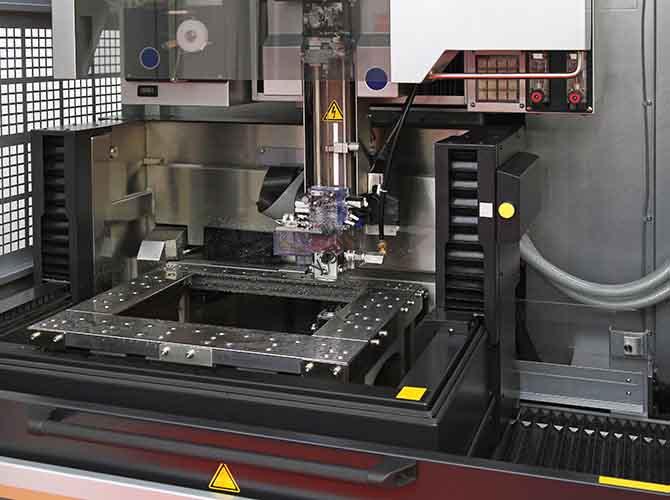
Dans la fabrication moderne, pourquoi faire 90% de high-precision factories rely on CNC machining and simulation instead of traditional machining alone? La réponse réside dans sa capacité à résoudre les problèmes critiques, comme les erreurs d'usinage coûteuses., cycles de production longs, et une faible cohérence du produit, qui freinent les méthodes traditionnelles. Cet article explique ce qu'est l'usinage et la simulation CNC, its core components, avantages clés, applications du monde réel, and step-by-step implementation, helping you leverage this technology to cut costs and boost quality.
What Is CNC Machining and Simulation?
CNC machining and simulation is an integrated technology that combines Computer Numerical Control (CNC) machining with virtual simulation. Think of it as a “digital rehearsal” for manufacturing: d'abord, you create a virtual model of the entire machining process (machine tools, workpieces, outils, and paths), test and optimize it, then execute the proven plan on physical CNC machines.
This technology isn’t just about “previewing” machining—it’s about predicting and fixing problemsavant they happen. Par exemple, a simulation can catch a tool collision that would destroy a $5,000 workpiece in real machining, saving time and money.
Core Components of CNC Machining and Simulation
CNC machining and simulation has 5 key components that work together to ensure smooth, error-free production. Here’s a detailed breakdown using a table:
| Component | But | Principales fonctionnalités |
|---|---|---|
| CNC Machine Tool Simulation | Model the physical CNC machine (structure, motion systems, main components) to replicate real-world movement. | – Simulates 5-axis motion for complex parts.- Matches parameters of real machines (par ex., FANUC 0i series). |
| Workpiece Design & Path Planning | Create 3D models of workpieces and plan tool paths to ensure accuracy. | – Uses CAD software (par ex., SolidWorks) for workpiece modeling.- Validates path stability to avoid overcutting. |
| Optimisation du parcours d'outil | Refine tool paths to reduce machining time and improve surface quality. | – Shortens path length by 15–20% on average.- Adjusts feed rates for hard materials (par ex., titane). |
| Process Parameter Simulation | Test different parameter combinations (vitesse, vitesse d'avance, depth of cut) to find the best setup. | – Predicts how parameters affect tool wear and workpiece quality.- Reduces trial-and-error in physical machining. |
| CNC Simulation Software | The “brain” that integrates all components into a virtual environment. | – Supports popular software (par ex., Svo CNC, Aerospace CNC, Yulong CNC).- Offers real-time visual feedback (par ex., tool movement, material removal). |
CNC Machining and Simulation vs. Traditional Machining: A Clear Comparison
Many manufacturers wonder if the investment in simulation is worth it. The table below contrasts the two methods to show why simulation is a game-changer:
| Aspect | Usinage et simulation CNC | Traditional Machining (No Simulation) |
|---|---|---|
| Error Rate | <1% (simulation catches collisions, overcuts, and parameter mistakes). | 8–12% (errors often discovered only after machining, leading to scrap). |
| Production Cycle | Shortens by 30–40% (optimized paths and no rework). | Plus long (requires multiple trial runs to fix issues). |
| Coût par pièce | Inférieur (reduces scrap, usure des outils, and labor time). | Plus haut (scrap parts, wasted tooling, and extra labor for rework). |
| Cohérence | 99.5% part-to-part consistency (simulation ensures identical paths every time). | 85–90% consistency (dépend de la compétence de l'opérateur). |
Key Benefits of CNC Machining and Simulation (With Real-World Examples)
CNC machining and simulation delivers tangible benefits that solve real manufacturing problems. Voici 3 core benefits with concrete cases:
1. Reduces Costly Scrap and Rework
- Problème: A medical device manufacturer was wasting 12% of titanium hip implants due to tool collisions in traditional machining—each scrap implant cost $2,000.
- Solution: After adopting simulation, they tested tool paths virtually and eliminated collisions. Le taux de rebut est tombé à 0.8%, économie $480,000 annuellement.
2. Speeds Up Product Development
- Problème: Besoin d'un équipementier automobile 6 weeks to develop a new engine bracket (3 weeks of trial runs + 3 weeks of production).
- Solution: Simulation optimized the tool path and parameters in 3 jours. Total development time fell to 2 semaines, cutting time-to-market by 67%.
3. Improves Operator Training
- Problème: A factory struggled to train new CNC operators—beginners took 3 months to master machine operation (risking damage during training).
- Solution: Simulation let trainees practice on virtual machines (no risk of damage). Training time dropped to 1 mois, and new operators made 50% fewer mistakes.
Step-by-Step Guide to Implementing CNC Machining and Simulation
Follow this linear process to integrate simulation into your manufacturing workflow—each step builds on the last to avoid mistakes:
- Define Goals:
- Identify what you want to improve (par ex., reduce scrap, accélérer la production, train operators). Par exemple, a goal could be “cut scrap rate from 10% à 2% for aluminum parts.”
- Choose Simulation Software:
- Pick software that matches your CNC machines. If you use FANUC 0i series machines, choose software compatible with FANUC (par ex., Svo CNC or Yulong CNC).
- Create Virtual Models:
- Model the CNC machine (import specs from the manufacturer), workpiece (use CAD software), and tools (input tool geometry and material).
- Plan and Simulate Tool Paths:
- Generate tool paths in the software, then run the simulation. Vérifiez:
- Tool collisions with the machine or workpiece.
- Overcuts (removing too much material) or undercuts (not enough material).
- Unoptimized paths (par ex., unnecessary backtracking).
- Generate tool paths in the software, then run the simulation. Vérifiez:
- Optimize Parameters:
- Test different parameters (par ex., vitesse de coupe: 80 contre. 100 m/mon) in simulation. Choose the setup that balances speed, qualité, et durée de vie de l'outil.
- Execute on Physical Machines:
- Export the optimized program to your CNC machine. Run a small batch (5–10 pièces) first to confirm results, then scale to full production.
- Monitor and Refine:
- Track key metrics (taux de rebut, temps de cycle) post-implementation. Adjust the simulation model if needed (par ex., update tool wear data).
Yigu Technology’s Perspective
Chez Yigu Technologie, we believeCNC machining and simulation is the future of smart manufacturing. Our simulation solutions integrate seamlessly with 90% of global CNC machines (including FANUC and Siemens) and offer real-time data sync (virtual and physical machines share parameters). We’ve helped clients cut production costs by 25% and improve part accuracy by 30%. As AI advances, we’re adding predictive analytics to simulation—soon, it will forecast tool wear and auto-adjust parameters, making manufacturing even more efficient.
FAQ
- Q: How much does CNC machining and simulation software cost?UN: Entry-level software (for small factories) costs $5,000–$15,000. Enterprise-level software (for large manufacturers with 5-axis machines) costs $30,000–$80,000. Most suppliers offer free trials.
- Q: Can simulation work for all CNC processes (par ex., fraisage, tournant, GED)?UN: Oui! Modern software supports milling, tournant, wire EDM, and machining centers. You just need to select the right module for your process (par ex., EDM module for wire EDM machines).
- Q: Do I need a powerful computer to run CNC simulation software?UN: A mid-range computer works for basic simulation (4-core CPU, 16GB RAM). For complex 5-axis machining or large workpiece models, use a high-performance computer (8-core CPU, 32GB RAM) to avoid lag.