
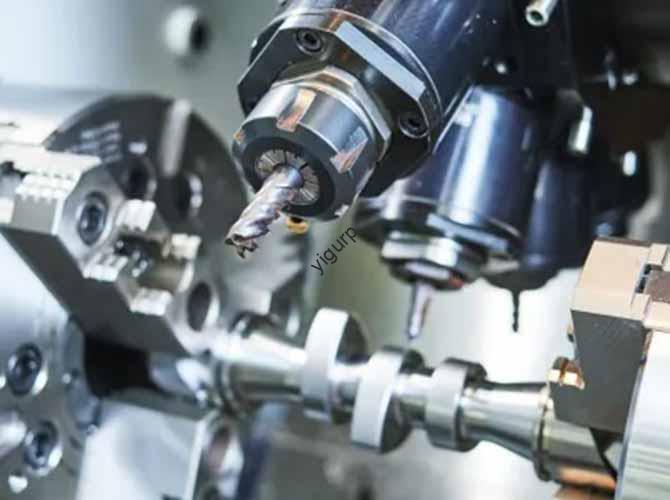
Quand il s'agit de CNC aluminum machining, même de petits ajustements des paramètres peuvent faire la différence entre une pièce impeccable et une pièce gaspillée. Que vous soyez un opérateur chevronné ou un directeur d'usine cherchant à optimiser la production, comprendre comment affiner les paramètres clés est essentiel. Ce guide décompose le noyau CNC aluminum processing parameters with actionable data, comparaisons, and practical tips to solve common challenges.
1. Core CNC Aluminum Processing Parameters: Définition & Optimal Ranges
The four most influential parameters—vitesse de broche, depth of cut, vitesse d'avance, etsélection d'outils—directly impact machining efficiency, état de surface, et durée de vie de l'outil. Below is a clear breakdown of each, with industry-proven ranges for aluminum alloys (par ex., 6061, 7075):
| Paramètre | Définition | Common Range for Aluminum | Key Impact Factor |
|---|---|---|---|
| Vitesse de broche | Rotational speed of the tool (measured in RPM) | 3,000–12 000 tr/min | Machine spindle type (BT30/BT40/BT50) & tool material |
| Depth of Cut (DOC) | Thickness of material removed per pass | 0.5–5mm | Workpiece tolerance & tool rigidity |
| Vitesse d'alimentation | Distance the tool moves per minute (measured in mm/min) | 1,000–3,000 mm/min | Cutting speed & aluminum alloy type |
| Tool Material | Material of the cutting tool | Carbure > High-Speed Steel | Résistance à l'usure & machining efficiency |
2. How to Set Spindle Speed: Avoid Tool Wear & Poor Finish
The spindle speed determines how fast the tool cuts through aluminum—but “faster” doesn’t always mean “better.”
Key Considerations:
- Machine Spindle Limitations: A BT30 spindle (common in small CNC machines) typically maxes out at 10,000 RPM, while a BT50 spindle (for heavy-duty machining) may cap at 6,000 RPM. Exceeding these limits risks spindle damage.
- Tool Material Impact: Outils en carbure (the most popular for aluminum) handle higher speeds (8,000–12 000 tr/min) than high-speed steel (HSS) outils (3,000–6,000 RPM).
Exemple: For a 6061 aluminum part using a carbide end mill and BT40 spindle, set the speed to 8,500 RPM. This balances efficiency and tool life—going to 12,000 RPM would cut cycle time by 20% but reduce tool life by 35%.
3. Depth of Cut (DOC): Balance Efficiency & Tool Load
Why does DOC matter? A too-deep cut strains the tool, causing vibration and rough surfaces; a too-shallow cut wastes time.
Step-by-Step DOC Selection:
- Check the workpiece’s required thickness: If you need to remove 10 mm of material, split it into 2–3 passes (par ex., 5 mm → 3 mm → 2 mm) instead of one 10 mm pass.
- Match DOC to tool size: UN 10 mm diameter end mill can handle a 5 mm DOC, but a 3 mm diameter end mill should max out at 1.5 mm DOC to avoid breaking.
- Test with a scrap piece: Before machining the final part, test the DOC on a small aluminum scrap to check for vibration.
4. Vitesse d'alimentation: The Link Between Speed & Qualité des surfaces
Feed rate is like the “pace” of the tool—too fast, and the part deforms; trop lent, and costs rise.
Common Feed Rate Mistakes & Correctifs:
| Mistake | Symptom | Fix |
|---|---|---|
| Feeding too fast (sur 3,000 mm/min) | Workpiece bends or has burrs | Lower to 2,500–2,800 mm/min |
| Feeding too slow (sous 1,000 mm/min) | Long cycle times; tool overheats | Increase to 1,200–1,500 mm/min |
| Ignoring alloy type | Uneven surface finish | Use 1,000–1,800 mm/min for 7075 (Plus fort) contre. 1,800–3,000 mm/min for 6061 (softer) |
5. Tool Selection for CNC Aluminum Machining: Carbide vs. HSS
Aluminum’s tendency to “stick” to tools makes tool choice critical. Let’s compare the two most common options:
| Feature | Outils en carbure | High-Speed Steel (HSS) Outils |
|---|---|---|
| Résistance à l'usure | Excellent (lasts 3–5x longer than HSS) | Pauvre (needs frequent sharpening) |
| Speed Compatibility | Haut (jusqu'à 12,000 RPM) | Faible (maximum 6,000 RPM) |
| Coût | Higher upfront ($20–$50 per tool) | Lower upfront ($5–$15 per tool) |
| Idéal pour | Production en grand volume; tolérances serrées | Small-batch jobs; simple cuts |
Pro Tip: Choose carbide tools with alarge rake angle (15°–20°). This reduces cutting force and prevents aluminum from adhering to the tool’s edge.
6. Yigu Technology’s Perspective on CNC Aluminum Processing
Chez Yigu Technologie, we’ve supported 500+ manufacturers in optimizing CNC aluminum machining. From our experience, 70% of quality issues stem from mismatched parameters—e.g., using a high feed rate with a shallow DOC. We recommend pairing ourYigu CNC spindle units (BT30/BT40 models) avec des outils en carbure: our BT40 spindle’s stable 10,000 RPM output, combined with a 15° rake angle carbide tool, cuts cycle time by 25% while keeping surface roughness (Râ) below 0.8 µm. For small-batch users, our HSS tool kits (pre-sharpened for aluminum) reduce setup time by 40%.
FAQ: Common Questions About CNC Aluminum Processing Parameters
- Q: Can I use the same parameters for 6061 et 7075 aluminium?UN: Non. 7075 is harder, so lower spindle speeds (6,000–8 000 tr/min) et taux d'alimentation (1,000–1,800 mm/min) are needed, par rapport à 6061 (8,000–12 000 tr/min; 1,800–3,000 mm/min).
- Q: How do I fix vibration caused by deep cuts?UN: Reduce the depth of cut by 30%, increase spindle speed by 10%, or use a tool with a larger diameter (par ex., switch from 6 mm à 10 mm end mill) for more rigidity.
- Q: When should I choose HSS tools over carbide?UN: HSS is better for small-batch jobs (moins que 50 parties) or simple cuts (par ex., percer des trous), as it’s cheaper upfront. Pour une production en grand volume, carbide’s longer life saves money.