
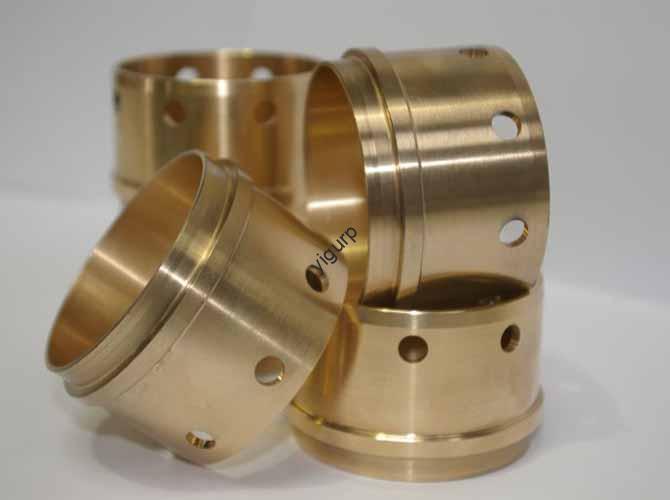
Lorsqu'il s'agit de matériaux qui équilibrent les performances, durabilité, et durabilité, few can match the versatility of C110 copper alloy. Aussi connu sous le nom electrolytic tough pitch (ETP) cuivre, cet alliage est un incontournable dans les industries allant de l'électronique à la construction, grâce à sa conductivité exceptionnelle, résistance à la corrosion, et recyclabilité. But what exactly sets it apart from other metals? Dans ce guide, nous allons décomposer ses propriétés clés, applications du monde réel, fabrication methods, and environmental benefits to help you understand why it’s a preferred material for critical projects.
1. Core Properties of C110 Copper Alloy: Pourquoi il se démarque
C110 copper alloy’s popularity stems from a unique combination of physical and chemical properties that address the needs of high-performance applications. Below is a detailed breakdown of its most critical characteristics, including comparisons to other common metals.
1.1 Electrical and Thermal Conductivity: Industry-Leading Efficiency
The defining feature of C110 copper alloy is its unmatched electrical conductivity, rated at 101% SIGC (Norme internationale de cuivre recuit)—a benchmark used to measure metal conductivity against pure annealed copper. This means it transfers electricity more efficiently than nearly all other commercial metals, minimizing energy loss in electrical systems.
Its thermal conductivity is equally impressive, measuring 226 BTU/sq.ft./hr/°F. This allows it to quickly transfer heat, making it ideal for cooling and heat exchange applications. To put these numbers in perspective, see how C110 compares to other metals:
| Matériel | Conductivité thermique (BTU/sq.ft./hr/°F) | Conductivité électrique (% SIGC) | Key Use Case |
| Alliage de cuivre C110 | 226 | 101 | Câblage électrique, échangeurs de chaleur |
| Argent | 247 | 70 | Electronique haut de gamme (limited use due to cost) |
| Or | N / A | 70 | Bijoux, connecteurs spécialisés |
| Aluminium | N / A | 61 | Lightweight electrical components |
Why this matters: For industries like power generation or HVAC, even small improvements in conductivity translate to lower energy costs and more reliable performance. C110’s ability to outperform aluminum and match silver (at a fraction of the cost) makes it a cost-effective choice.
1.2 Corrosion Resistance and Durability: Long-Lasting Performance
C110 copper alloy naturally forms a couche d'oxyde protectrice lorsqu'il est exposé à l'air, shielding it from rust and degradation. This makes it suitable for harsh environments, y compris:
- Systèmes de plomberie (potable water and wastewater)
- Marine applications (coques de navires, offshore components)
- Outdoor installations (toiture, éléments décoratifs)
Unlike some metals, it also resists hydrogen embrittlement—a common issue where hydrogen exposure weakens metal structures. This property ensures longevity in hydrogen-rich environments, such as fuel cells or industrial processing plants.
To quantify its durability, consider this: C110 copper pipes in residential plumbing can last 50+ années with minimal maintenance, par rapport à 20-30 years for plastic alternatives.
1.3 Ductility and Malleability: Easy to Shape Without Breaking
C110 copper alloy’s haute ductilité (ability to stretch without fracturing) et excellent malleability (ability to be pressed into shapes) make it a favorite for custom or intricate designs. Key metrics include:
| Propriété | Mesures | Real-World Impact |
| Élongation | 20–50% in 2 pouces | Can be drawn into thin wires (aussi petit que 0.001 pouces) pour l'électronique. |
| Ductilité | Haut | Resists cracking during bending, ideal for HVAC ductwork or architectural details. |
| Malléabilité | Excellent | Can be hammered into sheets or formed into complex shapes (par ex., garniture décorative). |
Par exemple, in the construction industry, C110 is often bent into curved roofing panels or custom pipe fittings—tasks that would crack less malleable metals like steel.
1.4 Recyclabilité: A Sustainable Choice for the Circular Economy
C110 copper alloy is one of the most recyclable metals on the planet, with two critical environmental benefits:
- Energy Savings: Recycling C110 requires only 10–15% of the energy needed to produce primary copper from ore. This reduces greenhouse gas emissions by 80–90% compared to virgin production.
- Property Retention: Unlike plastics or some alloys, C110 retains its full conductivity and durability through multiple recycling cycles. A copper wire recycled today can be turned into a new heat exchanger tomorrow with no loss in performance.
The alloy’s high scrap value (typiquement \(3–)4 per pound) also incentivizes recycling, ensuring less waste ends up in landfills.
2. Applications industrielles: Where C110 Copper Alloy Shines
C110’s versatility makes it indispensable across sectors. Voici ses utilisations les plus courantes, organized by industry, with specific examples and benefits.
2.1 Electrical and Electronics Industry: Powering Reliable Systems
The electrical industry relies on C110 more than any other alloy, thanks to its 101% Conductivité du SIGC. Les applications clés incluent:
- Wiring: Used in residential, commercial, and industrial electrical systems (par ex., Romex cables, high-voltage power lines). Its low resistance reduces energy loss, cutting utility costs.
- Bus Bars: Thick copper strips that distribute electricity in switchgear, transformateurs, and data centers. C110’s conductivity ensures even power distribution, éviter la surchauffe.
- Connectors and Terminals: Used in smartphones, ordinateurs portables, and electric vehicles (VÉ). Its ability to shield against radio frequency interference (RFI) ensures uninterrupted signal flow.
Étude de cas: A major EV manufacturer switched to C110 copper connectors in its battery packs, reducing energy loss by 5% and extending driving range by 8 miles par charge.
2.2 Thermal Management: Keeping Systems Cool
C110’s high thermal conductivity makes it essential for applications where heat control is critical. Common uses include:
- Échangeurs de chaleur: Found in refrigerators, air conditioners, and industrial chillers. C110 transfers heat 30% faster than aluminum, improving cooling efficiency.
- Radiators: Used in cars, trucks, et machinerie lourde. Its durability under thermal stress prevents leaks, even in extreme temperatures (-40°F to 400°F).
- LED Heat Sinks: Dissipates heat from high-power LEDs, extending their lifespan from 20,000 à 50,000 heures.
2.3 Construction and Architecture: Durable and Aesthetic
In construction, C110 balances functionality with visual appeal. Key applications:
- Plumbing: Pipes, raccords, and valves for potable water. It does not leach chemicals (unlike some plastics) and resists corrosion from chlorine or minerals.
- Roofing and Flashing: Develops a unique green patina over time (due to oxidation), adding architectural character. A C110 copper roof can last 100+ années.
- Éléments décoratifs: Skylight frames, dosserets de cuisine, and handrails. Its malleability allows for custom designs, from modern minimalism to ornate patterns.
2.4 Fabrication industrielle: Heavy-Duty Performance
Manufacturers depend on C110 for its strength and reliability in demanding environments:
- Electromagnets: Used in MRI machines, industrial cranes, and particle accelerators. C110’s conductivity enhances magnetic field strength.
- Composants automobiles: Spark plug electrodes and wiring harnesses. Its corrosion resistance ensures longevity, even in engine bays (exposed to oil, chaleur, et l'humidité).
- Industrial Valves: Controls fluid flow in chemical plants and refineries. C110 resists corrosion from acids and solvents, reducing maintenance downtime.
The table below summarizes key applications and their benefits:
| Industrie | Application | Key Benefit of C110 Copper Alloy |
| Electrical/Electronics | Wiring, bus bars | 101% IACS conductivity reduces energy loss. |
| Thermal Management | Échangeurs de chaleur, radiateurs | 226 BTU/sq.ft./hr/°F thermal conductivity enables fast heat transfer. |
| Construction | Plumbing, toiture | Corrosion resistance and 50+ year lifespan. |
| Fabrication | Electromagnets, pièces automobiles | Durability under stress and resistance to chemicals/moisture. |
3. Fabrication and Machinability: How to Work With C110 Copper Alloy
To maximize C110’s performance, proper fabrication is critical. Below are best practices for machining, formation, and joining the alloy.
3.1 Usinage: Tips for Precision and Efficiency
C110 has moderate machinability—rated at 20% compared to free-cutting brass (a benchmark for easy-to-machine metals). To achieve smooth, des résultats de haute qualité, follow these guidelines:
| Machining Step | Best Practice |
| Sélection d'outils | Utiliser carbide tools (preferred for durability) or high-speed steel (HSS). |
| Vitesses de coupe | 200–400 feet per minute (FPM) for carbide; 100–200 FPM for HSS. |
| Feed Rates | 0.002–0.004 inches per revolution (IPR) to avoid tool wear. |
| Lubrication | Use water-soluble or sulfurized oils to reduce friction and heat buildup. |
| Workholding | Secure with soft jaws or pads to prevent surface scratches. |
Common Mistake to Avoid: Using dull tools or excessive cutting speeds can cause “built-up edge” (metal sticking to the tool), ruining the part’s finish.
3.2 Forming and Shaping: Hot vs. Travail à froid
C110’s ductility makes it suitable for both hot and cold working. The table below outlines key parameters:
| Technique | Temperature Range | Use Case |
| Travail à chaud | 1400°F – 1600°F | Forging large parts (par ex., vannes industrielles) or thick sheets. |
| Travail à froid | Room temperature | Rolling into thin wires, bending pipes, or stamping connectors. |
| Recuit | 700°F – 1200°F | Restoring ductility after cold working (par ex., after drawing wire). |
Exemple: To make a copper wire, manufacturers cold-draw C110 through a series of dies (reducing its diameter) and anneal it between steps to keep it flexible.
3.3 Welding and Joining: Ensuring Strong, Durable Joints
Welding C110 requires careful preparation to avoid porosity (bulles d'air) or cracking. Recommended methods:
| Welding Method | Key Considerations |
| TIG (GTAW) | Preferred for precision (par ex., composants électroniques). Use argon shielding gas. |
| MOI (GMAW) | Faster than TIG; idéal pour les grandes pièces (par ex., panneaux de toiture). |
| SMAW (Stick Welding) | Less common—risk of porosity. Only use for thick, pièces non critiques. |
Preparation Steps:
- Clean surfaces thoroughly to remove oxides (use sandpaper or a wire brush).
- Preheat to 500°F to minimize thermal shock (reduces cracking).
- Après soudage, perform post-weld heat treatment to relieve stress.
4. Sustainability and Cost-Effectiveness: The Long-Term Value of C110
For businesses and engineers, choosing a material isn’t just about performance—it’s about long-term value. C110 excels in both sustainability and cost-effectiveness.
4.1 Environmental Impact: Reducing Carbon Footprints
Comme indiqué précédemment, C110’s recyclability is a game-changer for sustainability. Here’s how it compares to virgin copper production:
| Metric | Virgin Copper Production | C110 Copper Recycling |
| Energy Use | 100% (baseline) | 10–15% of virgin production |
| Greenhouse Gas Emissions | 100% (baseline) | 10–20% of virgin production |
| Water Use | Haut (for ore mining/processing) | Faible (only for cleaning/scrap) |
En plus, C110’s long lifespan (50+ years in plumbing, 100+ years in roofing) reduces the need for replacements—cutting down on material waste and manufacturing emissions.
4.2 Économies de coûts: Lower Total Cost of Ownership
While C110 may have a higher upfront cost than aluminum or plastic, its durability and efficiency lead to lower long-term costs. Key savings include:
- Entretien réduit: Corrosion resistance means fewer repairs (par ex., no pipe replacements every 20 années).
- Efficacité énergétique: 101% IACS conductivity lowers electricity costs for electrical systems.
- Recycling Revenue: At the end of its lifespan, C110 scrap can be sold for \(3–)4 per pound, offsetting initial costs.
Exemple: A commercial building using C110 copper plumbing saves $15,000 sur 50 years compared to plastic plumbing (due to fewer repairs and no replacement costs).
5. Yigu Technology’s Perspective on C110 Copper Alloy
Chez Yigu Technologie, we’ve seen firsthand how C110 copper alloy transforms industrial and consumer applications. Its unique blend of conductivity, durabilité, and sustainability aligns with our mission to create high-performance, eco-friendly solutions.
In our work with electronics manufacturers, we’ve found that C110 reduces energy loss in EV battery systems by up to 7%—a critical factor as the world shifts to electric mobility. For construction clients, its corrosion resistance and aesthetic appeal make it a top choice for green buildings seeking LEED certification.
We also prioritize recyclability in our designs, and C110’s ability to retain properties through multiple cycles supports our circular economy goals. As industries face increasing pressure to reduce carbon footprints, C110 isn’t just a material—it’s a strategic investment in long-term sustainability and performance.
6. FAQ: Answers to Common Questions About C110 Copper Alloy
Q1: How does C110 copper alloy differ from pure copper?
C110 is 99.9% pure copper with trace amounts of oxygen (added during the electrolytic refining process). This oxygen enhances its conductivity and ductility, making it more suitable for industrial applications than pure copper (which lacks these trace elements and is less durable).
Q2: Can C110 copper alloy be used in high-temperature environments?
Oui. Its thermal conductivity and resistance to thermal stress make it ideal for high-temperature applications like heat exchangers (up to 400°F) and automotive engine components. Cependant, it’s important to follow recommended fabrication temperatures (1400°F–1600°F for hot working) to avoid damaging its properties.
Q3: Is C110 copper alloy safe for drinking water systems?
Absolument. C110 does not leach harmful chemicals (unlike some plastic pipes) and is approved by the EPA and FDA for potable water use. Its corrosion resistance also prevents rust or mineral buildup, ensuring clean water flow for decades.