
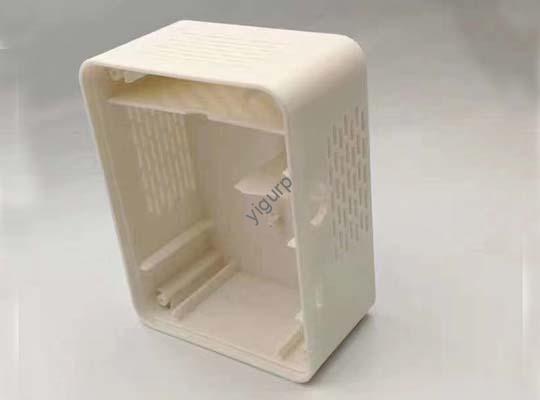
3L'impression D a transformé la fabrication en transformant des modèles CAO complexes en pièces physiques, rapidement et à moindre coût.. Mais l’essor de cette technologie a également posé un gros problème: la plupart des matériaux d'impression 3D sont des plastiques non biodégradables. Ces plastiques s'accumulent dans les décharges et nuisent à l'environnement s'ils ne sont pas éliminés correctement..
Heureusement, the industry is shifting toward biodegradable 3D printing materials—solutions that let you use 3D printing’s power without hurting the planet. Dans ce guide, we’ll break down the most popular, emerging, and composite biodegradable materials, leurs avantages et inconvénients, utilisations réelles, and how they’re changing manufacturing.
1. The Most Popular Biodegradable 3D Printing Material: PLA
PLA (Acide polylactique) is the backbone of eco-friendly 3D printing. It’s cheap, easy to find, and works with most consumer 3D printers (especially FDM models). Let’s take a closer look at why it’s so widely used.
How PLA Is Made
PLA comes from renewable, plant-based sources. It starts with carbohydrates like sugarcane, corn starch, or even potato waste. These materials are fermented under controlled conditions to make lactic acid. Alors, the lactic acid is turned into PLA through two processes:
- Direct condensation of lactate monomers
- Polymerization of lactide (a lactic acid derivative)
This means PLA is 100% plant-based—no petroleum needed.
Key Properties of PLA
PLA’s properties make it perfect for many 3D printing projects. Here’s how it stacks up against common plastics:
| Propriété | PLA Performance | Comparison to Other Plastics |
| Résistance mécanique | Bien (similar to polypropylene) | Weaker than ABS (petroleum-based) |
| Résistance thermique | Satisfactory (softens at ~60°C) | Lower than ABS (resists ~90°C) |
| Imprimabilité | Excellent (point de fusion bas: 180–220°C) | Easier to print than PHA or ABS |
| Biodegradability | Oui (in controlled composting) | Faster than non-biodegradable plastics |
Real-World Uses of PLA
PLA is everywhere because it’s safe and versatile. Here are some common applications:
- Food Packaging: PLA is FDA-certified safe for food contact. Companies use it to make disposable containers, tasses, and wrappers. Par exemple, a small bakery in Portland uses 3D-printed PLA containers for their pastries—these containers break down in industrial compost in 6–12 months.
- Dispositifs médicaux: Since PLA is non-toxic, it’s used for temporary medical parts like dissolvable stitches, guides chirurgicaux, or casts. A European hospital tested 3D-printed PLA casts in 2023; patients reported they were lighter than traditional casts, and the PLA dissolved naturally after the bone healed.
- Biens de consommation: Hobbyists and small businesses print PLA into toys, home decor (like plant pots), and even textile fibers for clothing.
Pros and Cons of PLA
| Avantages | Inconvénients |
| Made from renewable, plant-based resources | Only biodegrades in controlled composting (needs high heat and moisture) |
| Non-toxic and food-safe | Uses food crops (like corn), which sparks debates about food vs. plastic production |
| Cheap (généralement \(20–)30 per kg of filament) | Less strong and less heat-resistant than petroleum-based plastics |
| Easy to print with (no heated bed needed for some brands) | Can become brittle over time if exposed to sunlight |
2. The Emerging Contender: PHA
PHA (Polyhydroxyalkanoate) is a newer biodegradable material that’s gaining attention—even though it’s not yet widely available. Contrairement au PLA (à base de plantes), PHA is made by bacteria, which gives it some unique advantages.
How PHA Is Produced
PHA is a “microbial plastic.” Here’s the process:
- Specific bacteria (comme Ralstonia eutropha) are grown in a nutrient-rich environment.
- The bacteria store energy as PHA inside their cells (similar to how humans store fat).
- The PHA is extracted from the bacterial cells and turned into a powder or filament for 3D printing.
This process is more complex than making PLA, which is why PHA is still in development.
Why PHA Matters: Avantages clés
PHA’s biggest selling point is its fast biodegradability. Contrairement au PLA, which needs industrial composting, PHA can break down in just 1–3 months—even in home compost piles or marine environments. Here are its other top benefits:
- UV Resistant: PHA doesn’t break down in sunlight, so it’s good for outdoor projects (like garden planters).
- Moisture Resistant: It repels water better than PLA, making it useful for items like waterproof cases.
- Natural Elasticity: PHA is more flexible than PLA, so it’s great for parts that need to bend (like hinges or phone grips).
Current Limitations of PHA
PHA isn’t ready for mainstream use yet. Here’s why:
- Coût élevé: Since it’s hard to produce, PHA costs 2–3 times more than PLA (currently ~\(60–)80 par kg).
- Hard to Find: Very few brands sell PHA filament—most are still in lab testing.
- Lower Performance: Compared to PLA, PHA has less strength and lower thermal resistance (softens at ~50°C).
Exemple: PHA in Research
A team at the University of California, Davis, is testing PHA for 3D-printed agricultural tools (like seed planters). The tools need to last 1–2 growing seasons, then break down in the soil. Early tests show PHA works—after 3 months in soil, the planters had decomposed by 70%.
3. The Newcomer: FLAM (Fungi-Like Additive Materials)
FLAM is one of the most exciting new biodegradable materials. It’s not plastic—it’s made from two of the most abundant natural polymers on Earth: cellulose (from plants) et chitin (from fungi, shrimp shells, or insect exoskeletons).
What Makes FLAM Unique
FLAM is a game-changer because it’s:
- Super Sustainable: Cellulose and chitin are everywhere—they’re waste products from farming, seafood processing, and forestry. Using them for FLAM turns waste into a valuable material.
- Polyvalent: Unlike PLA or PHA (which are mostly for FDM printing), FLAM works for woodworking, fonderie, modélisation, et impression 3D. Its mechanical properties are almost identical to polyurethane foam—soft but durable.
- Ultra-Cheap: FLAM costs 10 times less than ABS or PLA. Researchers estimate that once it’s mass-produced, it could cost as little as $2 par kg.
Current Challenges for FLAM
FLAM is still in the early stages. Here’s what’s holding it back:
- Lack of Research: There are only a handful of studies on FLAM’s 3D printing performance. Scientists are still figuring out the best way to print it (par ex., optimal temperature, hauteur de couche).
- Complex Printing Process: FLAM has a different texture than plastic filaments—it’s more like a paste. This means 3D printers need special nozzles or modifications to use it.
- No Commercial Availability: You can’t buy FLAM filament yet. It’s only used in university labs and small startup projects.
A Promising Test Case
Dans 2024, a Dutch startup called MycoWorks tested FLAM for 3D-printed furniture. They printed a small chair using FLAM, and it held up to 150 kg of weight. After testing, the chair was composted in a home garden and fully broke down in 4 mois.
4. Biodegradable Composites: Fixing the Limitations of Single Materials
Single biodegradable materials (like PLA or PHA) have flaws—PLA is weak, PHA is expensive, FLAM is untested. That’s where biodegradable composites come in. These are materials made by mixing two or more biodegradable substances to combine their strengths and fix their weaknesses.
Popular Biodegradable Composites for 3D Printing
Here are the most promising composites being tested today:
| Composite Material | Components | Avantages clés | Current Uses |
| Algae-PLA | PLA + Algae Biomass | More sustainable than pure PLA (uses algae, not food crops); better thermal resistance | Prototypes for packaging and small toys |
| PLA + PHA | PLA (cheap, facile à imprimer) + PHA (fast biodegradable) | Balances affordability and eco-friendliness; stronger than pure PLA | Outdoor planters and disposable tools |
| Wood-Filled PLA | 70% PLA + 30% Wood Fiber | Looks and feels like wood; more rigid than pure PLA | 3D-printed home decor (par ex., coasters, étagères) |
Why Composites Are the Future
Composites solve the biggest problems of single materials. Par exemple:
- Pure PLA can’t handle high temperatures, but adding 10% PHA makes it more heat-resistant.
- Wood-filled PLA is cheaper than pure wood but has the same natural look—great for furniture or decorative parts.
The only downside? Most composites are still not widely available. Only a few brands (like Prusament and eSun) sell wood-filled PLA, and algae-PLA is still in lab testing.
5. Recycled Silk: An Eco-Friendly Alternative (Even If Not Biodegradable)
While not technically biodegradable, recycled silk (made from recycled plastics) is another eco-friendly option for 3D printing. It’s not new, but it’s gaining traction because it keeps plastic out of landfills.
How Recycled Silk Works
Recycled silk filaments are made from post-consumer plastic waste—like old water bottles, sacs en plastique, or even discarded 3D printing scraps. The plastic is melted down, nettoyé, and extruded into filaments.
Why It’s a Good Choice
- Reduces Waste: Every kg of recycled silk keeps ~10 plastic bottles out of landfills.
- Similar Performance to PLA: Recycled silk has similar strength and printability to PLA, so it’s easy to use with existing printers.
- Abordable: It costs about the same as PLA (\(25–)35 par kg).
Use Case
A startup called Refil uses recycled plastic from coastal cleanups to make 3D printing filaments. Their recycled silk is used to print beach toys—so the plastic that once polluted beaches is turned into something useful.
Yigu Technology’s View on Biodegradable 3D Printing Materials
Chez Yigu Technologie, we believe biodegradable 3D printing materials are the future of sustainable manufacturing. PLA is a great starting point for consumers, but we’re excited about PHA and FLAM’s potential—especially for industrial use. We’re investing in R&D to make PHA more affordable and FLAM easier to print, so businesses can switch to eco-friendly materials without sacrificing performance. We also see composites as key: our team is testing a new PLA + hemp composite that’s stronger than pure PLA and 100% biodégradable. For now, we recommend PLA for most users, but we encourage trying recycled silk or wood-filled PLA to reduce waste. The goal is clear: make 3D printing green for everyone.
FAQ: Your Questions About Biodegradable 3D Printing Materials Answered
1. Can I compost PLA at home, or do I need an industrial compost facility?
PLA only biodegrades in industrial compost facilities (which have high temperatures—55–70°C—and lots of moisture). If you put PLA in a home compost pile, it will break down very slowly (over 2–3 years) or not at all. To compost PLA properly, check if your local waste management offers industrial composting services.
2. Is PHA better than PLA for outdoor 3D printing projects?
Oui! PHA is UV-resistant and can break down in outdoor environments (like soil or rain), while PLA becomes brittle in sunlight and won’t biodegrade outside. For outdoor projects (like garden planters or bird feeders), PHA is a better choice—just keep in mind it’s more expensive and harder to find.
3. Do I need a special 3D printer to use biodegradable materials like FLAM or PHA?
Most biodegradable materials (like PLA, wood-filled PLA, or recycled silk) work with standard FDM printers. Cependant, PHA needs a slightly higher printing temperature (200–240°C) than PLA, so you may need to adjust your printer settings. FLAM is trickier—it’s a paste-like material, so you’ll need a printer with a larger nozzle (0.6mm or bigger) and possibly a heated bed to prevent warping.