
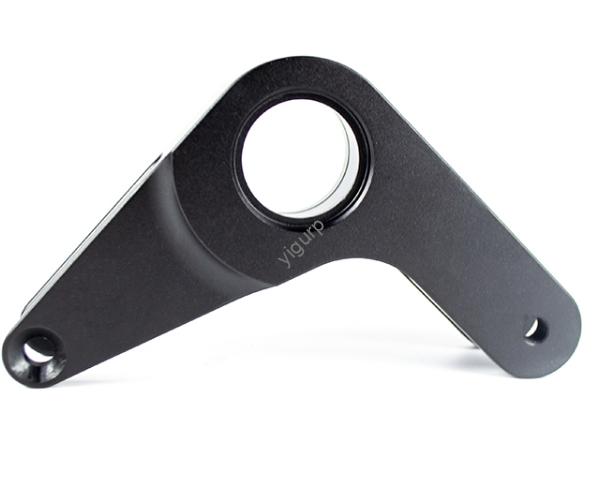
Dans l'industrie aérospatiale, où la précision, efficacité, et l'innovation sont essentielles, 3D printing prototype technology has emerged as a revolutionary force. Il répond à des défis de longue date tels que la lenteur du développement de produits., coûts de fabrication élevés, et une flexibilité de conception limitée. Cet article explore comment les prototypes d'impression 3D remodèlent la fabrication aérospatiale, avec des exemples concrets, informations basées sur les données, and practical solutions to help industry professionals unlock new possibilities.
1. Boosting Manufacturing Efficiency: Shortening Aerospace Product Development Cycles
One of the biggest pain points in aerospace is the lengthy product development cycle. Traditional manufacturing methods often take months to create a single prototype, delaying the testing and optimization of spacecraft and components. 3Technologie d'impression D solves this by drastically reducing lead times, enabling faster iteration and innovation.
Key Data & Real-World Examples:
- For high-end aerospace products like spacecraft, traditional prototype manufacturing can take 8–12 semaines. Avec l'impression 3D, this cycle is shortened to 2–4 semaines—a reduction of up to 75%.
- China’s “Chang’e” lunar exploration series is a prime example. During the development of the Chang’e-5 lander, 3D printing prototypes were used for critical components such as the sampling arm. This cut the R&D time by 40% par rapport aux méthodes traditionnelles, allowing the team to test and refine designs more quickly.
- Another success story is China’s Mars rover, Zhurong. The rover’s navigation sensor housing was prototyped using 3D printing. This not only accelerated development by 35% but also ensured the component met strict weight and performance requirements.
Efficiency Comparison: 3D Impression vs. Traditional Prototyping
| Aspect | Traditional Prototyping | 3D Printing Prototyping | Reduction in Time/Cost |
| Lead Time for Prototype | 8–12 semaines | 2–4 semaines | Jusqu'à 75% |
| R.&D Iteration Speed | Lent (1–2 iterations/quarter) | Rapide (3–4 iterations/quarter) | 200% increase |
2. Optimizing Design Structures: Achieving Complexity Unmatched by Traditional Methods
Aerospace components often require complex, lightweight structures to improve performance and reduce fuel consumption. Traditional manufacturing techniques like machining or casting struggle to create these intricate designs without compromising strength or increasing costs. 3Impression D excels here, as it builds parts layer by layer, enabling the creation of geometries that were once impossible.
Étude de cas: Tianwen-1 Probe Main Engine
China’s Tianwen-1 Mars probe is a standout example of how 3D printing optimizes design. The probe’s main engine uses 3D printed turbine blades and combustion chambers. These components feature internal cooling channels and a lattice structure—designs that traditional manufacturing could not produce.
- Résultats: The 3D printed engine components reduced the engine’s volume by 30% and weight by 25% compared to traditional versions. This weight reduction directly improved the probe’s fuel efficiency, allowing it to travel further and carry more scientific instruments.
- Why It Matters: Lighter components mean less fuel consumption for spacecraft, which is crucial for long-duration missions like Mars exploration. 3D printing’s ability to create complex structures also eliminates the need for multiple assembled parts, reducing the risk of failure in space.
3. Cutting Costs & Enhancing Quality: Precision and Waste Reduction
Cost control and quality assurance are top priorities in aerospace. Traditional manufacturing generates significant material waste (often up to 60% pour pièces complexes) and requires expensive tooling, driving up costs. 3D printing’s additive nature minimizes waste and eliminates tooling expenses, while ensuring consistent, prototypes de haute qualité.
Cost and Quality Benefits:
- Material Waste Reduction: 3D printing uses only the material needed to build the part, reducing waste to as low as 5%—a stark contrast to traditional machining, which can waste 50–60% of raw materials. Par exemple, when manufacturing a titanium alloy bracket for a commercial airliner, 3D printing cuts material waste by 90% compared to CNC machining.
- Stable Quality: 3D printing’s precise layer-by-layer process ensures consistent part dimensions and mechanical properties. A study by the Aerospace Industries Association found that 3D printed prototypes have a defect rate of less than 2%, compared to 5–8% for traditional prototypes.
- Special Materials Flexibility: Aerospace often relies on high-performance materials like titanium alloys, nickel-based superalloys, and carbon fiber composites. 3D printing can process these materials with ease, opening up new possibilities for component design.
4. Enabling Space Industrialization: The Future of Off-Earth Manufacturing
Space industrialization—manufacturing components and tools directly in space—is a long-term goal for the aerospace industry. 3Technologie d'impression D is poised to be a key enabler of this vision, as it can operate in microgravity environments and reduce the need to launch pre-manufactured parts from Earth.
NASA’s International Space Station (ISS) Project
NASA has been at the forefront of space-based 3D printing. Dans 2014, the agency installed the first 3D printer on the ISS, developed by Made In Space. Since then, the printer has successfully produced a variety of parts, including tool handles, boîtiers de capteurs, and even small satellite components.
- Achievements: The ISS 3D printer demonstrated that 3D printing can work reliably in microgravity, with parts meeting the same quality standards as those made on Earth. Dans 2023, NASA used the printer to manufacture a replacement valve for the ISS’s life support system, eliminating the need to wait for a resupply mission from Earth (which typically takes 3–6 months).
- Significance for Deep Space Exploration: For future missions to the Moon, Mars, or beyond, 3D printing will be essential. Astronauts could manufacture spare parts, outils, or even habitat components on-site, reducing the cost and risk of long-duration spaceflights.
5. Innovating Production Organization Models: Cost-Effective Low-Volume and Custom Production
Aerospace manufacturing often involves low-volume production of custom components (par ex., parts for unique spacecraft or experimental satellites). Traditional production models struggle with this, as tooling and setup costs are high for small batches. 3Impression D changes this by making low-volume and custom production more cost-effective.
Comment ça marche:
- Aucun outillage requis: Unlike injection molding or casting, 3D printing does not need expensive tooling. This means manufacturers can produce small batches of custom parts without upfront investments, reducing costs by 30–50% for runs of 1–100 components.
- On-Demand Production: 3D printing enables on-demand manufacturing, so aerospace companies can produce parts when needed, rather than stockpiling inventory. This reduces storage costs and the risk of obsolete parts.
Exemple: Small-Satellite Manufacturing
Small satellites (CubeSats) are increasingly used for Earth observation, communication, and scientific research. Each CubeSat often requires custom components to meet specific mission goals. UN 2024 study by the Small Satellite Conference found that 3D printing prototypes for CubeSat components reduced production costs by 45% and lead times by 60% par rapport aux méthodes traditionnelles. Par exemple, a startup called Orbital Insights used 3D printing to produce custom antenna brackets for its CubeSats, cutting the cost per bracket from \(500 à \)275.
Yigu Technology’s Perspective on 3D Printing in Aerospace
Chez Yigu Technologie, we recognize that 3D printing prototype technology is a cornerstone of aerospace innovation. Our team has supported aerospace clients in developing 3D printed prototypes for components like satellite structures and rocket engine parts. We’ve seen firsthand how 3D printing shortens development cycles by up to 60% and reduces material waste by 80%, helping clients meet tight deadlines and cost targets. As space exploration and commercial aerospace grow, we believe 3D printing will play an even bigger role—enabling more ambitious missions and making aerospace technology more accessible. We’re committed to advancing 3D printing solutions that address the unique needs of the aerospace industry, from high-temperature materials to microgravity-compatible processes.
FAQ:
1. Can 3D printed prototypes be used for critical aerospace components that need to withstand extreme conditions (par ex., températures élevées, radiation)?
Oui. 3D printing can process high-performance materials like nickel-based superalloys (which resist temperatures up to 1,200°C) and radiation-shielding polymers. Par exemple, 3D printed nickel alloy parts are used in rocket engines, where they withstand extreme heat and pressure. En plus, post-processing techniques like heat treatment and coating can further enhance the durability of 3D printed prototypes for extreme environments.
2. How does 3D printing compare to traditional methods in terms of part strength for aerospace applications?
3D printed parts can match or exceed the strength of traditionally manufactured parts when using the right materials and processes. Par exemple, 3D printed titanium alloy parts have a tensile strength of 900–1,100 MPa, which is comparable to CNC-machined titanium. In some cases, 3D printing’s ability to create lattice structures can even improve strength-to-weight ratios, making parts lighter and stronger than traditional alternatives.
3. Is 3D printing cost-effective for small aerospace companies or startups with limited budgets?
Absolument. 3D printing eliminates upfront tooling costs, which are a major barrier for small companies. Par exemple, a startup developing a small satellite can use 3D printing to prototype components for \(500–)2,000, par rapport à \(5,000–)10,000 for traditional prototyping. En plus, many 3D printing service providers offer on-demand printing, so startups don’t need to invest in expensive equipment. This makes 3D printing a cost-effective solution for small aerospace businesses looking to innovate.