
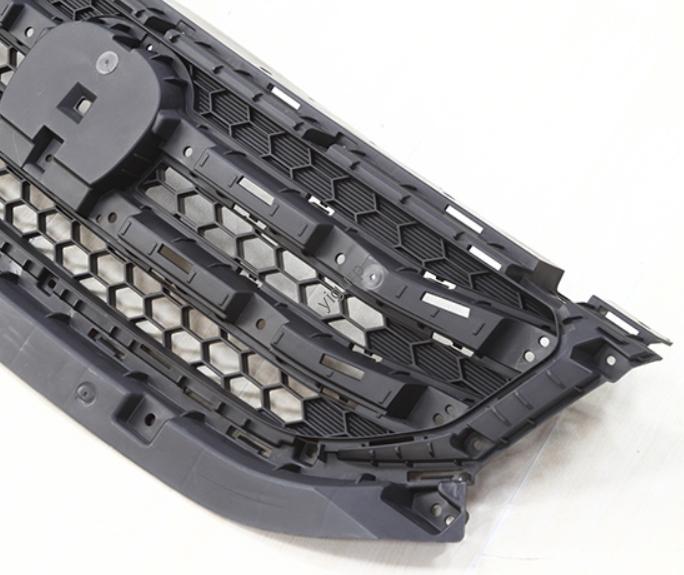
L’industrie automobile s’efforce constamment d’innover, qu’il s’agisse d’améliorer le rendement énergétique., améliorer la sécurité, ou lancer des véhicules électriques (VÉ) plus rapide. Dans cet environnement en évolution rapide, 3D printed prototypes have become a secret weapon for engineers and designers. Contrairement aux méthodes de fabrication traditionnelles (qui sont lents et rigides pour les tests en petits lots), 3D printing turns digital designs into physical parts in hours, letting teams iterate quickly and solve problems early.
Dans ce guide, we’ll break down the key applications of 3D printed prototypes in automotive development, share real-world case studies and data, and explain how this technology solves common industry pain points. Our goal is to help automotive professionals leverage 3D printing to speed up 研发 (R.&D), réduire les coûts, and drive innovation.
1. Supercharge R&D Efficiency: From Design to Prototype in Days
The biggest advantage of 3D printed prototypes in automotive R&D is speed. Traditional methods like CNC machining or injection molding can take 2–4 weeks to create a single prototype. 3Impression D (also called rapid prototyping) slashes this time to 4–48 heures—letting teams test more designs and iterate faster.
- How it works: Upload a CAD (Conception Assistée par Ordinateur) file to a 3D printer, select a material (par ex., ABS, PLA, ou en métal), and start printing. L'imprimeur construit la pièce couche par couche, so there’s no need for expensive tooling or molds.
- Data-backed impact: UN 2024 survey by the Automotive Innovation Forum found that 82% of car manufacturers using 3D printing reduced their R&D cycle by 30–50%. Par exemple, a European automaker cut the time to prototype a new steering wheel from 3 semaines (Usinage CNC) à 2 jours (3Impression D)—letting them test 5 design variants in the time it once took to test 1.
- Pro Tip: For early-stage “concept checks” (par ex., testing a dashboard shape), use low-cost PLA material. For functional tests, switch to durable ABS or nylon to mimic production parts.
2. Drive Lightweighting: Boost Fuel Efficiency and Reduce Emissions
Lightweighting is critical for modern cars—every 10% reduction in weight improves fuel efficiency by 5–8% (selon les États-Unis. Ministère de l'Énergie). 3D printing lets engineers design and test lightweight parts that are impossible with traditional manufacturing.
- Design freedom: 3D printing supports complex, lattice-like structures (honeycomb patterns, Par exemple) that are strong but ultra-light. These structures remove unnecessary material without sacrificing strength.
- Real-world example: BMW used 3D printed prototypes to test lightweight aluminum alloy parts for its i3 electric car. The 3D printed suspension component was 15% plus léger than the traditionally made version. Après test, BMW adopted the design for production, cutting the car’s overall weight by 8kg and improving its range by 12km.
- EV focus: For electric vehicles, lightweighting is even more important (it extends battery life). A Chinese EV maker used 3D printing to prototype a carbon-fiber-reinforced plastic (CFRP) battery tray—testing 3 lightweight designs in 2 semaines. The final design reduced the tray’s weight by 20%, helping the EV achieve a 25km longer range.
3. Manufacture Complex Parts: Avoid Traditional Manufacturing Limits
Traditional methods like casting or machining struggle with parts that have intricate shapes (par ex., curved ducts, contre-dépouilles, or internal channels). 3D printing excels here—it can create complex, one-piece prototypes that would require multiple assembled parts with traditional methods.
Common complex automotive parts made with 3D printed prototypes include:
- Intérieurs automobiles: Curved air vents, custom dashboard inserts, or seat frame components with built-in wiring channels.
- Composants du moteur: Intake manifolds with complex flow paths (to improve fuel combustion) or oil pans with internal baffles.
- Outillage: Custom jigs, luminaires, or labeling machine parts used in assembly lines.
Étude de cas: Ford wanted to test a new engine intake manifold with a twisted internal flow path (to boost performance). Traditional machining couldn’t create the path without splitting the manifold into 3 parties (which would leak). Using 3D printing (SLA technology with high-temperature resin), Ford created a one-piece prototype in 18 heures. Testing showed the design improved engine airflow by 9%—Ford later adapted it for its F-150 pickup trucks.
Below is a table of complex part applications, 3D printing technologies, et avantages:
| Complex Part Type | 3D Printing Technology Used | Key Benefit | Example Use Case |
| Interior air vents | ANS (Stéréolithographie) | Captures fine curves and texture | Luxury car dashboard vents |
| Engine intake manifolds | FDM (Modélisation des dépôts fondus) with nylon | Heat resistance and strength | Performance car engines |
| Assembly line jigs | SLS (Frittage sélectif au laser) with polyamide | Durability for repeated use | EV battery assembly tools |
4. Cut Costs for Small-Batch Prototyping
Traditional manufacturing relies on expensive molds (costing \(10,000–)50,000) for even small batches. 3D printing eliminates mold costs entirely—making it far cheaper for small-batch prototyping (1–100 pièces).
- Cost breakdown example: A startup developing a new electric motorcycle needed 20 prototypes of a custom handlebar control module.
- Traditional method (moulage par injection): \(12,000 for the mold + \)50 per part = $13,000 total.
- 3Impression D (FDM with ABS): \(30 per part = \)600 total.
- Économies: 95%—letting the startup reinvest funds into battery development.
- Additional cost savings: 3D printing also reduces material waste (it only uses the material needed for the part, contre. 20–30% waste with machining) and cuts logistics costs (parts can be printed on-site, no need to ship from overseas factories).
5. Test and Verify Prototypes: Catch Design Flaws Early
Before mass production, automotive parts must pass rigorous tests (par ex., résistance aux chocs, tolérance à la chaleur, or fit with other components). 3D printed prototypes let teams test these factors early—avoiding costly recalls or redesigns later.
Common prototype tests enabled by 3D printing:
- Fit testing: Check if a part aligns with other components (par ex., a 3D printed door handle fitting with the door latch).
- Functional testing: Simulate real-world use (par ex., bending a 3D printed suspension arm 10,000 times to test durability).
- Safety testing: Evaluate crash performance (par ex., 3D printed plastic prototypes of bumper brackets for impact simulations).
Critical Example: A Japanese automaker used 3D printed prototypes to test a new side-impact beam for its compact car. The first 3D printed prototype failed the impact test (it bent too much). The team adjusted the beam’s thickness in the CAD file and printed a new prototype in 6 heures. The second prototype passed—saving the company from a $2 million production delay (which would have happened if the flaw was caught post-mold).
6. Innovate in New Energy Vehicles (NEV) and Battery Production
3D printed prototypes are driving innovation in the fast-growing NEV sector—especially for battery-related components. Batteries are the most expensive part of an EV, so optimizing their design (for safety, 散热,and weight) is key.
Key NEV applications for 3D printed prototypes:
- Battery housings/trays: 3D printed prototypes test designs that improve heat dissipation (critical for preventing battery overheating) and crash protection.
- Battery cell holders: Customizable holders that fit unique cell shapes (par ex., cylindrical vs. prismatic cells) et réduire le poids.
- Charging port components: Prototypes of durable, weather-resistant charging ports for fast-charging EVs.
Breakthrough Case: Tesla used 3D printing to prototype a new battery tray for its Model Y. The 3D printed tray had integrated cooling channels (to keep batteries at optimal temperature) et était 10% lighter than the original design. Testing showed the tray improved battery life by 7%—Tesla now uses a modified version of the design in its Gigafactories.
7. Yigu Technology’s Perspective on 3D Printed Prototypes in Automotive
Chez Yigu Technologie, we’ve supported over 150 automotive clients—from startups to global OEMs—with 3D printed prototype solutions. From our experience, 3D printing’s biggest value in automotive is its ability to turn “what if” into “let’s test it fast.” We often help clients optimize designs for lightweighting (par ex., suggesting lattice structures for suspension parts) and choose the right materials (par ex., high-temperature resins for engine components). For NEV clients, we focus on battery-related prototypes—helping them cut battery tray weight by 10–20% and improve 散热 efficiency. 3D printing isn’t just a tool; it’s a way to accelerate automotive innovation, and we’re excited to help clients shape the future of electric and sustainable mobility.
8. (FAQ)
Q1: What materials are most commonly used for 3D printed automotive prototypes?
The top materials are:
- ABS: Durable, résistant aux chocs, and mimics many production plastic parts (great for interior and exterior components).
- Nylon/Polyamide: Heat-resistant and strong (ideal for engine parts or under-hood components).
- Carbon-fiber-reinforced plastics (CFRPs): Lightweight and ultra-strong (used for NEV battery trays or structural parts).
- Métaux (aluminium, titane): For high-strength prototypes (par ex., composants de suspension), though they’re more expensive than plastics.
Q2: Can 3D printed prototypes be used for mass production in automotive?
No—3D printing is too slow for mass production (it can make 1–10 parts per hour, contre. 100+ per hour with injection molding). Cependant, it’s perfect for pre-production prototypes, small-batch custom parts (par ex., vintage car replacements), or low-volume specialty vehicles (par ex., race cars).
Q3: How does the cost of 3D printed prototypes compare to traditional methods for large batches?
Pour les gros lots (500+ parties), méthodes traditionnelles (moulage par injection) are cheaper. Par exemple, un lot de 1,000 plastic door handles would cost ~\(5 per part with injection molding (after the \)15,000 moule) contre. $30 per part with 3D printing. But for small batches (1–100 pièces), 3D printing is 50–95% cheaper (no mold cost).