
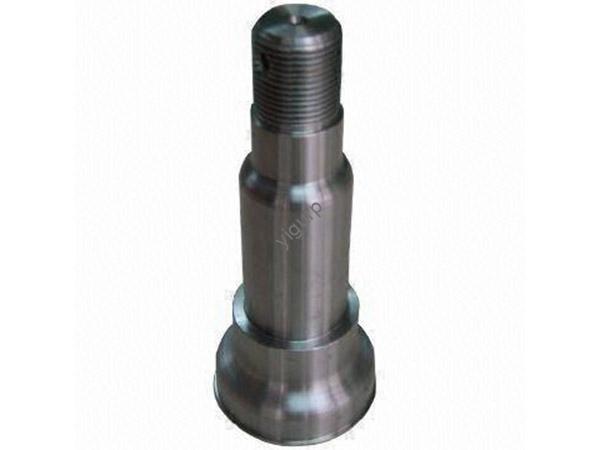
Si vous avez besoin d'un acier inoxydable qui résiste à l'eau salée, produits chimiques, ou des conditions extérieures difficiles : pensez à l'équipement marin, réservoirs chimiques, or coastal architecture—AISI 316 acier inoxydable est l'étalon-or. Son secret? Molybdène, ce qui augmente la résistance à la corrosion bien au-delà de la norme 304. Ce guide détaille tout ce que vous devez savoir pour sélectionner, fabriquer, et utilisez l'AISI 316 for your toughest environments.
1. AISI 316 Acier inoxydable: Material Overview & Caractéristiques
AISI 316’s exceptional performance starts with its precise chemistry and adherence to global industry standards. Let’s dive into its core details:
Key Chemical Composition
| Élément | Gamme de contenu | Role in AISI 316 |
|---|---|---|
| Chrome (Cr) | 16.0–18.0% | Forms a protective passivation layer (fights rust) |
| Nickel (Dans) | 10.0–14.0% | Stabilizes the austenitic structure (non magnétique, ductile) |
| Molybdène (Mo) | 2.0–3,0% | The “superpower” — boosts resistance to pitting and chloride corrosion (critical for marine/chemical use) |
| Carbone (C) | ≤0,08% | Provides strength without increasing sensitization risk (contre. higher-carbon grades) |
| Manganèse (Mn) | ≤2.0% | Enhances formability for bending/forming |
Critical Specifications & Physical/Mechanical Traits
| Specification/Property | Valeur | Pourquoi c'est important |
|---|---|---|
| UNS Designation | S31600 | Global identifier for sourcing AISI 316 |
| ASTM/ASME Standards | ASTM A240 (sheets/plates), ASME SA-240 | Ensures quality for industrial/structural use |
| Densité | 8.0 g/cm³ | Slightly heavier than 304 (7.93 g/cm³)—plan for weight in marine/architectural designs |
| Point de fusion | 1,400°C (2,550°F) | Résiste à une chaleur élevée (par ex., systèmes d'échappement, fours industriels) |
| Résistance à la traction | 515 MPa (74,700 psi) | Strong enough for pressure vessels and structural parts |
| Limite d'élasticité | 205 MPa (29,700 psi) | Resists deformation in high-use items (par ex., tuyaux, attaches) |
| Dureté | 217 HB (Brinell) / 95 DGRH | Tough enough for wear (par ex., bandes transporteuses) but machinable with proper tools |
Exemple: A marine hardware maker uses ASTM A240 316 sheets for boat cleats—its tensile strength ensures cleats don’t bend under heavy rope loads, while molybdenum prevents rust in saltwater.
2. AISI 316 Acier inoxydable: Résistance à la corrosion & Environmental Performance
AISI 316’s biggest advantage is its corrosion resistance—especially in chloride-rich or chemical-heavy environments. Here’s how it outperforms other stainless steels:
Corrosion Resistance Breakdown
| Environnement | Performance | Avantage clé (contre. 304) |
|---|---|---|
| Chloride Environments | Excellent | Molybdenum gives aPREN value of 24.2 (contre. 304c'est 18)—resists pitting in saltwater, swimming pools, or coastal air |
| Marine Environments | Supérieur | No rust in seawater for 5+ années (304 rusts in 1–2 years)—ideal for boat hulls, offshore fasteners |
| Chemical Solutions | Great | Resists sulfuric acid (jusqu'à 50% concentration) and phosphoric acid—safe for chemical storage tanks |
| Salt Spray Tests | Laissez-passer 1,000+ heures (ASTM B117) | No red rust after weeks of continuous salt spray—critical for outdoor hardware |
| Intergranular Corrosion | Bien (with proper heat treatment) | Less risk of weld decay than 304, but 316L (à faible émission de carbone) is better for welded chemical equipment |
316 contre. 316L: Sensitization Comparison
| Trait | AISI 316 | AISI 316L (Low-Carbon) | Idéal pour |
|---|---|---|---|
| Teneur en carbone | ≤0,08% | ≤0,03% | 316: Usage général; 316L: Welded chemical equipment |
| Sensitization Risk | Faible (if annealed after welding) | Très faible (no post-weld annealing needed) | 316L: Pharmaceutical reactors, acid pipes |
| Résistance à la corrosion | Excellent | Slightly Better (produits chimiques) | 316: Quincaillerie marine; 316L: Réservoirs chimiques |
Étude de cas: A desalination plant switched from 304 à 316 tuyauterie. 304 pipes developed pitting after 6 mois, alors que 316 pipes have operated rust-free for 4 années—économie $200,000 in annual replacements.
3. AISI 316 Acier inoxydable: Traitement thermique, Microstructure & Phase Stability
Proper heat treatment keeps AISI 316’s corrosion resistance and strength intact. Voici ce que vous devez savoir:
Key Heat Treatment Processes
- Recuit de mise en solution: Chauffer à 1,010–1,120°C (1,850–2,050°F), hold for 30–60 minutes, then quench in water. Ce:
- Dissolves carbide precipitates (prevents intergranular corrosion).
- Resets the austenitic microstructure (restores ductility after cold working).
- Strengthens the passivation layer for better corrosion resistance.
- Residual Stress Relief: For welded parts, heat to 800–850°C (1,470–1,560°F) to reduce stress—avoids cracking in high-pressure applications (par ex., chemical pipes).
Microstructure & Phase Stability
- Austenitic Grain Size: Typically ASTM 5–7 (medium grain)—balances strength and ductility. Coarser grains (ASTM 4) boost high-temperature strength, while finer grains (ASTM 8) improve formability.
- Sigma Phase Prevention: Avoid long exposure to 600–800°C (1,110–1,470°F)—this causes sigma phase (a brittle intermetallic compound). Solution annealing reverses sigma phase if it forms.
- Cold Work Effects: Cold rolling/bending increases strength (tensile strength rises to 650 MPa after 30% travail à froid) but makes AISI 316 slightly magnetic (permeability ~1.05 μr). Annealing restores non-magnetic properties.
Pour un pourboire: A chemical plant skipped solution annealing for 316 tank welds—within 6 mois, the welds developed intergranular corrosion. Re-annealing the tanks fixed the issue and extended their life by 8 années.
4. AISI 316 Acier inoxydable: Soudage, Fabrication & Machining Guidelines
AISI 316 is easy to fabricate, but using the right techniques ensures it retains corrosion resistance. Here’s how to work with it:
Welding Best Practices
| Aspect | Recommendation | Why It Works for Corrosion-Prone Use |
|---|---|---|
| Filler Metal | ER316L (TIG/MIG) or E316L (soudage à la baguette) | Low carbon prevents sensitization—critical for chemical/marine welds |
| TIG Welding Parameters | 100–150 amps, 10–15 volts, argon shielding gas | Clean welds with no spatter (avoids crevices where corrosion starts) |
| Preheat Temperature | 100–150°C (212–302°F) pour les pièces >25mm d'épaisseur | Prevents cold cracking without risking sensitization |
| Post-Weld Steps | 1. Clean welds with a stainless steel brush; 2. Passivate (nitric acid bath) | Removes heat tint (décoloration) and restores the passivation layer |
Usinage & Forming Tips
- Machining Speeds/Feeds: Use carbide inserts (Revêtement TiAlN) for long tool life:
- Tournant: 120–180 m/min speed, 0.1–0.2 mm/rev feed.
- Fraisage: 100–150 m/min speed, 0.05–0.1 mm/tooth feed.
- Fluide de coupe: Use soluble oil (not mineral oil)—prevents galling (metal sticking to tools) and cools the workpiece.
- Formabilité: Deep drawing works well—use a die radius of 2x material thickness (par ex., 2mm sheet needs a 4mm radius) pour éviter de craquer. A food processor uses 316 sheets for deep-drawn mixing bowls—their smooth finish meets FDA hygiene standards.
Exemple: An offshore construction firm uses ER316L filler metal for 316 attaches. Post-weld passivation ensures fasteners don’t rust in saltwater, even after years of exposure.
5. AISI 316 Acier inoxydable: Product Forms, Sizes & Supply Chain
AISI 316 comes in nearly every form to fit marine, chimique, et projets architecturaux. Here’s how to source it:
Common Product Forms & Sizes
| Formulaire | Typical Sizes | Key Uses |
|---|---|---|
| Sheets/Plates | 0.5–100mm thickness; 1x2m to 3x6m | Marine hulls, chemical tank walls, façades architecturales |
| Seamless Pipes | 6–600mm OD; 1–20mm wall thickness | Desalination plant piping, chemical transport lines |
| Round Bars | 5–300mm de diamètre; 1–6m length | Offshore fasteners, surgical implants, arbres de machines |
| Angle Iron | 20x20mm to 100x100mm legs | Coastal building frames, marine railings |
| Coil Stock | 0.3–3mm thickness; 1219mm largeur | Bandes transporteuses, small marine components |
Supply Chain Tips
- Price: 316 costs $5.00–$6.50 per kg (2024 estimates)—20–30% more than 304, but worth it for corrosion resistance.
- Délai de mise en œuvre: 2–3 weeks for stock sizes (par ex., 1x2m sheets); 4–6 weeks for custom sizes (par ex., large-diameter pipes).
- Fournisseurs: Choose ISO 9001-certified suppliers who provide mill test reports (MTRs) confirming:
- Teneur en molybdène (2.0–3,0%).
- Compliance with ASTM A240/ASME SA-240.
- Salt spray test results (for marine projects).
Pour un pourboire: A brewery ordered 316 heat exchanger tubes from a supplier with MTRs—this ensured the tubes resist beer’s acidic content, avoiding leaks that would ruin batches.
6. AISI 316 Acier inoxydable: Applications industrielles & Use Cases
AISI 316’s versatility makes it a staple in industries where corrosion resistance is non-negotiable:
1. Marin & En mer
- Marine Exhaust Systems: Boat exhausts use 316—resists saltwater corrosion and high heat (jusqu'à 600°C). A boat manufacturer reports 316 exhausts last 3x longer than 304.
- Offshore Platform Fasteners: 316 bolts and nuts withstand constant salt spray—no rust for 10+ années.
2. Chimique & Pharmaceutique
- Chemical Storage Tanks: Holds acids (par ex., sulfuric, phosphoric) and solvents—316’s molybdenum prevents pitting. A chemical plant uses 316 tanks for 50% sulfuric acid—they’ve operated leak-free for 7 années.
- Pharmaceutical Reactors: 316’s smooth surface is easy to sterilize (répond aux normes FDA)—ideal for drug manufacturing.
3. Nourriture & Boisson
- Brewery Heat Exchangers: Cools/heats beer without rust leaching into the product—316 resists beer’s acidic content.
- Food Processing Conveyors: 316 belts withstand cleaning chemicals (par ex., soude caustique) and avoid contaminating food.
4. Architecture & Outdoor
- Coastal Architectural Facades: 316 cladding and railings don’t rust in coastal air—used in beachfront hotels and homes.
- Swimming Pool Hardware: 316 ladders and drains resist chlorine corrosion (304 rusts in chlorinated water).
Le point de vue de Yigu Technology
Chez Yigu Technologie, AISI 316 is our top choice for marine, chimique, and food clients needing uncompromised corrosion resistance. We supply 316 feuilles, tuyaux, and bars (UNS S31600, ASTM A240/ASME SA-240) with full MTRs and salt spray test reports. For a desalination project, we provided custom 316 seamless pipes—our post-weld passivation service ensured zero pitting, and the pipes have run rust-free for 3 années. We also offer technical support, sharing welding and machining tips to maximize part life. Alors que 316 costs more than 304, its long service life delivers ROI by cutting maintenance and replacements—especially in harsh environments.
FAQ
- L'AISI peut-elle 316 be used in extreme high-temperature applications (par ex., 1,000°C)?
No—AISI 316’s strength drops above 870°C. For temps over 900°C, use 316H (high-carbon 316) or Inconel 625. 316 is best for high-heat applications up to 800°C (par ex., systèmes d'échappement). - Is AISI 316 magnétique?
Annealed AISI 316 is nearly non-magnetic (permeability ~1.02 μr). Cold working (par ex., flexion, estampillage) can make small areas slightly magnetic, but this doesn’t affect corrosion resistance or strength. - Do I need to passivate AISI 316 après soudage?
Yes—welding removes the passivation layer and leaves heat tint (a thin oxide film). Passivating with a nitric acid bath restores the protective layer, ensuring the weld resists corrosion (critical for marine/chemical use). For non-critical applications (par ex., indoor railings), brushing with a stainless steel cleaner may suffice.