
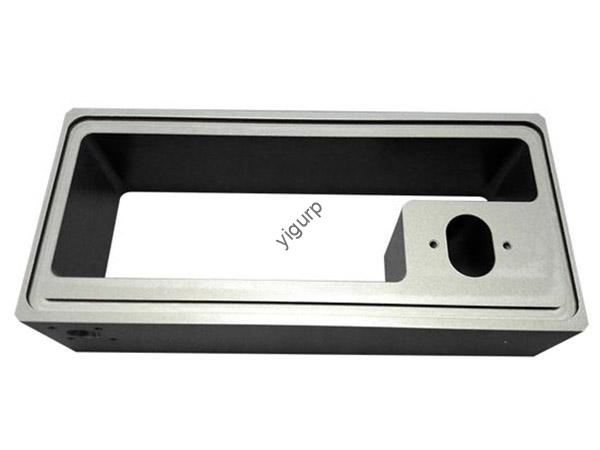
AISI 2205 l'acier duplex est un matériau polyvalent, alliage haute performance qui combine la résistance de l'acier ferritique et la résistance à la corrosion de l'acier austénitique. C'est unique2205 ferrite-austenite balance 50-50 microstructure makes it ideal for harsh environments like offshore oil rigs, usines chimiques, et installations de dessalement. Ce guide détaille ses principales spécifications, caractéristiques de performance, and real-world uses to help you make informed material choices.
1. Material Overview & Key Specifications
Understanding 2205’s composition and standards is the first step to leveraging its full potential. Below is a clear breakdown of its essential properties.
Composition chimique & Normes
Le2205 duplex steel composition includes 21–23% chromium, 4.5–6.5% nickel, 2.5–3.5% molybdenum, and 0.08–0.20% nitrogen—these elements create the alloy’s balanced microstructure. It adheres to global standards for consistency:
- 2205 UNS S32205 (Unified Numbering System)
- 2205 DANS 1.4462 équivalent (European standard for matching performance)
- 2205 ASTM A240 / 2205 ASME SA-240 (for plates, feuilles, and strips)
Physical & Propriétés mécaniques
2205 duplex steel delivers exceptional strength—far higher than austenitic alloys like 316L. Key metrics are organized in the table below:
| Propriété | Valeur |
|---|---|
| Densité | 7.82 g/cm³ |
| Melting range | 1420–1465 °C |
| Minimum yield strength | 450 MPa (2x higher than 316L) |
| Minimum tensile strength | 620 MPa |
| Brinell hardness | 293 HB (maximum) |
An offshore oil company in Norway uses2205 ASTM A240 plates for subsea manifolds—they rely on the 450 MPa yield strength to handle deep-sea pressure (jusqu'à 300 bar) et corrosion.
2. Résistance à la corrosion & Environmental Performance
2205’s biggest advantage is its industry-leading corrosion resistance. C'est2205 PREN 35–40 (Pitting Resistance Equivalent Number) is far higher than 316L’s PREN of ~24, making it resistant to pitting, crevice corrosion, and stress cracking in harsh fluids.
Key Corrosion-Resistant Traits
- Pitting & Crevice Corrosion: It has exceptional 2205 pitting corrosion resistance and a high 2205 crevice corrosion threshold—even in tight gaps (par ex., heat exchanger gaskets) exposed to seawater.
- Stress Corrosion Cracking: It offers 2205 chloride stress corrosion cracking immunity—critical for offshore and desalination applications where chloride levels are high.
- Sour Service: It meets 2205 sour service NACE MR0175 normes, resisting 2205 sulfide stress cracking in oil and gas wells with high hydrogen sulfide (H₂S) levels.
- Résistance chimique: It handles 2205 sulfuric acid performance (resists 20% sulfuric acid up to 60 °C) et 2205 nitric acid resistance (ideal for chemical processing).
2205 vs 316L corrosion comparison: A desalination plant in Saudi Arabia tested both alloys—316L pipes failed after 2 years due to pitting, alors que2205 seawater corrosion rate (≤0.01 mm/year) kept 2205 pipes operational for 10+ années.
3. High-Temperature & Low-Temperature Properties
2205 performs well across a wide temperature range, though it’s optimized for moderate heat and cold environments.
High-Temperature Traits
- Force & Oxydation: It maintains 2205 résistance à haute température jusqu'à 300 °C, avec 2205 oxidation resistance up to 300 °C (suitable for warm chemical processes). Le 2205 continuous service temperature est 300 °C—beyond this, avoid prolonged exposure to prevent sigma phase formation.
- Résistance au fluage: 2205 creep rupture data shows it can last 10,000+ heures à 250 °C under light stress, making it ideal for heat exchanger tubes.
Low-Temperature Traits
- Dureté: It has excellent 2205 low-temperature toughness, avec 2205 impact energy at -46 °C of ≥40 J (no brittle fracture). C'est 2205 cryogenic ductility also makes it suitable for cold-climate offshore projects (par ex., Arctic oil rigs).
A case study: A Canadian geothermal plant used2205 geothermal heat exchangers (operating at 280 °C). Après 5 années, no corrosion or creep deformation occurred—unlike the previous carbon steel exchangers that failed every 18 mois.
4. Traitement thermique & Microstructure Balance
Proper heat treatment is critical to maintaining 2205’s 50-50 ferrite-austenite balance and avoiding harmful phases like sigma or chi.
Essential Heat Treatment Processes
- Solution Annealing: Chauffer à 1020–1100 °C, hold for 30–60 minutes, then water-quench (le 2205 water quench requirement is non-negotiable—it prevents sigma phase formation and restores the balanced microstructure).
- Travail à chaud: Utiliser 1150–950 °C comme le 2205 hot working range for forging or rolling. This keeps the material ductile and preserves the ferrite-austenite balance.
- Residual Stress Relief: Heat to 400–450 °C to reduce stresses from welding or forming. Avoid 475 °C (le 2205 embrittlement at 475 °C température) to prevent loss of toughness.
Microstructure Control
- Ferrite Content: Maintain 2205 ferrite content 35–55 % (tested via magnetic methods) to ensure strength and corrosion resistance.
- Sigma Phase Prevention: Avoid heating to 500–800 °C for long periods—2205 sigma phase formation kinetics accelerates in this range, making the material brittle.
5. Soudage, Fabrication & Machining Guidelines
Soudage 2205 requires careful heat input control to preserve its microstructure, but it’s still highly workable with the right techniques.
Welding Tips
- Consumables: Utiliser 2205 welding consumables 2209 (for TIG/MIG welding) ou 2205 MIG wire 2209—these match 2205’s composition and maintain the ferrite-austenite balance in the weld.
- Heat Input & Interpass Temperature: Contrôle 2205 heat input 0.5–2.5 kJ/mm (low heat = less ferrite formation) and keep 2205 interpass temperature 150 °C max (prevents sigma phase).
- Root Gas Purge: Use argon gas to purge the weld root (critical for austenitic formation and corrosion resistance). Après soudage, effectuer 2205 post-weld cleaning (affûtage + pickling) to remove scale.
Usinage & Formation
- Speeds & Feeds: 2205 machining speeds and feeds should be 10–15% lower than austenitic steel. Utiliser 2205 tool life with coated carbide (TiAlN coatings work best—they resist wear from the alloy’s high strength).
- Formabilité: 2205 formability limits are moderate—cold bending is possible, but avoid excessive strain (anneal after heavy forming to restore toughness). Utiliser 2205 distortion control techniques (par ex., clamping during welding) to keep parts true to size.
6. Product Forms, Sizes & Supply Chain
2205 is available in a wide range of forms to fit nearly any high-corrosion, high-strength project.
Common Product Forms
- Plates & Sheets: 2205 duplex plate thicknesses range from 3 mm à 200 mm; 2205 sheet gauge chart includes 16 jauge (1.5 mm) à 1/2 inch (12.7 mm) for chemical vessel liners.
- Pipes & Tubes: 2205 seamless pipe ASTM A790 (for high-pressure offshore piping) et 2205 welded pipe ASTM A928 (for low-pressure desalination lines).
- Bars & Raccords: 2205 round bar stock (10 mm à 300 mm diamètre), 2205 angle iron sizes (20×20 mm to 100×100 mm), et 2205 marine fasteners (for ship hulls).
- Specialty Forms: 2205 coil slit widths (10 mm à 1250 mm), 2205 hollow bar suppliers (for lightweight parts), 2205 custom forgings (par ex., corps de vannes), et 2205 clad plate suppliers (for cost-effective large structures).
Supply Chain Tips
Work with global suppliers who stock2205 seamless pipe ASTM A790 et2205 clad plate suppliers—these forms have longer lead times. For urgent offshore projects, prioritize suppliers with ISO 13845 attestation (for weld quality).
7. Applications industrielles & Études de cas
2205’s strength and corrosion resistance make it a top choice for industries facing harsh conditions. Here are key use cases:
- Offshore & Marin: 2205 offshore piping, 2205 subsea manifolds, et 2205 marine fasteners (resist seawater corrosion and deep-sea pressure).
- Chimique & Processus: 2205 chemical process vessels, 2205 heat exchanger tubes, et 2205 storage tanks for chlorides (handle acids and high-chloride fluids).
- Water Treatment: 2205 desalination evaporators et 2205 FGD scrubber systems (remove sulfur from power plant exhausts).
- Pulp & Paper: 2205 pulp & paper digesters (resist chlorine-based bleaches and high temperatures).
A real example: Un États-Unis. oil company replaced 316L with 2205 for offshore risers—2205 sulfide stress cracking resistance eliminated riser failures, réduisant les coûts de maintenance en 80% and extending service life from 5 à 15 années.
Yigu Technology’s Perspective
Chez Yigu Technologie, nous recommandons 2205 for clients needing strength + résistance à la corrosion. Nous nous approvisionnons2205 ASTM A240 plates and2205 seamless pipe ASTM A790 from certified mills, ensuring ferrite content 35–55% and PREN 35–40. For offshore clients, we provide welding support (en utilisant2209 consumables) and NACE MR0175 testing. Alors que 2205 costs more than 316L, its 2x higher strength and 5x longer lifespan make it cost-effective for high-stress, high-corrosion projects.
FAQ
- What’s the main advantage of 2205 over 316L?
2205 offers 2x higher yield strength (450 MPa contre. 316L’s 205 MPa) and far better corrosion resistance (PREN 35–40 vs. 316L’s ~24). It’s also immune to chloride stress corrosion cracking, making it ideal for offshore/desalination projects where 316L fails. - Can 2205 be used at temperatures above 300 °C?
Avoid prolonged use above 300 °C (c'est continuous service temperature). At 300–500 °C, 2205 sigma phase formation kinetics accelerates, making the material brittle. Pour 300 °C+ applications, choose 347H (résistance à haute température) or 904L (résistance à la corrosion). - Do I need to preheat 2205 before welding?
No—preheating isn’t required for 2205. Plutôt, focus on 2205 heat input control 0.5–2.5 kJ/mm, interpass temperature 150 °C max, and root gas purging. Utiliser 2205 welding consumables 2209 and post-weld cleaning to preserve performance.