
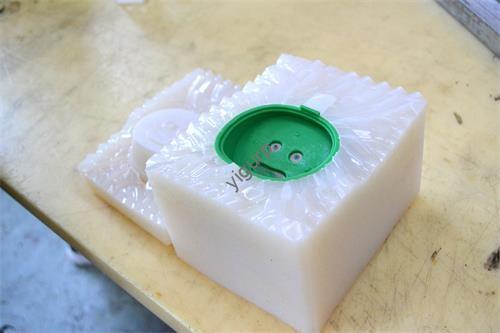
Si vous travaillez dans le développement de produits, que ce soit pour l'électronique, dispositifs médicaux, ou des biens de consommation : vous cherchez toujours des moyens de réaliser des prototypes plus rapidement, moins cher, et plus précisément. That’s wherecoulée sous vide (également appelé réplication sous vide) brille. Mais qu’est-ce qui le distingue exactement des autres méthodes comme le moulage par injection ou l’impression 3D ??
Dans ce guide, nous allons décomposer le 9 key advantages of vacuum casting, avec des exemples concrets, données, and practical insights to help you decide if it’s the right fit for your next project. Our goal is to answer the question: Why should you choose vacuum casting over other manufacturing methods?
1. Rentabilité: Save Money on Low-Demand & Complex Parts
One of the biggest draws ofcoulée sous vide is its low cost—especially for small batches or complex designs. Contrairement aux traditionnelsmoules en acier (used in injection molding), which can cost $10,000–$50,000 and take weeks to make, vacuum casting uses affordablemoules en silicone that cost just $500–$2,000.
This makes it perfect for:
- Early-stage prototypes (you don’t want to invest in expensive tooling before validating your design).
- Low-demand products (par ex., custom medical devices for a small clinic, limited-edition consumer goods).
- Pièces complexes (silicone molds are cheaper to make than steel molds for intricate shapes).
Exemple: A startup developing a new smart thermostat needed 30 prototypes to test user interaction. Utilisation de la coulée sous vide, they spent $800 on a silicone mold and $300 on casting materials—total $1,100. If they’d used injection molding, the steel mold alone would have cost $12,000.
2. Fast Speed: Shorten Your Production Cycle
Time is critical in product development, and vacuum casting delivers speed that’s hard to beat. The entire process—from creating a master prototype to getting finished parts—takes just3–5 jours, compared to 2–4 weeks for injection molding.
Here’s a breakdown of the timeline to show how fast it is:
- Make the master prototype (1–2 jours, using SLA 3D printing or CNC machining).
- Create the silicone mold (1–2 jours: mix silicone, pour, cure, and demold).
- Cast and finish parts (1 jour: pour material, cure, and add small touches like sanding).
Pro Tip: Pour les projets urgents, you can speed up curing time (par ex., heat the silicone mold to 30–35°C to cut curing time from 8–12 hours to 4–6 hours).
Étude de cas: Nous avons besoin d'une entreprise de dispositifs médicaux 20 syringe prototypes for a regulatory test in 4 jours. Utilisation de la coulée sous vide, they delivered the parts on time—something injection molding (which needs 2+ weeks for a mold) couldn’t have done.
3. Haute précision: Meet Tight Tolerances for Most Prototypes
Vacuum casting isn’t just fast and cheap—it’s also precise. The standard replication accuracy is±0.20mm per 100mm of part size, which meets the needs of 90% of prototype and small-batch projects.
To put this in perspective:
- A typical phone case is 150mm long—vacuum casting would keep the error to just ±0.30mm (smaller than a grain of rice).
- A small medical sensor (50mm de large) would have an error of ±0.10mm—perfect for parts that need to fit with other components.
Why it’s so precise: The vacuum removes air bubbles from both the silicone mold and the casting material, garantir chaque détail (even tiny textures or logos) is captured accurately.
Exemple: An electronics company used vacuum casting to make 50 wireless earbud prototypes. The charging port (which needs to fit a USB-C cable) had an accuracy of ±0.15mm—all 50 prototypes worked with standard cables, aucun ajustement nécessaire.
4. Excellent for Complex Structures & Uniform Wall Thickness
Traditional methods like injection molding struggle with complex parts (par ex., parts with undercuts, parois minces, or intricate textures)—they often require expensive, multi-piece steel molds. Coulée sous vide, cependant, excels at complex designs becausesilicone molds are flexible and can easily replicate even the most detailed shapes.
It’s also great for parts with uniform wall thickness (critical for structural strength and consistent curing). The vacuum ensures the casting material flows evenly into every corner of the mold, preventing thin spots or unevenness.
Common complex parts made with vacuum casting:
- Dispositifs médicaux (par ex., syringe plungers with tiny channels for fluid).
- Composants automobiles (par ex., sensor housings with multiple ports).
- Électronique (par ex., laptop hinge covers with small gears).
Étude de cas: A robotics company needed a prototype arm joint with 3 small gears and 2 contre-dépouilles. Injection molding would have required a $15,000 3-piece mold, but vacuum casting used a single $1,200 silicone mold—and the parts worked perfectly in testing.
5. Color Variety: Customize Appearance for Marketing & Essai
Contrairement à l'impression 3D (which often requires post-paint work) ou moulage par injection (which needs color-matched pellets), vacuum casting lets you easily create parts in almost any color—right during the casting process.
How it works:
- Add liquid dye to the casting material (par ex., PU resin, ABS) before pouring it into the mold.
- Choose from standard colors (noir, blanc, rouge, bleu) or custom Pantone shades to match your brand.
This is a big advantage for:
- Prototypes marketing (you want to show stakeholders a part that looks like the final product).
- User testing (color can affect how users perceive a product—e.g., a medical device in soft blue vs. bright red).
Exemple: A toy company tested 3 color versions of a new action figure (rouge, bleu, vert) using vacuum casting. They made 20 of each color for user testing—and found that kids preferred the blue version, which they used for the final product.
6. Wide Material Selection: Match Your Part’s Function
Vacuum casting works with a range of materials, so you can choose one that fits your part’s purpose (par ex., flexibilité, résistance à la chaleur, transparence). Here’s a table of the most popular materials and their uses:
| Matériel | Propriétés clés | Idéal pour | Example Parts |
|---|---|---|---|
| PU Resin | Flexible (Rivage A 30–90), faible coût | Soft components, logements | Coques de téléphone, remote control grips |
| ABS | Rigide, résistant aux chocs | Pièces structurelles, électronique | Cadres pour ordinateurs portables, toy bodies |
| PC (Polycarbonate) | Résistant à la chaleur (jusqu'à 130°C), transparent | High-temperature or clear parts | Couvertures légères, fenêtres pour dispositifs médicaux |
| Pennsylvanie (Nylon) | Résistant à l'usure, résistant aux produits chimiques | Engrenages, attaches | Petits engrenages, screw holders |
Pro Tip: For most prototypes, start with PU resin—it’s affordable, easy to work with, and comes in flexible or rigid options.
7. Good Operability: Simplify Mold Making & Démoulage
Moules en silicone (utilisé en coulée sous vide) are flexible and easy to work with—unlike rigid steel molds (moulage par injection) that require specialized equipment to handle.
Key operability benefits:
- Easy to cut: Après durcissement, you can use a utility knife to split the silicone mold along the parting line—no need for complex tools.
- Simple demolding: The flexible silicone peels away from the part easily, reducing the risk of damage (critical for delicate prototypes).
- Translucent design: Most silicone molds are translucent, so you can check if the casting material has filled all areas of the mold.
Exemple: A hobbyist making custom jewelry used vacuum casting. They cut the silicone mold with a regular craft knife, demolded the parts by hand, and had no issues with breakage—even for tiny, delicate pendants.
8. Good Repeatability: Consistent Quality Across Batches
When you need multiple identical parts (par ex., 50 prototypes for testing), repeatability is key. Vacuum casting delivers consistent quality because:
- The silicone mold captures every detail of the master prototype—so each part is a near-perfect copy.
- The vacuum ensures no air bubbles (which cause defects) in any part of the batch.
Dans la plupart des cas, you’ll get95%+ pièces cohérentes with vacuum casting—meaning only 1–2 defective parts per 50-piece batch.
Étude de cas: A consumer electronics company made 100 prototypes of a new tablet stand using vacuum casting. They tested 20 random parts for size and strength—all were within ±0.20mm of the master prototype, and none failed the strength test (holding a 500g tablet for 24 heures).
9. Environmental Friendliness: Reduce Waste
Compared to traditional large-scale production (comme le moulage par injection), vacuum casting is more environmentally friendly because it produces less waste:
- No excess material: You only mix as much casting material as you need for the batch—no leftover pellets or scrap.
- Reusable molds: A silicone mold can be used 15–25 times before it wears out—reducing the need to make new molds.
- Low energy use: Vacuum casting doesn’t require high heat (contrairement au moulage par injection, which needs 200–300°C to melt plastic)—so it uses less electricity.
Exemple: A small eco-friendly brand used vacuum casting to make 50 reusable water bottle lids. They produced just 2g of waste (from trimming small edges) and reused the silicone mold 18 times—cutting their environmental impact by 60% par rapport au moulage par injection.
10. Wide Applicability: Fit for Multiple Industries
Vacuum casting isn’t limited to one industry—it works for products in almost every sector that needs rapid prototyping or small batches. Here are the most common industries using it:
| Industrie | Utilisations courantes | Example Parts |
|---|---|---|
| 3C Electronics | Logements, connecteurs, sensor parts | Coques de téléphone, charnières pour ordinateur portable, earbud chargers |
| Dispositifs médicaux | Seringues, boîtiers de capteurs, tool parts | Corps de seringue, small surgical tool handles |
| Automobile | Prototypes for interior/exterior parts | Dashboard buttons, couvercles de capteurs |
| Robotique | Joints, engrenages, petites pièces structurelles | Robot arm joints, tiny gears |
| Biens de consommation | Jouets, ustensiles de cuisine, bijoux | Figurines, custom spoon handles, pendants |
Yigu Technology’s Perspective on the Advantages of Vacuum Casting
Chez Yigu Technologie, we’ve seen firsthand how vacuum casting’s advantages transform product development for our clients. From startups saving on tooling costs to medical device companies getting precise parts fast, it’s a versatile solution that solves real pain points. We especially value its repeatability (critical for consistent testing) et flexibilité matérielle (letting clients match final-product performance). For most low-batch, complex projects, vacuum casting isn’t just an option—it’s the most efficient, choix rentable. We often recommend it as the first step before moving to large-scale injection molding, as it lets clients validate designs without big investments.
(FAQ)
Q1: Is vacuum casting still cost-effective for very small batches (par ex., 5 parties)?
Oui! Même pour 5 parties, vacuum casting is cheaper than injection molding (which requires a $10k+ mold). Pour 5 parties, you’ll spend ~$600 (moule + matériel)—vs. $12k+ for injection molding. The only time 3D printing might be cheaper is for 1–2 parts, but vacuum casting is better for consistency.
Q2: Can vacuum casting handle parts with very thin walls (par ex., 0.5mm)?
Oui, but you need to use a low-viscosity casting material (like thin PU resin) and ensure the vacuum is strong (-0.095MPa to -0.1MPa). We’ve made parts with 0.4mm walls for medical devices—just make sure the silicone mold is properly filled to avoid thin spots.
Q3: How does vacuum casting’s precision compare to 3D printing?
Vacuum casting is more precise for most parts: it has an accuracy of ±0.20mm/100mm, while FDM 3D printing is ±0.30mm/100mm and SLA 3D printing is ±0.15mm/100mm. For parts that need to fit together (par ex., a gear and a housing), vacuum casting’s consistency across batches also makes it better than 3D printing.