
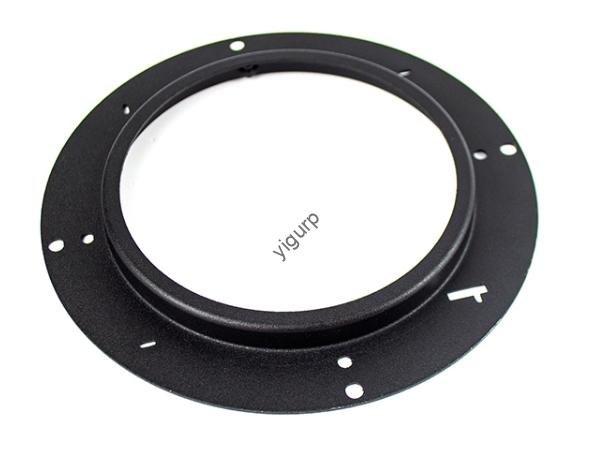
Dans le secteur en évolution rapide des équipements de communication, où des produits comme les talkies-walkies, micros, et les composants des stations de base nécessitent des mises à jour constantes pour répondre aux demandes du marché : le prototypage est une étape décisive. Méthodes de prototypage traditionnelles (comme le moulage par injection ou l'usinage CNC) souffrent souvent de longs délais de livraison, coûts élevés, et une flexibilité de conception limitée. Cependant, 3D printing for communication equipment prototypes a changé la donne, solving these pain points and unlocking new possibilities for design and innovation. Ci-dessous, we break down its key advantages with real data, exemples, and practical insights.
1. Rapid Idea-to-Prototype Conversion: Slash Development Cycles
One of the biggest frustrations for communication equipment developers is waiting weeks (or even months) to turn a CAD design into a physical prototype.3D printing eliminates this delay by directly translating digital designs into solid models—no expensive tooling or complex setup required.
How It Saves Time (With Data)
Traditional prototyping for communication devices (par ex., a walkie-talkie housing) typically takes 4–6 weeks. This is because it requires creating custom molds or tooling, which involves multiple rounds of adjustments. En revanche, 3D printing can produce the same prototype in24–72 heures—a time reduction of over 90%.
Real-World Example
A mid-sized communication device manufacturer wanted to test a new lightweight microphone design for outdoor use. Using traditional methods, the team quoted 5 weeks to get a prototype. By switching to 3D printing:
- They uploaded the CAD file to a 3D printer on Monday morning.
- Received a fully functional prototype by Wednesday afternoon (just 3 jours).
- Completed initial weight and grip testing by the end of the week, cutting their testing timeline by 85%.
This speed not only accelerates design verification but also lets teams respond faster to customer feedback—critical in a market where trends shift quickly.
2. Unmatched Design Flexibility: Enable Agile Iteration
Communication equipment often needs to adapt to specific use cases: a walkie-talkie for construction workers might need a rugged, large-button design, while one for hospital staff requires a compact, sanitizable model.3D printing gives designers the freedom to tweak designs on the fly—no need to rebuild expensive tooling for every change.
Key Flexibility Features (With Use Cases)
| Design Adjustment Need | Traditional Prototyping | 3D Printing Solution | Time/Cost Saved |
|---|---|---|---|
| Resize a walkie-talkie for child users | Requires new mold ($5,000–$8,000); 3–4 semaines | Edit CAD file (1–2 heures); reprint in 2 jours | $4,800+ en outillage; 3 weeks of time |
| Add a waterproof groove to a microphone | Modify existing mold ($2,000–$3,000); 2 semaines | Update 3D model (30 minutes); reprint in 1 jour | $1,800+ in mold changes; 1.5 weeks of time |
| Test 3 different antenna shapes for a base station | 3 separate molds ($15,000 total); 6 semaines | 3 CAD edits + 3 impressions ($300 total); 5 jours | $14,700 en outillage; 5+ weeks of time |
This flexibility is a lifesaver forrapid iteration—a core part of optimizing communication devices. Par exemple, a team testing a new two-way radio can print 3 different button layouts in a week, test them with users, and finalize the best design in half the time of traditional methods.
3. Cost-Effective Customization for Small-Batch Needs
Many communication equipment projects require small-batch prototypes—such as 5–20 units for field testing or 1–5 custom units for a specific client (par ex., a military-grade walkie-talkie for a defense contractor). Traditional manufacturing struggles here: tooling costs alone can make small runs unaffordable.3D printing solves this by eliminating tooling and minimizing waste.
Comparaison des coûts: Traditional vs. 3D Impression (Small-Batch of 10 Walkie-Talkie Prototypes)
| Cost Category | Traditional Prototyping (Moulage par injection) | 3D Impression | Total Cost Difference |
|---|---|---|---|
| Tooling/Mold Costs | $7,000 | $0 (aucun outillage nécessaire) | -$7,000 |
| Material Costs | $500 (granulés de plastique; 20% déchets) | $300 (3D printing filaments; 5% déchets) | -$200 |
| Labor/Setup Costs | $1,500 (mold setup + assemblée) | $800 (3D printer operation + minor post-processing) | -$700 |
| Total Cost | $9,000 | $1,100 | -$7,900 (88% réduction des coûts) |
Client Success Story
A client approached a communication tech firm needing 8 custom base station component prototypes for a remote mining site. The components required a unique shape to fit into existing mining equipment. Traditional prototyping would have cost $12,000 (mostly tooling) and taken 4 semaines. Using 3D printing:
- The firm delivered the 8 prototypes for $1,400 (un 88% cost cut).
- Completed the project in 5 jours.
- The client tested the components in the field and requested 2 minor tweaks—which were reprinted in 1 jour, with no extra tooling costs.
Yigu Technology’s Perspective on 3D Printing for Communication Prototypes
Chez Yigu Technologie, we’ve supported dozens of communication equipment clients in streamlining their prototyping with 3D printing. The biggest feedback we hear? It turns “waiting for prototypes” into “testing and iterating fast”—a difference that lets our clients launch products 3–4 months earlier than competitors. We’ve seen small teams use 3D printing to compete with industry giants by cutting R&D costs by 60% ou plus. As 3D printing materials (like durable, weather-resistant filaments for outdoor communication gear) advance, we expect it to become the standard for communication equipment prototyping—empowering more innovation and faster time-to-market.
FAQ:
1. Are 3D printed communication prototypes durable enough for real-world testing?
Absolument. Modern 3D printing materials—such as ABS plastic (résistant aux chocs) and PETG (waterproof and UV-stable)—match the durability of traditional prototype materials. Par exemple, 3D printed walkie-talkie housings can withstand drop tests (depuis 6 pieds) et les changements de température (-20°C to 60°C), just like injection-molded prototypes.
2. Can 3D printing handle complex internal structures for communication devices?
Oui. Contrairement aux méthodes traditionnelles (which struggle with hollow or intricate internal designs), 3D printing builds parts layer by layer—making it easy to create features like internal cable channels, small cavities for circuit boards, or lightweight lattice structures. We’ve printed microphone prototypes with built-in sound-dampening chambers that would be impossible to make with injection molding.
3. How long does it take to learn to use 3D printing for communication prototypes?
Not long. Most teams can master basic 3D printing workflows (CAD file preparation, printer setup, post-traitement) in 1–2 weeks with minimal training. Chez Yigu Technologie, we provide clients with step-by-step guides and 1-on-1 support—so even teams new to 3D printing can start producing prototypes within a month.