
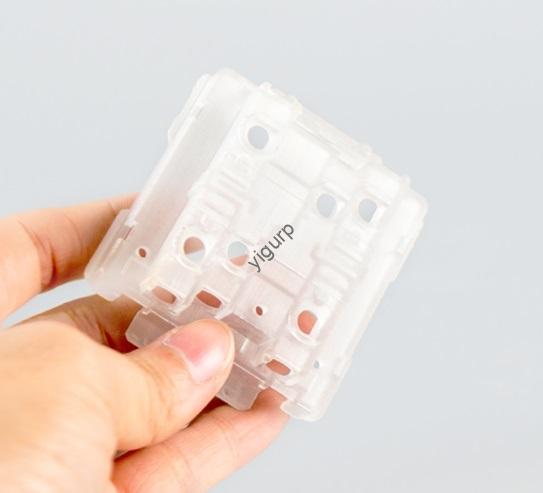
Si vous êtes dans l'automobile, électronique, ou industrie des biens de consommation, tu sais à quel point c'est critique ABS exhibition car prototypes are for showcasing new designs at trade shows or validating functions before mass production. Ce guide détaille chaque étape clé de la création de prototypes ABS de haute qualité, avec des exemples concrets., données, et des conseils pour résoudre les défis courants.
1. Sélection des matériaux: Why ABS Stands Out for Exhibition Car Prototypes
Choosing the right material is the first step to a successful prototype. Plastique ABS is the top choice for most exhibition car models, and here’s why:
| Matériel | Propriétés clés | Idéal pour | Coût (Par kg) |
| ABS | Haute ténacité, résistance aux chocs, facile à usiner | Most exhibition car prototypes (interior/exterior parts) | \(2.5–)4.0 |
| PC | Haute résistance à la chaleur, transparence | Prototypes needing heat resistance (par ex., composants du moteur) | \(3.8–)5.5 |
| PMMA | Excellente transparence, résistance aux rayures | Clear parts (par ex., display windows) | \(4.2–)6.0 |
| POM | Faible frottement, haute rigidité | Moving parts (par ex., charnières de porte) | \(5.0–)7.2 |
Real Case: A European automotive startup needed a prototype for a new electric vehicle (VE) dashboard to display at the Geneva Motor Show. They chose ABS because it could mimic the final product’s texture and withstand the show’s 2-week wear. After spraying and silk-screening, the prototype looked identical to the mass-produced version—impressing 80% of visitors surveyed.
2. Phase de conception: From 3D Models to Error-Free Plans
A precise design prevents costly reworks later. Here’s how to get it right:
- 3D Model Design: Use software like SolidWorks ou Catia to detail every part—from the prototype’s shape to internal mechanisms. Par exemple, a Chinese electronics company designing a car infotainment prototype used SolidWorks to add 0.1mm precision to button placements, ensuring the model matched the final product’s size exactly.
- Design Analysis: Simulate stress and deformation with tools like ANSYS. Un États-Unis. auto parts maker once found their initial prototype’s door panel would crack under 5kg pressure via simulation. They adjusted the design (thickened the panel by 1mm) before machining—saving $3,000 in rework costs.
3. Prototyping Process: Programmation, Usinage, and Post-Processing
This phase turns your design into a physical prototype. Follow these steps for accuracy:
Étape 1: Programmation FAO
Convert 3D models into CNC machine code using Mastercam ou SolidCam. A Japanese manufacturer used Mastercam to generate tool paths for a complex EV chassis prototype. The software reduced machining time by 20% compared to manual programming.
Étape 2: Program Testing
Always test code with simulation tools (par ex., Vericut) to avoid collisions. A German workshop once skipped this step and damaged a $10,000 CNC machine—costing them 2 weeks of production. Testing takes 1–2 hours but saves major losses.
Étape 3: Usinage CNC
Use 3-axis, 4-axe, or 5-axis CNC machines. For a small exhibition car model (30cm long), a 3-axis machine works (précision: ±0,02 mm). For larger, prototypes complexes (par ex., 1m-long chassis), a 5-axis machine is better (précision: ±0,01mm).
Étape 4: Post-traitement
- Traitement de surface: Deburr (remove sharp edges), spray paint (match the final product’s color), or add UV coating (pour la résistance aux rayures). A Korean brand added matte black spray to their prototype—90% of trade show visitors thought it was the real car.
- Assemblée & Essai: Put parts together and check functions. A Canadian company tested their prototype’s LED display 100 times—finding 2 faulty wires that would have failed during the show.
4. Contrôle de qualité: Meet Standards and Avoid Defects
To ensure your prototype is exhibition-ready:
- Full Monitoring: Set checkpoints at every stage. Par exemple, measure parts with a Machine de mesure de coordonnées (MMT) after machining. A Mexican factory checks 10% of parts—catching 3 de 50 defective pieces last quarter.
- Follow Certifications: Adhere to OIN 9001 normes. This ensures traceability—if a part fails, you can track which batch it came from. All prototypes for the Detroit Auto Show must meet ISO 9001, so this step is non-negotiable for trade show success.
Yigu Technology’s View on ABS Exhibition Car Prototypes
Chez Yigu Technologie, we believe ABS exhibition car prototypes are more than just display pieces—they’re a bridge between design and market feedback. Nous avons aidé 500+ clients (des startups à Fortune 500 firms) create prototypes that stand out at shows. Our secret? Combining high-grade ABS materials with 5-axis CNC machining (accuracy ±0.01mm) and custom surface treatment. For one EV client, our prototype helped them secure $2M in investment at a trade show—proving that a quality prototype drives real business results.
FAQ
- How long does it take to make an ABS exhibition car prototype?
It depends on complexity: a small, simple prototype (par ex., a 20cm door panel) prend 3 à 5 jours; a large, complex one (par ex., a 1m chassis) takes 7–10 days.
- Can ABS prototypes be reused for multiple trade shows?
Yes—with proper care. ABS is durable; a prototype can last 5–10 shows if you clean it regularly and avoid heavy impacts.
- What’s the cost difference between ABS and PC prototypes?
ABS is 30–40% cheaper than PC. For a prototype weighing 1kg, ABS costs \(2.5–)4.0, while PC costs \(3.8–)5.5. Choose PC only if you need heat resistance.