
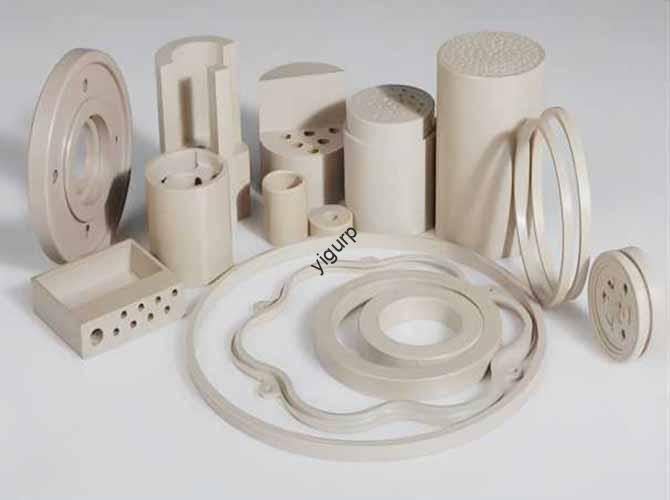
Vous êtes-vous déjà retrouvé coincé dans le développement de produits – à attendre des semaines pour un prototype, dépenses excessives en matériaux, ou avoir du mal à tester des conceptions complexes? 3D printing solid prototypes are the solution. Ces physiques, les modèles entièrement formés transforment la façon dont les équipes valident les conceptions, réduire les coûts, et accélérer la mise sur le marché. Ci-dessous, nous décomposons leurs principaux avantages, utilisations réelles, fabrication étape par étape, and how to avoid common pitfalls.
1. Core Benefits: Why 3D Printing Solid Prototypes Beat Traditional Methods
What makes 3D printing solid prototypes a game-changer? The table below compares them to traditional prototyping (Usinage CNC, manual making) to highlight clear advantages:
| Benefit Category | 3D Impression de prototypes solides | Traditional Prototyping (CNC/Manual) |
| Production Speed | 1–3 days for complex designs (par ex., pièces automobiles) | 2–4 weeks for the same complexity |
| Rentabilité | 50–70% lower material waste; no tooling fees | 20–30% material waste; expensive tooling ($500+) |
| Flexibilité de conception | Handles internal cavities, fine details (0.1mm precision) | Struggles with intricate shapes; limité par l'outillage |
| Répétabilité | Consistent results (Tolérance de ±0,05 mm) across batches | Variability from manual labor or tool wear |
| Small-Batch Suitability | Ideal for 1–100 units; no setup cost increases | Costly for small runs (tooling fees don’t scale) |
2. Applications clés: Solving Problems Across Industries
3D printing solid prototypes aren’t just for “testing”—they solve unique challenges in three critical sectors:
UN. Dessin industriel (Automotive/Aerospace)
Engineers need to validate part fit and function before mass production. Par exemple:
- An automotive team used 3D printing solid prototypes to test a new engine bracket design. Traditional CNC would have taken 3 weeks and \(2,000 in tooling—3D printing delivered 5 prototypes en 2 days for \)300 total.
- Résultat: They identified a stress point early, avoiding a $50,000 recall later.
B. Electronique grand public
Brands prioritize ergonomics and user experience. A smartphone maker:
- Printed 10 solid prototypes of a new phone case (using SLA technology) to test grip and button placement.
- Used feedback to adjust the case’s curve—reducing user hand fatigue by 30% (per user testing).
C. Éducation
Teachers struggle to make complex concepts tangible. A university:
- 3D printed solid prototypes of human bones and gear systems for engineering/biology classes.
- Student comprehension scores improved by 45% (contre. textbook-only learning), as students could touch and disassemble models.
3. Step-by-Step Production Process: How to Make a 3D Printed Solid Prototype
Creating a 3D printed solid prototype is straightforward—follow this linear, actionable workflow:
- 3Modélisation D: Use software (SolidWorks, Fusion 360) to design a digital model. Focus on:
- Adding clear dimensions (par ex., “100mm length, 5mm wall thickness”).
- Marking support structures for overhangs (angles >45° need support).
- Technologie & Sélection des matériaux: Choose based on your needs:
| 3D Printing Tech | Idéal pour | Materials Used |
| ANS (Stéréolithographie) | Détails fins (par ex., bijoux, électronique) | Résines (ABS-like, flexible) |
| FDM (Modélisation des dépôts fondus) | Durable parts (par ex., parenthèses) | PLA, PETG, nylon |
| SLS (Frittage sélectif au laser) | Heat-resistant parts (par ex., composants du moteur) | Polyamide (nylon), glass-filled composites |
- Impression & Post-traitement:
- Upload the model to the printer, set parameters (hauteur de couche: 0.1–0,2 mm), and start printing.
- Après l'impression: Remove supports, sand the surface (for smoothness), and paint if needed (par ex., for visual prototypes).
4. Common Pitfalls & How to Avoid Them
Even great 3D printing solid prototypes can fail—here’s how to fix top issues:
| Pitfall | Cause | Solution |
| Weak part structure | Thin walls (<1mm) or lack of support | Increase wall thickness to 1.5–2mm; add support for overhangs >45° |
| Rough surface finish | High layer height (>0.2mm) | Use 0.1mm layer height; sand with 400-grit sandpaper post-print |
| Dimensional inaccuracies | Printer calibration issues | Calibrate the printer’s bed level and filament flow before printing |
5. Yigu Technology’s Perspective
Chez Yigu Technologie, we see 3D printing solid prototypes as the backbone of fast, smart product development. We’ve helped clients cut prototyping time by 60% using our optimized SLA/FDM printers and high-performance materials (par ex., heat-resistant resins for industrial parts). We also offer custom workflows—for example, a medical client used our SLS service to print biocompatible prototypes, accelerating their device’s FDA approval by 3 mois. For us, it’s not just about printing parts—it’s about helping you solve problems faster.
FAQ
- What’s the maximum size of a 3D printed solid prototype?
Most desktop printers handle up to 300x300x300mm. Pour les pièces plus grandes (par ex., pare-chocs automobiles), we use industrial printers (1000x1000x1000mm) or print in sections, then assemble.
- How long do 3D printed solid prototypes last?
Cela dépend du matériau: PLA prototypes last 6–12 months (good for testing), while nylon/SLS prototypes last 2–3 years (suitable for long-term use).
- Can 3D printed solid prototypes be used for functional testing (par ex., tests de résistance)?
Yes—choose durable materials like nylon or PETG. Par exemple, a nylon prototype can withstand 500+ cycles of bending (simulating real use) without breaking.