
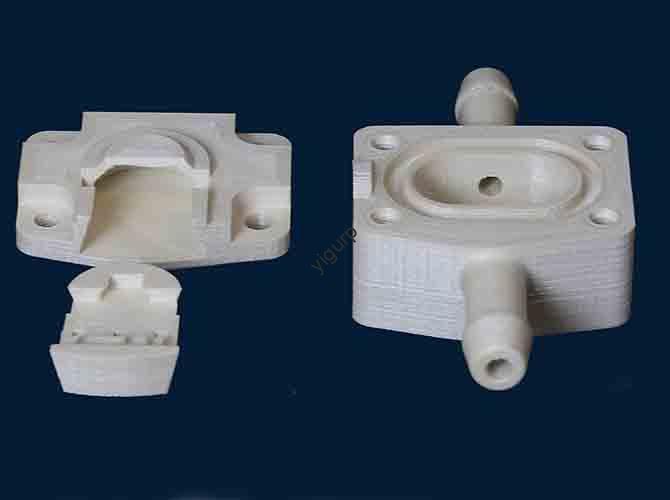
L’industrie navale traditionnelle est confrontée à de longs cycles de production, gaspillage de matériaux élevé, et flexibilité limitée pour les conceptions complexes. 3Navire d'impression D technology is changing this by enabling layer-by-layer manufacturing of ship components—from small parts to entire hulls. Mais comment ça marche pour les besoins marins? Quels problèmes cela résout-il dans la construction navale, réparation, et modélisme? And how can you overcome its current limitations? This guide answers these questions to help you leverage 3D printing for maritime projects.
1. Core Technical Principles of 3D Printing for Ships
3D printing ships relies on two foundational elements: layered manufacturing and strategic material selection. Understanding these ensures you choose the right approach for your project.
1.1 Fabrication en couches: Building Ships Step-by-Step
Unlike traditional shipbuilding (which assembles pre-cut parts), 3D printing builds components from the bottom up using digital models. Here’s the process:
- Modélisation numérique: Create a detailed 3D CAD model of the ship component (par ex., a hull section or valve).
- Layer Slicing: Software splits the model into thin layers (0.1–0.5mm thick), defining each layer’s shape and position.
- Material Deposition: The 3D printer deposits material (métal, plastique, ou composite) couche par couche, fusing each layer to the one below.
- Post-traitement: Trim excess material, surfaces lisses, or add coatings (par ex., anti-corrosion paint for marine parts) to meet standards.
Analogy: Think of it like building a sandcastle with a precision tool—each “grain” of material is placed exactly where needed, no extra sand (déchets) left behind.
1.2 Sélection des matériaux: Matching Materials to Marine Needs
Ship components face saltwater corrosion, contrainte mécanique, and harsh weather—so material choice is critical. The table below compares the most common options:
| Type de matériau | Propriétés clés | Ideal Ship Components | Fourchette de coût (Par kg) | Limites |
| Métaux (Acier inoxydable, Alliages d'aluminium) | Haute résistance, résistance à la corrosion | Pièces structurelles (hull frames, arbres d'hélice) | \(2–)8 | Lourd; requires high-power printers |
| Plastiques (ABS, PLA) | Faible coût, traitement facile | Pièces non structurelles (armoires, model components) | \(0.5–)2 | Low durability in saltwater; not for load-bearing use |
| Composites (Carbon Fiber-Reinforced Plastics) | Léger, rapport résistance/poids élevé | Des pièces performantes (hull sections, deck panels) | \(10–)30 | Cher; requires specialized printing tech |
2. Practical Applications of 3D Printing in Shipbuilding
3D printing adds value across three key areas of the maritime industry—solving specific pain points like long repair times and rigid designs.
2.1 Key Application Areas & Real-World Examples
| Application Area | Problem Solved | Example Case | Results Achieved |
| Construction navale | Slow production of complex hulls/components; coûts de moulage élevés | Moi Composites (Italie) 3D printed the fiberglass yacht “MAMBO” (6.5m de long, 2.5m wide) | Reduced build time by 50% contre. méthodes traditionnelles; eliminated 80% of mold costs |
| Ship Repair & Entretien | Long wait times for replacement parts; difficulty sourcing obsolete components | A European ferry company 3D printed a damaged pipeline valve on-site | Reduced ship downtime from 2 semaines à 2 jours; enregistré $15,000 in downtime costs |
| Ship Model Making | Inaccurate, time-consuming model assembly; inability to replicate fine details | NOUS. Naval Surface Warfare Center (Carderock) 3D printed a 1:20 scale model of a Navy hospital ship | Captured 95% of the real ship’s internal/external details; cut model production time by 70% |
2.2 Why These Applications Benefit Most from 3D Printing
- Construction navale: Complex hull shapes (with curved surfaces and internal ribs) are hard to make with traditional methods—3D printing creates them in one piece, reducing assembly errors.
- Repair: Ships often need custom or rare parts (par ex., old valve designs)—3D printing produces these on-demand, no need to wait for factory production.
- Model Making: Designers need accurate models to test ship stability or pitch—3D printing replicates even small details (par ex., portholes, garde-corps) for reliable testing.
3. Advantages of 3D Printing Ships vs. Fabrication Traditionnelle
3D printing outperforms traditional shipbuilding in four key ways, directly addressing industry pain points. The table below highlights the differences:
| Advantage Category | 3D Printing Performance | Traditional Manufacturing Performance | Impact on Ship Projects |
| Liberté de conception | Creates complex shapes (par ex., curved hulls, lattice-structured decks) without process limits | Limited to simple, flat or curved shapes; complex designs require multiple assembled parts | Enables optimized hull designs that reduce water resistance—boosting fuel efficiency by 5–10% |
| Personnalisation | Adjusts component size/shape in CAD software; no mold changes needed | Custom parts require new molds (\(10,000–)100,000+); long lead times | Meets niche needs (par ex., a fishing boat’s custom storage compartments) in days, pas des mois |
| Matériel & Économies de coûts | Material waste as low as 5–10% (adds material only where needed); no tooling costs | Waste up to 70% (cuts away excess material); high mold/tool costs | For a small yacht hull, enregistre \(5,000–)10,000 in material costs; eliminates $20,000+ en coûts de moule |
| Vitesse | Prototypes/components ready in days (contre. weeks/months) | A single hull section takes 4–6 weeks to make with traditional cutting/welding | Accelerates ship development—get a new design from concept to prototype in 1 month vs. 3 mois |
4. Key Challenges & Practical Solutions for 3D Printing Ships
While 3D printing offers big benefits, it still faces hurdles in the maritime industry. Below are the top challenges and how to fix them:
4.1 High Costs: Reduce Expenses Without Losing Quality
| Challenge Aspect | Root Cause | Solution |
| Expensive Machines & Matériels | Large 3D printers (for hulls) coût \(500k–\)2M; composite materials cost \(10–)30 par kg | 1. Pour les petites pièces: Use low-cost FDM printers (\(5k–\)50k) for plastics/metals. 2. For large projects: Partner with 3D printing service bureaus (avoids buying expensive machines). 3. Negotiate bulk material discounts (cuts composite costs by 15–20%). |
| High Cost for Large Ships | Printing a full-size hull needs tons of material and weeks of time | Start with hybrid builds: 3D print complex parts (par ex., hull ribs) and use traditional methods for simple parts (par ex., flat deck plates)—balances cost and performance. |
4.2 Slow Printing Speed: Meet Production Deadlines
- Problème: Printing a 6m yacht hull takes 2–3 weeks with a single 3D printer—too slow for commercial shipyards.
- Solutions:
- Use multi-nozzle printers (2–4 nozzles) to double/triple printing speed.
- Prioritize 3D printing for high-value parts (par ex., custom valves) and use traditional methods for large, pièces simples (par ex., long hull sections).
- Optimize layer thickness: Increase from 0.1mm to 0.3mm for non-critical parts—cuts print time by 40% sans perdre de force.
4.3 Contrôle de qualité: Ensure Marine Safety Standards
Ship parts must withstand saltwater, waves, and heavy loads—3D printing’s layer-by-layer process can create defects (par ex., gaps between layers) if not controlled. Here’s how to ensure quality:
- Monitor Print Parameters: Track temperature (±2°C for plastics, ±5°C for metals), adhérence des couches, and material flow with real-time sensors.
- Post-Print Testing:
- For structural parts: Conduct tensile strength tests (ensure they withstand 200–500 MPa, marine-grade standards).
- For corrosion resistance: Test metal parts in saltwater baths (must resist rust for 5+ années).
- Follow Standards: Adhere to maritime guidelines like ABS Guide for Additive Manufacturing (Bureau américain de la navigation) to ensure certification.
5. Yigu Technology’s Perspective
Chez Yigu Technologie, we see 3D printing as a catalyst for maritime innovation—especially for small-to-medium shipyards struggling with long lead times and high costs. Our advice is to start small: use 3D printing for repairs or model making first (low risk, quick ROI) before scaling to hull components. We’re developing AI tools to optimize 3D print parameters for marine materials (par ex., composites en fibre de carbone), cutting defect rates by 30% and print time by 25%. As costs drop and speed improves, 3D printing will become a standard in shipbuilding—and we’re here to make that transition smooth for every client.
6. FAQ: Answers to Common 3D Printing Ship Questions
Q1: Can 3D printing make full-size ships (par ex., cargo ships or cruise ships)?
A1: Actuellement, it’s most practical for small-to-medium ships (up to 20m long, like yachts or ferries). Full-size cargo ships (100m+) need too much material and time—hybrid builds (3D printed parts + traditional hulls) are the best solution today. As large-format printers improve, full-size 3D printed ships may become feasible in 5–10 years.
Q2: Are 3D-printed ship parts durable enough for saltwater?
A2: Yes—if you choose the right materials and test them. Acier inoxydable, alliages d'aluminium, and carbon fiber composites resist saltwater corrosion when coated with marine-grade paint. Par exemple, 3D printed stainless steel valves have been tested to last 7+ years in saltwater without rusting.
Q3: How much does it cost to 3D print a small ship component (par ex., a valve or deck panel)?
A3: It depends on size and material. A small plastic valve (10cm diameter) frais \(20–)50. A metal deck panel (1mx 0,5m) frais \(200–)500. A composite hull section (2m x 1m) frais \(1,000–)3,000. This is 30–50% cheaper than traditional manufacturing for small-batch parts.