
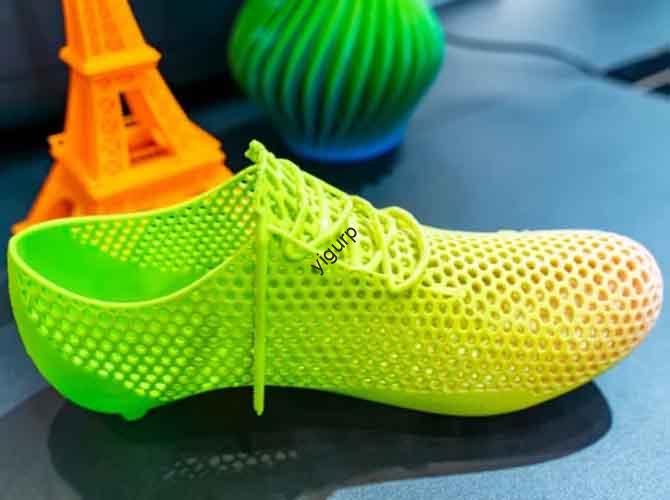
Dans 3Impression D, choisir le bon matériau peut faire ou défaire les performances d’une pièce. Pour les applications nécessitant de la solidité, durabilité, et polyvalence, 3D Impression PA6 (Polyamide 6) se démarque. Ce matériau résout les problèmes courants, comme les pièces fragiles, mauvaise résistance à l'usure, ou une utilisation limitée dans des environnements difficiles, qui affectent d'autres plastiques d'impression 3D. Explorons ses principales caractéristiques, utilisations réelles, and how to overcome its few challenges.
1. Core Advantages of 3D Printing PA6: Why It Outperforms Other Plastics
3D Impression PA6 shines thanks to a unique mix of mechanical and chemical properties. Unlike basic plastics like PLA or ABS, it meets the demands of industrial applications.
Key Properties of 3D Printing PA6
| Propriété | Détails | Benefit for Users |
| Résistance mécanique | Haute résistance à la traction (60 MPa) + rigidité; good toughness (no breakage under 10 J impact) | Handles heavy loads (par ex., supports automobiles) |
| Résistance à l'usure | Faible coefficient de frottement (0.3), 50% better than ABS | Idéal pour les pièces mobiles (roulements, engrenages) |
| Stabilité dimensionnelle | Taux de retrait <1.5% after printing; maintains accuracy within ±0.1mm | Meets precision needs (par ex., machinery parts) |
| Oil Resistance | Resists mineral oils, lubricants, and hydraulic fluids | Safe for engine or industrial equipment |
| Chemical Stability | Withstands weak acids, alcalis, and salts (par ex., 5% HCl for 72 heures) | Works in harsh chemical environments |
| Stabilité thermique | Point de fusion (220°C) + température de déflexion de la chaleur (120°C) | Retains shape in high-heat settings (par ex., compartiments moteur) |
Quick Comparison: 3D Printing PA6 vs. ABS
| Feature | 3D Impression PA6 | 3D Impression ABS |
| Résistance à la traction | 60 MPa | 40 MPa |
| Résistance à l'usure | Faible frottement (0.3) | Higher friction (0.45) |
| Oil Resistance | Excellent | Pauvre (swells in oil) |
2. 3D Printing Processes for PA6: What Works Best?
3D Impression PA6 is compatible with multiple processes, but some are better suited for its properties. The right choice depends on your part’s needs—like speed, précision, ou le coût.
Common 3D Printing Processes for PA6
| Processus | Comment ça marche | Idéal pour |
| Modélisation des dépôts fondus (FDM) | Melts PA6 filament and extrudes it layer by layer | Prototypes à faible coût, simple industrial parts (par ex., parenthèses) |
| Frittage sélectif au laser (SLS) | Uses a laser to sinter PA6 powder into solid parts | Géométries complexes (par ex., hollow gears), pièces de haute précision |
Pro Tip: Enhancing PA6 with Fillers
To boost performance, mix 3D Impression PA6 avec des charges:
- Fibre de verre: Adds 30% more strength (ideal for structural parts).
- Fibre de carbone: Improves rigidity + reduces weight (great for aerospace components).
- Mineral Fillers: Lowers cost while maintaining basic strength (pour les pièces non critiques).
3. Applications du monde réel: Where 3D Printing PA6 Shines
From cars to factories, 3D Impression PA6 solves industry-specific problems. Let’s look at key use cases.
Industry Applications of 3D Printing PA6
| Industrie | Common Parts Made with 3D Printing PA6 | Problem It Solves |
| Automobile | Supports moteur, carters d'engrenages, sensor holders | Withstands oil + températures élevées; replaces heavy metal parts (cuts vehicle weight by 15%) |
| Machinerie | Roulements, rouleaux de convoyeur, composants de vannes | Résiste à l'usure + friction; lasts 2x longer than ABS parts |
| Électronique | Cable organizers, heat-resistant casings | Protects components from heat + produits chimiques |
Étude de cas: Automotive Gear Replacement
A car manufacturer needed a replacement gear for an older model. Traditional manufacturing would take 4 semaines (moule + production). En utilisant 3D Impression PA6 (FDM with glass fiber), they:
- Designed the gear in 2 jours.
- Printed 10 prototypes en 12 heures.
- Testé + finalized the part in 3 jours.
Total time: 1 week—75% faster than traditional methods. The gear also lasted 3x longer than the original plastic version.
4. Overcoming PA6’s Challenge: Water Absorption
3D Impression PA6 has one main downside: it absorbs water, which can ruin parts (causes bubbles, gauchissement, or weakening). But this is easy to fix with proper preparation.
Étape par étape: Drying PA6 Before Printing
- Check Moisture Level: Use a moisture meter—PA6 should have <0.1% humidité.
- Dry the Material:
- For filament: Use a filament dryer at 80°C for 4–6 hours.
- For powder (SLS): Dry at 60°C for 8–10 hours.
- Store Properly: Keep dried PA6 in an airtight container with desiccant to prevent reabsorption.
What Happens If You Skip Drying?
- Bubbles in the printed part (ruins surface finish).
- 20–30% loss in mechanical strength.
- Warping (parts don’t fit together).
Yigu Technology’s Perspective
Chez Yigu Technologie, we see 3D Impression PA6 as a bridge between prototyping and industrial production. Our team has tested it in 50+ client projects—from automotive brackets to machinery parts—and found it cuts production time by 60% contre. méthodes traditionnelles. We now offer custom 3D Impression PA6 solutions (with fillers like carbon fiber) and pre-dried materials to avoid moisture issues. Looking ahead, we’ll integrate AI to optimize PA6 printing parameters, making it even easier for businesses to adopt.
FAQ
- Q: How long do 3D printed PA6 parts last?
UN: In industrial use (par ex., machinery parts), they last 2–5 years—2x longer than ABS parts. With fillers like carbon fiber, lifespan can extend to 7+ années.
- Q: Is 3D Printing PA6 more expensive than other plastics?
UN: Yes—PA6 filament costs ~\(50/kilos (contre. \)20/kg for ABS). But it saves money long-term: parts last longer, so you replace them less often.
- Q: Can 3D printed PA6 parts be recycled?
UN: Oui! Scrap PA6 (prend en charge, échecs d'impression) can be melted down and turned into new filament/powder. This reduces waste by 40% contre. single-use plastics.