
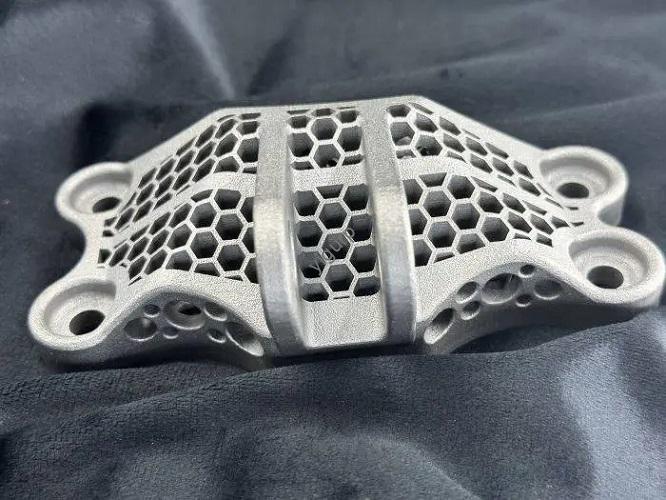
L'industrie médicale vit une révolution, grâce à la technologie d'impression 3D. Ce qui était autrefois un concept avant-gardiste est désormais un outil quotidien, transformer la façon dont nous créons des prothèses, implants, et outils chirurgicaux. At the heart of this revolution are 3D printing materials—the building blocks that make safe, efficace, et solutions médicales personnalisées possibles. Dans ce guide, we’ll break down everything you need to know about medical-grade 3D printing materials, from key requirements to real-world applications and top material options.
Why 3D Printing Materials Matter in Healthcare
3D printing’s success in medicine hinges on its materials. Contrairement à la fabrication traditionnelle, 3D printing lets creators build complex, patient-specific products—think a custom knee implant or a surgical guide tailored to a doctor’s needs. But none of this works without materials that meet healthcare’s strict standards.
Par exemple, a dental implant can’t use just any plastic; it needs to be safe for long-term contact with gums (biocompatible) and able to withstand chewing (force). A surgical tool must be easy to clean (stérilisable) to prevent infections. Without the right materials, 3D printed medical products risk failure, harm, or regulatory rejection.
Key Requirements for Medical-Grade 3D Printing Materials
Not all 3D printing materials are suitable for healthcare. The industry has non-negotiable standards to protect patients and ensure product performance. Below are the four critical characteristics every medical 3D printing material must have:
| Requirement | Définition | Why It’s Essential |
| Biocompatibilité | No adverse reactions (like inflammation or toxicity) when in contact with the body. | Implants, dentures, and pacemakers stay inside or touch the body—unsafe materials cause harm. |
| Stérilisabilité | Can be cleaned and disinfected using healthcare methods (par ex., gamma rays, vapeur). | Medical tools and reusable devices must kill bacteria/viruses to prevent cross-infection. |
| Bioavailability | Physical properties match the body part it replaces (par ex., flexibilité, force). | A 3D printed ear needs to be soft like real cartilage; a bone implant needs to be strong like bone. |
| Conformité réglementaire | Meets global standards (par ex., OIN, USP) for medical use. | Ensures the material is tested and approved for safe patient use. |
Note: Requirements vary by use case. A temporary surgical guide may not need the same long-term biocompatibility as a permanent hip implant.
Top 3D Printing Materials for Medical Applications (With Case Studies)
Let’s dive into the most widely used medical-grade 3D printing materials, leurs atouts, and how they’re applied in real healthcare scenarios.
1. Nylon PA 12 (Polyamide 12)
Qu'est-ce que c'est: Un poids léger, durable thermoplastic with excellent flexibility and chemical resistance.
Principales fonctionnalités:
- Sterilizable via 5+ méthodes (oxyde d'éthylène, gamma irradiation, steam autoclave).
- Meets ISO and USP I-IV certifications (the gold standard for medical materials).
- Works with MJF (Fusion multi-jets) et SLS (Frittage sélectif au laser) 3D printing for precise shapes.
Real-World Case: A prosthetics clinic in Germany used Nylon PA 12 to create a custom forearm prosthetic for a patient. The material’s flexibility mimicked the natural movement of the wrist, while its light weight (50% lighter than traditional metal prosthetics) reduced strain on the patient’s shoulder. The prosthetic was also sterilizable, making it easy for the patient to clean daily.
Utilisations courantes: Prothèses, orthèses (par ex., ankle braces), and dental aligner molds.
2. ULTEM 1010 (Polyétherimide)
Qu'est-ce que c'est: A high-performance thermoplastic known for strength and heat resistance—even better than most plastics for medical use.
Principales fonctionnalités:
- Résiste aux températures élevées (up to 170°C/338°F), making it safe for steam sterilization.
- Highly biocompatible and resistant to chemicals (par ex., disinfectants).
- Works with FDM (Modélisation des dépôts fondus) 3Impression D, a cost-effective method for prototypes.
Real-World Case: Un États-Unis. hospital used ULTEM 1010 to print surgical guides for spinal fusion surgeries. The guides were designed to fit the patient’s spine exactly, helping surgeons place screws more accurately (reducing surgery time by 25%). After use, the guides were sterilized with gamma rays and reused for training new surgeons.
Utilisations courantes: Guides chirurgicaux, prototypes de dispositifs médicaux, and small prosthetic components.
3. Silicone (Sil 30)
Qu'est-ce que c'est: A soft, elastic elastomer that’s gentle on the skin and body tissues.
Principales fonctionnalités:
- Heat-resistant and tear-proof, making it durable for long-term use.
- 100% biocompatible—ideal for products that touch skin or inside the body.
- Printed via Carbon DLS (Digital Light Synthesis) for smooth, detailed surfaces.
Real-World Case: A pediatric hospital used Sil 30 to print custom breathing masks for premature infants. Traditional masks were too rigid and caused skin irritation, but the silicone masks conformed to the babies’ tiny faces, reducing discomfort and improving oxygen delivery.
Utilisations courantes: Skin-contact devices (breathing masks, wound dressings), and soft implants (par ex., ear cartilage replacements).
4. Titane (Ti6Al4V)
Qu'est-ce que c'est: A strong, lightweight metal that’s often called “the gold standard” for medical implants.
Principales fonctionnalités:
- Physical properties nearly match human bone (force + flexibilité), reducing implant rejection.
- 100% biocompatible et résistant à la corrosion (no rusting inside the body).
- Printed via DMLS (Frittage laser direct des métaux) for high precision—even for complex shapes like hip sockets.
Real-World Case: A Japanese orthopedic center used Titanium Ti6Al4V to print a custom knee implant for an 80-year-old patient. The implant’s design matched the patient’s worn knee exactly, and its bone-like strength allowed the patient to walk without pain within 6 semaines (faster than the 12-week average for traditional implants).
Utilisations courantes: Implants orthopédiques (genoux, les hanches, plaques d'os), implants dentaires, et outils chirurgicaux.
5. Acier inoxydable (17-4PH)
Qu'est-ce que c'est: A cost-effective metal with good strength and biocompatibility—great for non-permanent medical products.
Principales fonctionnalités:
- Sterilizable via most methods (vapeur, chemical disinfection).
- Lower cost than titanium (30-40% moins cher), making it ideal for budget-friendly tools.
- Works with DMLS 3D printing for sharp, durable edges (critical for surgical tools).
Limites: Less corrosion-resistant than titanium—not recommended for permanent implants (par ex., arthroplasties de la hanche).
Real-World Case: A clinic in India used 17-4PH stainless steel to print 50 surgical scalpels for a rural medical camp. The scalpels were sterilizable, durable, and cost half as much as imported scalpels, allowing the camp to treat more patients.
Utilisations courantes: Outils chirurgicaux (scalpels, forceps), implants temporaires (par ex., bone screws for fracture healing), and medical device frames.
How to Choose the Right 3D Printing Material for Medical Use
Avec autant d'options, choosing the right material can be tricky. Follow these 4 steps to make the best decision:
- Define the product’s purpose: Is it a permanent implant (needs long-term biocompatibility) or a one-time surgical guide (needs sterilizability)?
- Check regulatory requirements: Ensure the material meets local standards (par ex., FDA in the U.S., CE in Europe).
- Test physical properties: Match the material’s strength, flexibilité, and heat resistance to the body part or use case.
- Consider cost and scalability: Titanium is great for implants but expensive—stainless steel may be better for low-cost, high-volume tools.
Yigu Technology’s Perspective on Medical 3D Printing Materials
Chez Yigu Technologie, we believe medical 3D printing materials are the backbone of patient-centric care. We focus on providing fast, high-precision 3D printing services using only certified materials (Nylon PA12, ULTEM 1010, Titanium Ti6Al4V, etc.) to meet healthcare’s strict standards. Our team works closely with hospitals and clinics to tailor materials to specific needs—whether it’s a custom prosthetic for a child or surgical tools for a remote clinic. We also offer post-processing (par ex., polissage, stérilisation) to ensure every product is safe, durable, and ready for use. For us, it’s not just about materials—it’s about empowering healthcare providers to deliver better outcomes.
FAQ About 3D Printing Materials in the Medical Industry
1. Are all 3D printing materials safe for medical use?
Non. Only materials that meet regulatory standards (par ex., OIN, USP) and have key properties like biocompatibility and sterilizability are safe. Never use non-medical-grade materials (par ex., regular plastic filaments) for patient-contact products.
2. Which 3D printing material is best for permanent implants?
Titane (Ti6Al4V) is the top choice. Its bone-like properties, biocompatibilité, and corrosion resistance make it ideal for long-term implants like hips, genoux, and dental fixtures.
3. How much more expensive is medical-grade 3D printing material compared to regular 3D printing material?
Medical-grade materials cost 2-5x more than regular materials. Par exemple, a spool of regular PLA plastic costs \(20-\)30, while a spool of medical-grade Nylon PA12 costs \(80-\)150. The higher cost comes from testing, attestation, and quality control to ensure patient safety.