
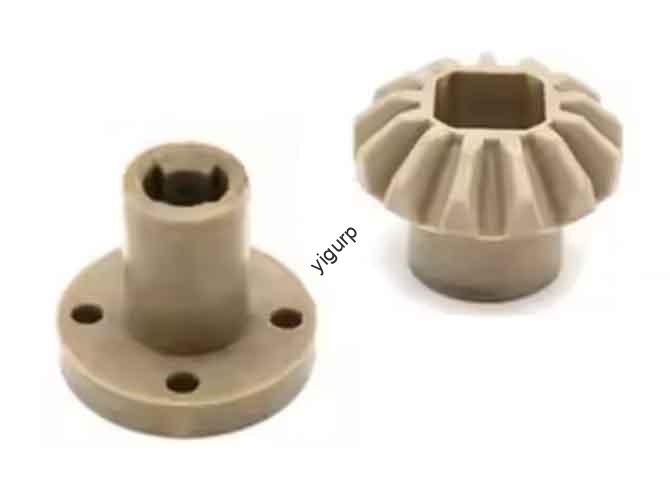
3La polyvalence de D Printing réside dans sa large gamme de matériaux, chacun avec des atouts uniques., faiblesses, et utilisations idéales. Que vous fassiez un prototype, une partie fonctionnelle, ou un objet de décoration, choisir le bon matériau détermine le succès. Cet article se décompose 3D printing different materials, leurs propriétés clés, et comment les adapter à vos besoins.
1. Overview of Common 3D Printing Materials (Propriétés clés & Utilisations)
Below is a comprehensive table of 7 popular 3D printing materials, including their advantages, disadvantages, and typical applications. It’s designed to help you quickly filter options based on your project goals.
| Type de matériau | Avantages principaux | Main Disadvantages | Ideal Application Scenarios |
| PLA (Acide polylactique) | – Facile à imprimer (idéal pour les débutants)- Écologique (biodégradable)- Faible coût- Minimal warping | – Low strength & durabilité- Poor high-temperature resistance (softens at ~60°C) | Education models, art/DIY projects, toy making, low-load prototypes |
| ABS (Acrylonitrile-Butadiène-Styrène) | – Haute résistance & dureté- Good heat resistance (~90–110°C)- Easy post-processing (sanding/painting) | – Prone to warping (needs heated bed)- Emits odors (requires ventilation) | Pièces automobiles, home appliance components, poignées d'outils, cadres structurels |
| PETG (Polyéthylène téréphtalate) | – Combines PLA’s ease of use & ABS’s strength- Non toxique (sans danger pour le contact alimentaire)- Low warping | – Hygroscopic (absorbe l'humidité; needs dry storage)- Higher cost than PLA | Conteneurs alimentaires, composants mécaniques, transparent parts (par ex., covers) |
| Nylon (Pennsylvanie) | – Exceptional wear resistance- Bonne stabilité thermique- Handles repeated mechanical stress (résistance à la fatigue) | – High printing temperature (needs heated enclosure)- Strong hygroscopicity | Engrenages industriels, roulements, pièces d'équipement de sport, load-bearing components |
| TPU (Polyuréthane thermoplastique) | – Haute élasticité (flexible like rubber)- Good wear & aging resistance- Adapts to complex shapes | – Difficult to print (needs high accuracy)- Slow printing speed & coût élevé | Semelles de chaussures, flexible phone cases, sealing rings, soft pipes |
| Metal Powder | – Ultra-haute résistance & dureté- Excellent electrical/thermal conductivity | – Very high cost- Requires specialized equipment (par ex., GDT) & compétences | Composants aérospatiaux, implants médicaux, pièces automobiles hautes performances |
| Photosensitive Resin | – Ultra-high printing precision- Smooth surface finish (no post-processing needed) | – Fragile (low impact resistance)- Not heat-resistant | Jewelry designs, modèles dentaires, prototypes de dispositifs médicaux, detailed miniatures |
2. How to Compare 3D Printing Materials for Your Needs? (Contrast & Decision Tips)
Not sure if PLA vs. PETG is better for a prototype, ou Nylon vs. Métal for an industrial part? Use these targeted comparisons to resolve common dilemmas.
2.1 For Prototyping: PLA vs. PETG contre. ABS
| Facteur | PLA | PETG | ABS |
| Facilité d'impression | ★★★★★ (best for beginners) | ★★★★☆ (faible déformation) | ★★★☆☆ (needs heated bed) |
| Coût | ★★★★★ (cheapest) | ★★★☆☆ (mid-range) | ★★★☆☆ (mid-range) |
| Force | ★★☆☆☆ (lowest) | ★★★★☆ (balanced) | ★★★★☆ (haut) |
| Food Safety | ★★☆☆☆ (not recommended) | ★★★★★ (sûr) | ★☆☆☆☆ (not safe) |
| Recommendation | Rapide, low-cost display models | Prototypes fonctionnels (par ex., pièces en contact avec les aliments) | Durable prototypes (par ex., pièces automobiles) |
2.2 For Flexible Parts: TPU vs. Other Materials
If your project needs flexibility, TPU is the only mainstream choice—but consider its limitations:
- TPU’s elasticity (Shore hardness 60A–95A) mimics rubber, making it ideal for parts that need to bend or stretch (par ex., phone case grips).
- Avoid TPU if: You need speed (it prints 2–3x slower than PLA) or low cost (it’s 3–4x pricier than PLA).
3. Step-by-Step Guide to Choosing the Right 3D Printing Material
Follow this linear, question-driven process to narrow down 3D printing different materials to your perfect match:
- Clarify Your Project’s Core Requirement
Ask: What does the part need to do?
- Decorative/display-only → Choose PLA (cheap, easy) ou Photosensitive Resin (détaillé).
- Functional (par ex., holds weight) → Pick ABS, PETG, ou Nylon (strength-focused).
- Flexible → Go with TPU (no alternatives for elasticity).
- High-performance (par ex., aérospatial) → Opt for Metal Powder ou High-grade Nylon.
- Check Practical Constraints
- Budget: Avoid Métal ou Résine if cost is tight; utiliser PLA ou ABS instead.
- Printing Setup: If you don’t have a heated enclosure, skip Nylon ou ABS (choose PLA ou PETG).
- Safety: Pour pièces en contact avec les aliments, only use PETG (PLA/ABS are not safe).
- Evaluate Long-Term Use
- La pièce sera-t-elle exposée à la chaleur? Avoid PLA (softens at 60°C); utiliser ABS ou Nylon.
- Will it face repeated wear? Prioritize Nylon (best wear resistance) sur ABS.
4. Yigu Technology’s Perspective on 3D Printing Material Selection
Chez Yigu Technologie, we believe choosing 3D printing different materials should follow a “needs-first, cost-optimized” principle. Many clients overspecify materials—for example, en utilisant Metal Powder for a non-load-bearing industrial prototype, which increases costs by 5–10x. Our team recommends starting with a “test material”: Utiliser PLA for initial design checks, PETG for functional prototypes, and only upgrade to Nylon ou Métal if real-world testing proves it’s necessary. We also help clients address material limitations (par ex., séchage PETG/Nylon to prevent printing defects) to ensure consistent results. This approach balances performance and cost, helping projects launch faster.
FAQ: Common Questions About 3D Printing Different Materials
- Q: Can I use PLA to make food-contact parts (par ex., a snack container)?
UN: Non. PLA is biodegradable but may release small molecules when in contact with food or warm temperatures. Pour des pièces de qualité alimentaire, PETG is the only mainstream plastic option (it meets FDA food-contact standards).
- Q: Why is TPU harder to print than PLA, and how can I fix printing issues?
UN: TPU is flexible, so it can stretch and jam the printer nozzle. To improve results: Use a slower printing speed (20–30 mm/s), a larger nozzle (0.4–0.6 mm), and keep the material dry (store in a sealed container with desiccants).
- Q: Is photosensitive resin a good choice for functional parts (par ex., petits engrenages)?
UN: Non. Photosensitive resin is brittle and has low impact resistance—even small mechanical stress will cause it to crack. For functional gears, utiliser Nylon (résistant à l'usure) ou ABS (difficile) instead.