
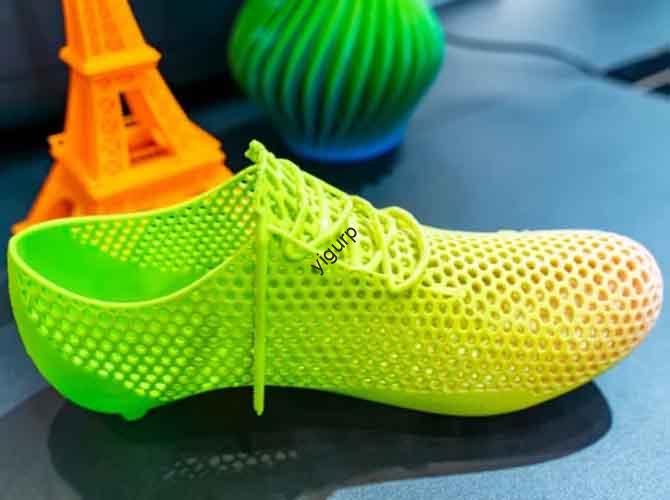
As 3Technologie d'impression D revolutionizes industries from healthcare to aerospace, choosing the right 3D printed plastic becomes a critical step for success. Que vous soyez un amateur créant des prototypes ou un ingénieur concevant des pièces industrielles, comprendre les propriétés, avantages, et les limitations des différents plastiques garantissent que votre projet répond aux objectifs de performance. This guide breaks down the most common 3D printing plastic materials, their applications, and how to select the best option for your needs.
1. Core Categories of 3D Printed Plastic: Thermoplastics vs. Thermodurcissables
The first step in choosing a 3D printed plastic is understanding its base category. All 3D printing plastics fall into two main groups: thermoplastics and thermosets. Their behavior under heat is the key difference—and this directly impacts their use cases.
| Feature | Thermoplastiques | Thermodurcissables |
| Response to Heat | Soften/melt when heated; harden when cooled (réversible) | Do not soften/melt when heated; become harder (irreversible) |
| Reusability | Can be melted and reshaped multiple times | Cannot be reused once cured |
| Avantages clés | Facile à imprimer, polyvalent, recyclable | Haute résistance, excellent high-temperature resistance |
| Common Examples | PLA, ABS, PC, Nylon | Résine époxy (EP), Résine phénolique (PF) |
| Typical Applications | Prototypes, biens de consommation, outils médicaux | Pièces très sollicitées, heat-resistant components |
2. Haut 6 3D Printed Plastic Materials: Properties and Use Cases
Pas tous 3D printed plastics are created equal. Below is a detailed breakdown of the most widely used options, with their unique traits and real-world applications.
2.1 PLA (Acide polylactique)
- What it is: A biodegradable thermoplastic made from renewable resources like cornstarch or sugarcane.
- Propriétés clés: Point de fusion bas (180–220°C), facile à imprimer, good gloss/transparency, non toxique (slight odor when heated).
- Limites: Poor heat resistance (softens above 60°C) et résistance à l'eau.
- Idéal pour: Hobbyist prototypes, objets de décoration, temporary parts (par ex., Halloween props, pots de fleurs).
2.2 ABS (Acrylonitrile-Butadiène-Styrène)
- What it is: A blend of three polymers (PS, SAN, BS) that balances hardness, dureté, et rigidité.
- Propriétés clés: Opaque (usually milky white), non toxique, excellent impact strength, good dimensional stability, résistance chimique.
- Limites: Requires a heated build plate to prevent warping.
- Idéal pour: Prototypes fonctionnels, produits de consommation (par ex., coques de téléphone, pièces de jouets), composants intérieurs automobiles.
2.3 PC (Polycarbonate)
- What it is: A high-performance thermoplastic known as an “engineering plastic.”
- Propriétés clés: Haute résistance, résistance à la chaleur (jusqu'à 130°C), résistance aux chocs, bending resistance.
- Unique Benefit: Parts can be directly assembled and used (aucun post-traitement n'est nécessaire pour de nombreuses applications).
- Idéal pour: Composants aérospatiaux, équipement médical (par ex., boîtiers d'outils de diagnostic), pièces extérieures automobiles.
2.4 Nylon (Polyamide)
- What it is: A lightweight thermoplastic with excellent wear resistance.
- Propriétés clés: Résistance à la chaleur, low friction coefficient, haute résistance à la traction (even without post-processing).
- Limites: Limited color options (can be colored via spray painting or dip dyeing).
- Idéal pour: SLS (Frittage sélectif au laser) impressions, pièces mobiles (par ex., engrenages, roulements), équipement sportif (par ex., pédales de vélo).
2.5 Photosensitive Resin
- What it is: A liquid material made of polymer monomers and prepolymers, cured by UV light.
- Propriétés clés: Fast curing speed, smooth surface finish, transparent to translucent matte appearance.
- Unique Benefit: Delivers ultra-high precision (down to 0.1mm layer heights).
- Idéal pour: Bijoux (par ex., custom pendants), modèles dentaires (par ex., crown prototypes), small high-detail parts (par ex., miniatures).
2.6 Specialized Materials
For advanced projects, ces 3D printed plastics offer unique solutions:
- Plastiques hautes performances: Î.-P.-É. (polyetherimide), COUP D'OEIL (polyéther éther cétone), PSE (polyether sulfone), and PPSU (polyphenyl sulfone) — used for extreme environments (par ex., pièces de moteurs aérospatiaux, implants médicaux).
- Water-soluble plastics: PVA (polyvinyl alcohol) — used as support structures for complex prints (dissolves in water, no manual removal needed).
3. How to Choose the Right 3D Printed Plastic: 4 Facteurs clés
Avec autant d'options, how do you pick the best 3D printed plastic? Follow this step-by-step process:
- Define Your Project’s Needs:
- La pièce est-elle fonctionnelle (par ex., un engrenage) ou décoratif (par ex., une figurine)?
- Will it be exposed to heat (par ex., near an engine) or water (par ex., a outdoor planter)?
- Does it need to be biodegradable (par ex., a temporary medical splint)?
- Consider Your Budget:
- Low-cost options: PLA (\(20–)30 par kg), ABS (\(25–)35 par kg).
- Mid-range options: PC (\(40–)60 par kg), Nylon (\(50–)70 par kg).
- High-cost options: Photosensitive resin (\(80–)150 per liter), COUP D'OEIL (\(300–)500 par kg).
- Check Compatibility with Your Printer:
- PLA/ABS work with most FDM (Modélisation des dépôts fondus) printers.
- Nylon requires SLS printers.
- Photosensitive resin needs a resin 3D printer (Durcissement aux UV).
- Evaluate Post-Processing Needs:
- Do you have time for sanding (ABS) or dyeing (Nylon)?
- Can you afford water-soluble supports (PVA)?
4. Yigu Technology’s Perspective on 3D Printed Plastic
Chez Yigu Technologie, we believe 3D printed plastic is the backbone of accessible innovation. Our engineering team prioritizes materials that balance performance and usability—for example, we often recommend PLA for beginners (facile à imprimer, faible coût) and PC/PEEK for industrial clients (haute durabilité, résistance à la chaleur). As 3D printing evolves, we’re seeing a shift toward eco-friendly options (like plant-based PLA) and ultra-high-performance plastics (like PEEK for medical implants). We advise clients to align material choice with long-term goals: a prototype may only need PLA, but a critical aerospace part demands PEEK.
5. FAQ About 3D Printed Plastic
Q1: Is 3D printed plastic toxic?
Most common 3D printed plastics (PLA, ABS, PC) are non-toxic when used correctly. PLA emits a slight sweet odor when heated (sûr), while ABS may release fumes—we recommend a well-ventilated space or a HEPA filter for ABS printing. Photosensitive resin is safe once cured but requires gloves when handling liquid resin.
Q2: Can 3D printed plastic parts be reused?
Thermoplastiques (PLA, ABS, PC) can be melted and reshaped multiple times, making them reusable. Thermodurcissables (résine époxy) and cured photosensitive resin cannot be reused, as their chemical structure changes permanently during curing.
Q3: What’s the most durable 3D printed plastic?
For general use, PC and Nylon offer excellent durability. Pour conditions extrêmes (chaleur élevée, pression), PEEK is the top choice—it’s used in medical implants and aerospace parts because of its strength and biocompatibility.