
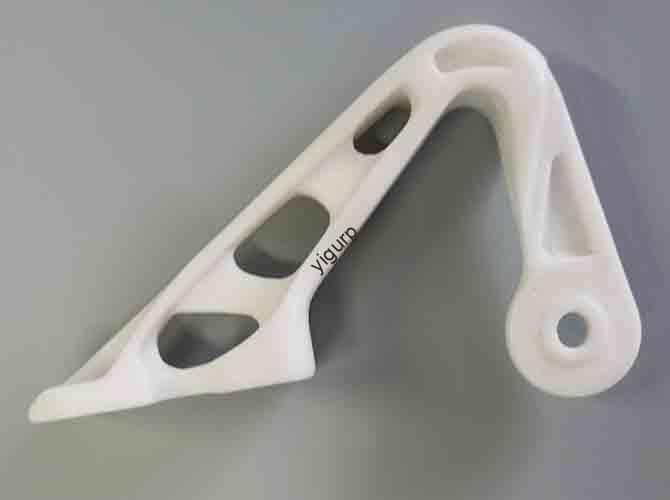
À l’ère de la fabrication intelligente, 3D high-precision printing has redefined how industries create complex, composants de haute qualité. Contrairement aux méthodes soustractives traditionnelles qui éliminent la matière, cette technologie construit des objets couche par couche, ouvrant ainsi la voie à des conceptions complexes, production plus rapide, et des solutions sur mesure. Ce guide plonge dans ses principes fondamentaux, avantages clés, applications du monde réel, and why it’s a critical tool for forward-thinking businesses.
1. Core Principles of 3D High-Precision Printing
En son coeur, 3D high-precision printing relies on a “layer-by-layer deposition” processus, driven by digital models (par ex., Fichiers CAO). This approach eliminates the limitations of traditional manufacturing, where complex shapes often require expensive molds or multiple machining steps. Below is a breakdown of how it works, plus a comparison to subtractive methods.
1.1 Flux de travail étape par étape
- Modélisation numérique: Create a detailed 3D model using software (par ex., SolidWorks, Fusion 360). The model is sliced into thousands of thin 2D layers (typically 10–100 microns thick).
- Préparation du matériel: Load specialized materials (plastiques, métaux, céramique) dans l'imprimante 3D. Each material is optimized for precision—e.g., metal powders for aerospace parts, biocompatible resins for medical devices.
- Impression couche par couche: The printer deposits or cures one layer at a time. Par exemple:
- Powder-based systems (par ex., GDT) use lasers to fuse metal powder.
- Resin-based systems (par ex., DLP) use light to harden photosensitive resin.
- Post-traitement: Remove the part, nettoyer l'excédent de matière, and apply finishing steps (par ex., heat treatment for metals, polishing for plastics) to enhance strength and precision.
1.2 3D High-Precision Printing vs. Traditional Subtractive Manufacturing
| Feature | 3D Impression de haute précision | Traditional Subtractive Manufacturing (par ex., Usinage CNC) |
| Utilisation du matériau | Déchets minimes (utilise uniquement le matériel nécessaire) | Déchets élevés (carves away up to 70% de matière première) |
| Complexity Support | Gère des géométries complexes (par ex., canaux internes) | Struggles with complex shapes (requires multiple setups) |
| Délai de mise en œuvre | Rapide (prototypes in hours/days) | Lent (molds/tooling take weeks/months) |
| Personnalisation | Easy (adjust digital model only) | Difficult (requires new tooling for each design) |
2. Key Advantages of 3D High-Precision Printing
What makes this technology a game-changer? Its four core strengths address critical pain points for industries like aerospace, soins de santé, and automotive—from reducing costs to enabling innovation.
2.1 Advantage Breakdown (with Data)
| Avantage | Détails & Real-World Impact |
| Micron-Level Accuracy | Achieves precision as low as 5–10 microns (0.005–0.01 mm)—critical for medical implants and aerospace components. Par exemple, dental crowns printed with this precision fit patients’ teeth perfectly. |
| Unmatched Design Freedom | No shape restrictions: Print parts with internal lattices, structures creuses, or organic curves. This has enabled lighter aerospace parts (reducing fuel costs by 15–20%) and personalized medical devices. |
| Diverse Material Support | Works with over 100+ matériels, y compris: – Métaux: Titane (for implants), aluminium (pour l'aérospatiale). – Plastiques: ABS (pour pièces automobiles), biocompatible resins (pour outils chirurgicaux). – Céramique: Zircone (for dental crowns), alumine (for industrial sensors). |
| Shortened Production Cycles | Cuts lead times by 50–80% compared to traditional methods. Par exemple, automotive prototypes that once took 6 weeks to make can now be printed in 2–3 days—accelerating R&D. |
3. Real-World Applications of 3D High-Precision Printing
This technology isn’t just innovative—it’s practical. Below are its most impactful use cases, with industry-specific examples.
3.1 Industrie aérospatiale
- Lightweight Components: Prints titanium or aluminum parts (par ex., supports de moteur, injecteurs de carburant) that are 30–50% lighter than traditional parts. Cela réduit le poids de l'avion, lowering fuel consumption by 10–15%.
- Complex Engine Parts: Creates turbine blades with internal cooling channels—impossible with CNC machining. These blades improve engine efficiency by 20%.
3.2 Healthcare Industry
- Custom Medical Devices: Produces personalized prostheses (par ex., artificial hips) and orthopedic stents. Using patient scans, parts fit perfectly—reducing post-surgery complications by 40%.
- Surgical Tools: Prints high-precision tools (par ex., biopsy forceps) with 10-micron accuracy. These tools are more durable than plastic alternatives and cost 30% less to produce.
3.3 Industrie automobile
- Prototypage rapide: Tests new designs (par ex., composants du tableau de bord, poignées de porte) in days instead of weeks. This speeds up new car launches by 3–6 months.
- Customized Parts: Makes limited-edition parts (par ex., racing spoilers) for high-end vehicles. No tooling is needed—saving manufacturers $50,000+ per design.
Yigu Technology’s Perspective on 3D High-Precision Printing
Chez Yigu Technologie, we view 3D high-precision printing as a catalyst for industrial transformation. Its ability to balance accuracy, vitesse, and material diversity helps our clients solve unique challenges—from creating lightweight aerospace parts to personalized medical devices. We’ve integrated this technology into our solutions to cut client lead times by 60% and reduce material waste by 50%. As materials and printers advance, we expect it to become the standard for high-value manufacturing—especially in sectors where precision and customization are non-negotiable.
FAQ: Common Questions About 3D High-Precision Printing
- Q: Is 3D high-precision printing only for small parts?
UN: Non. While it excels at small, pièces détaillées, industrial printers can produce large components (par ex., 1m x 1m aerospace panels) with the same precision. The key is choosing the right printer and material.
- Q: Are 3D-printed high-precision parts as strong as traditionally made parts?
UN: Yes—often stronger. Par exemple, metal parts printed via SLM have a 99.9% densité (same as forged metal) and can withstand high temperatures. Post-traitement (par ex., traitement thermique) further boosts strength.
- Q: How much does a 3D high-precision printer cost?
UN: Prices vary by size and capability: – Desktop models (for small plastics): \(5,000–)50,000. – Industrial metal printers (pour l'aérospatiale/médical): \(200,000–)2 million. The cost is offset by lower material waste and faster lead times.