
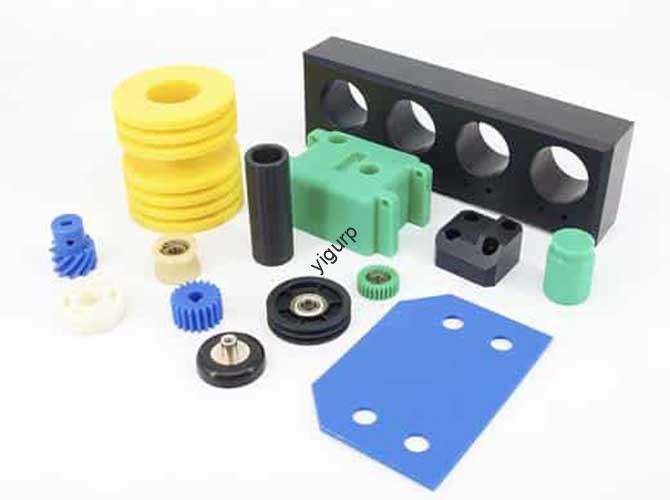
En développement de produits, le temps est tout. Attendre des semaines pour que les prototypes traditionnels testent une conception ou valident une fonctionnalité peut retarder les lancements et augmenter les coûts.. That’s where 3D batch printing prototypes come in—this technology lets you produce multiple high-quality prototypes quickly, résoudre les problèmes courants comme la lenteur d’exécution, coûts élevés, et une flexibilité de conception limitée. This guide breaks down what 3D batch printing prototypes are, how to use them effectively, and how they transform product development.
1. What Are 3D Batch Printing Prototypes?
3D batch printing prototypes refer to the mass production of product prototypes using 3D printing technology. Unlike single-prototype printing, batch printing focuses on creating 5–100+ identical or customized prototypes at once, making it ideal for design validation, tests fonctionnels, and pre-production reviews.
Think of it like baking a batch of cookies instead of one at a time: you prepare the dough (conception), use a tray (3D printer build plate) to bake multiple cookies (prototypes) together, and get results faster—without sacrificing quality.
Key Purposes of 3D Batch Printing Prototypes
- Design Validation: Test if a design works for users (par ex., a phone case’s grip or a medical device’s ergonomics) by giving prototypes to multiple testers.
- Tests fonctionnels: Check if parts perform as intended (par ex., a gear’s rotation or a container’s leak resistance) across multiple samples.
- Pre-Production Display: Show stakeholders (par ex., clients, investors) physical prototypes to get feedback before mass production.
Exemple: A startup developing a new water bottle needs to test 20 prototypes—some with a flip lid, some with a straw lid. 3D batch printing lets them produce all 20 dans 2 jours (contre. 20 days with traditional machining), so they can quickly compare which lid users prefer.
2. Material Selection for 3D Batch Printing Prototypes
Choosing the right material is critical—pick the wrong one, and your prototypes won’t accurately represent the final product. The table below compares common materials, their traits, et les meilleures utilisations:
| Type de matériau | Key Traits | Idéal pour | Batch Printing Compatibility | Coût (Par kg) |
| PLA (Acide polylactique) | Biodégradable, facile à imprimer, low odor, low heat resistance | Decorative prototypes, basic design validation (par ex., pièces de jouets) | Excellent—fast printing, no warping | \(20–)30 |
| ABS (Acrylonitrile Butadiène Styrène) | Fort, résistant à la chaleur (jusqu'à 90°C), durable | Prototypes fonctionnels (par ex., poignées d'outils, car interior parts) | Good—needs heated enclosure to avoid warping | \(30–)40 |
| PETG (Polyéthylène téréphtalate glycol) | Résistant aux produits chimiques, étanche, difficile, facile à imprimer | Prototypes needing durability (par ex., bouteilles d'eau, contenants alimentaires) | Excellent—balances speed and strength | \(35–)45 |
| Photosensitive Resin | Détail élevé (0.05mm hauteur de couche), surface lisse, fragile | Prototypes de haute précision (par ex., bijoux, modèles dentaires) | Good—resin printers handle small batches well | \(50–)80 |
| Nylon Powder | Résistant à l'usure, fort, flexible | Prototypes fonctionnels (par ex., engrenages, charnières) | Limited—needs SLS printers (industriel) | \(100–)150 |
| Poudres métalliques (Acier inoxydable, Titane) | Ultra-résistant, résistant à la chaleur, résistant à la corrosion | Industrial prototypes (par ex., pièces aérospatiales, implants médicaux) | Limited—needs SLM/EBM printers (coût élevé) | \(500–)1,000 |
Common Problem Solved: “Why do my prototypes break during functional testing?»
You likely used PLA for a part that needs strength. Switch to PETG or ABS—for example, a prototype hinge made with PETG can withstand 1,000+ openings (contre. 100 with PLA), accurately testing how the final part will perform.
3. The 3D Batch Printing Prototype Process
The process is highly automated, turning digital designs into physical prototypes in 4 simple steps. Follow this linear workflow to avoid mistakes:
Étape 1: Design the CAD Model
Use software like Fusion 360, SolidWorks, or Tinkercad to create a 3D model. For batch printing:
- Optimize for Build Plate Size: Arrange multiple models on the build plate to maximize space. For a 22cm x 22cm plate, you can fit 10–15 small prototypes (par ex., 5cm x 5cm phone cases).
- Add Batch-Specific Features: If prototypes need customization (par ex., different sizes), use “parametric design” to adjust dimensions quickly (par ex., a water bottle model with 3 size options: 300ml, 500ml, 700ml).
Étape 2: Slice the Model
Use slicer software (par ex., Traitement, PrusaSlicer) to convert the CAD model into printer code. Key settings for batch printing:
- Hauteur de couche: 0.2mm for most prototypes (balances speed and quality).
- Infill: 20–50% (20% for decor, 50% pour les pièces fonctionnelles).
- Batch Arrangement: Use the slicer’s “copy” tool to duplicate the model across the build plate—ensure 1–2mm spacing between prototypes to avoid sticking.
Étape 3: 3D Batch Printing
Load the sliced file into your 3D printer and start printing. For best results:
- Use a Large Build Plate: Printers with 30cm x 30cm plates (par ex., Creality Ender 5 Plus) handle more prototypes per batch than smaller 22cm plates.
- Monitor the First Layer: The first layer determines if prototypes stick—if it’s uneven, pause and adjust the build plate level.
Étape 4: Post-traitement
Finish prototypes to improve appearance and functionality:
- Remove Supports: Use pliers or a support removal tool to take off excess material—resin prototypes may need soaking in isopropyl alcohol first.
- Sand Surfaces: Use 200–400 grit sandpaper to smooth rough edges (par ex., a PLA prototype’s layer lines).
- Paint/Coat (Facultatif): Add paint or a clear coat to match the final product’s appearance (par ex., a car part prototype painted to look like metal).
Time Comparison: 3D Batch Printing vs. Traditional Prototyping
| Étape | 3D Batch Printing (20 Prototypes) | Traditional Machining (20 Prototypes) |
| Conception & Installation | 1 jour | 3 jours |
| Production | 2 jours | 17 jours |
| Post-traitement | 1 jour | 5 jours |
| Total Time | 4 jours | 25 jours |
4. Advantages of 3D Batch Printing Prototypes
3D batch printing solves key product development problems that traditional methods can’t. Voici comment cela ajoute de la valeur:
- Délai d'exécution rapide: Produire 20 prototypes en 4 jours (contre. 25 days with machining)—critical for meeting tight launch deadlines.
- Haute précision: Errors as low as ±0.05mm ensure prototypes match the final product’s dimensions (par ex., a medical device prototype that fits exactly like the production version).
- Économies de coûts: No expensive molds or tooling—batch printing 50 PLA prototypes costs \(50–)100 (contre. \(500–)1,000 pour usinage traditionnel).
- Flexibilité de conception: Easily adjust designs between batches (par ex., change a phone case’s color or a gear’s teeth size) sans réoutillage.
Exemple: A car manufacturer needs 50 prototypes of a new dashboard button. 3D batch printing costs \(80 (PLA material) and takes 3 jours. Traditional machining would cost \)800 and take 20 days—saving the manufacturer $720 et 17 jours.
5. Limitations and How to Overcome Them
While 3D batch printing has many benefits, it’s not perfect. Here are common limitations and fixes:
| Limitation | Solution |
| Some materials (par ex., PLA) lack strength/durability | Use stronger materials (PETG, ABS) for functional prototypes; test with 50% infill instead of 20%. |
| Large prototypes are hard to batch print (build plate limits) | Split large prototypes into smaller parts (par ex., a 60cm tall robot into 5 parties), print in batches, then assemble. |
| Resin prototypes need safety gear (gloves, mask) | Use water-washable resin (less toxic) and always wear PPE; work in a well-ventilated area. |
6. Application Fields of 3D Batch Printing Prototypes
3D batch printing is used across industries to speed up development. Here are the most common use cases:
- Aérospatial: Print 20+ prototypes of small engine parts to test heat resistance and fit.
- Automobile: Produire 50+ interior prototypes (par ex., porte-gobelets, poignées de porte) to test user comfort.
- Dispositifs médicaux: Batch print 10–15 custom prosthetic socket prototypes to find the best fit for patients.
- Electronique grand public: Créer 30+ phone case prototypes with different designs to test market appeal.
Yigu Technology’s Perspective
Chez Yigu Technologie, we see 3D batch printing prototypes as a game-changer for product development. Many clients struggle with slow traditional prototyping, which delays launches. Our solutions include high-speed FDM printers (up to 150mm/s) optimized for batch printing and a “Material Selector Tool” that recommends the right material for your prototype’s needs. We also offer pre-sliced templates for common parts (par ex., coques de téléphone, engrenages) to save setup time. As 3D tech evolves, we’ll add larger build plates and faster resin printers to handle bigger batches, helping clients turn ideas into validated prototypes faster than ever.
FAQ
1. How many prototypes can I print in one batch?
It depends on your printer’s build plate size and prototype size. A 22cm x 22cm plate can fit 10–15 small prototypes (5cm x 5 cm) or 2–3 medium prototypes (10cm x 10cm). Industrial printers with 40cm x 40cm plates can handle 50+ small prototypes per batch.
2. Can I print different prototype designs in one batch?
Oui! Slicer software lets you arrange multiple unique models on the build plate. Par exemple, you can print 5 phone cases with flip lids and 5 with straw lids in the same batch—great for comparing designs quickly.
3. Are 3D batch printed prototypes strong enough for pre-production testing?
Cela dépend du matériau. PETG, ABS, or nylon prototypes are strong enough for most pre-production tests (par ex., tests de chute, load tests). Avoid PLA for high-stress tests—use PETG instead, which has similar strength to the plastic used in many final products.