
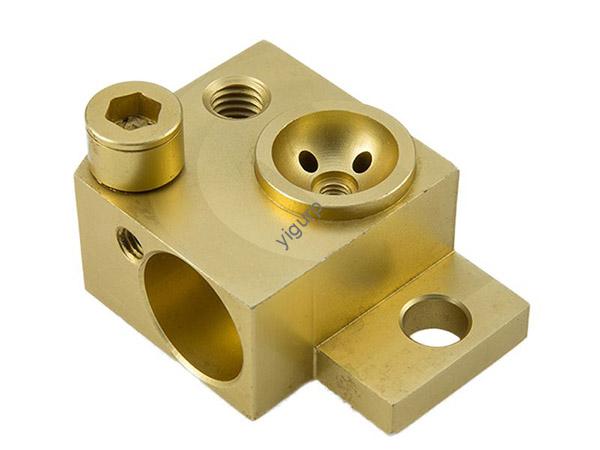
Si vous êtes dans le secteur manufacturier, jewelry making, or automotive design, 260 laiton is a material you’ll want to know well. Also calledalliage 260 laiton, cartridge brass, or by its UNS codeC26000, this popular70/30 laiton (70% cuivre, 30% zinc) is famous for its amazing formability and brightyellow brass apparence. Whether you’re making ammunition casings or decorative jewelry, compréhension 260 brass’s strengths will help you pick the right material for your project. Let’s dive into all the key details.
1. 260 Brass Overview: Why It’s a Go-To Alloy
260 laiton (UNS C26000) is one of the most widely usedcommon brass grades—and for good reason. It follows strict standards likeASTM B36, ensuring consistency across every batch. What makes it stand out? C'est 70/30 copper-zinc mix gives it two big advantages: great ductility (so it bends and shapes easily) and a warm, golden color that’s perfect for decorative items.
Par exemple, a leading ammunition manufacturer in Colorado relies on 260 brass for cartridge cases. They choose it because it can be stretched thin (without breaking) to hold gunpowder, and its strength keeps the case intact when fired. Even jewelry makers love it—its bright finish polishes up beautifully, making it a cheaper alternative to gold for necklaces and bracelets.
2. Chemical Composition of 260 Laiton (C26000)
The performance of 260 brass starts with its simple, well-balanced chemical makeup. Here’s a breakdown of its key elements, including important details likeRoHS compliance:
| Element | Percentage | Role & Importance |
|---|---|---|
| Cuivre (Cu) | 70% | Gives strength, ductilité, and the alloy’s signature golden color |
| Zinc (Zn) | 30% | Boosts formability (making it easy to shape) and lowers material cost |
| Lead (Pb) | < 0.07% | Kept very low to meetRoHS compliant brass standards—safe for electronics and toys |
| Fer (Fe) | ≤ 0.05% | Minimized to prevent brittleness (so the alloy doesn’t crack when formed) |
| Trace Elements | < 0.5% total | Small amounts of other metals (like tin) to keep properties consistent |
This low-lead formula makes 260 brass a top choice for products that touch skin (comme des bijoux) or need to meet global safety rules—unlike higher-lead alloys such as 360 laiton.
3. Mécanique & Physical Properties: Force, Ductilité, et plus encore
260 brass’s properties make it perfect for projects that need both flexibility and durability. Voici la clémécanique & physical properties you need to know:
- Résistance à la traction: 300–360 MPa (43,500–52,200 psi) – Strong enough for ammunition casings but not for heavy structural parts.
- Yield Strength: 75–280 MPa (10,900–40,600 psi) – Low yield strength means it’s easy to bend (great for forming) but can be hardened with cold work.
- Élongation: 66% – One of the most ductile brasses! It can stretch to 66% of its original length before breaking (ideal for deep drawing).
- Dureté: 55–100 HRB – Soft in its annealed state (55 HRB) but gets harder when bent or rolled (jusqu'à 100 HRB for spring temper parties).
- Densité: 8.53 g/cm³ – Heavier than aluminum (2.7 g/cm³) but lighter than stainless steel (7.9 g/cm³), balancing weight and feel.
- Modulus of Elasticity: 110 GPa – Stiffer than 360 laiton (97 GPa), so it holds its shape well in parts like lamp fixtures.
- Conductivité électrique: 28% IACS – Conducts electricity well enough for electrical socket shells (though not as well as pure copper).
- Annealing Temperature: 427–482°C (800–900°F) – Heating to this range softens the metal after cold work, making it easy to shape again.
Un exemple concret: A radiator manufacturer uses 260 brass for radiator cores. Its high elongation lets them form thin, complex tubes, while its conductivity helps transfer heat efficiently.
4. Cold Working & Formabilité: Façonner 260 Brass with Ease
260 laiton is famous for its exceptionalcold working & formabilité—it’s one of the best brasses for shaping without heat. Here’s how to get the most out of it:
- Deep Drawability: Parfait pour cup drawing (like making ammunition casings or small bowls). It can be pulled into deep, thin-walled shapes without cracking.
- Common Processes: Great for estampillage (making electrical socket shells), roll forming (creating long, curved parts like lamp trim), et coining (pressing detailed designs for jewelry).
- Earing Tendency: Minimal “earing” (small bumps on the edge of drawn parts) – this saves time on trimming and finishing.
- Work Hardening Rate: Hardens as you shape it (par ex., bending a tube will make it stiffer). If it gets too hard, anneal it (heat it to 427°C) to soften it again.
- Grain Size Control: Keeping grain size small (via proper annealing) ensures consistent formability—no weak spots that could break during shaping.
Par exemple, a musical instrument maker uses 260 brass for trumpet tubes. They roll-form the brass into long, curved shapes, then anneal it to keep it flexible enough to bend into the instrument’s unique design.
5. Applications courantes: Where 260 Brass Excels
Thanks to its formability and attractive color, 260 brass is used in dozens of industries. Here are its most popularapplications courantes:
- Ammunition: Cartridge cases (le 70/30 mix balances strength and ductility for firing).
- Automobile: Radiator cores & tanks (conducts heat well and resists coolant corrosion).
- Électronique: Electrical socket shells (sûr, low-lead, and easy to stamp into shape).
- Decorative: Lamp fixtures, bijoux (polishes to a bright gold finish), and decorative trim.
- Musical Instruments: Trumpet, trombone, and tuba tubes (produces a warm tone and bends easily).
- Industriel: Tubes d'échangeur de chaleur (transfers heat efficiently) and flexible hoses (handles bending without cracking).
One notable use: A jewelry brand in California makes affordable wedding bands from 260 laiton. They stamp the metal into rings, polish it to a shine, and coat it with a protective layer to prevent tarnishing—all at a fraction of the cost of gold.
6. Product Forms & Normes: What’s Available?
260 brass comes in manyproduct forms to fit different projects, all meeting strict industrynormes like ASTM B36 and ASTM B135:
| Product Form | Common Sizes | Key Standards | Temper Designations |
|---|---|---|---|
| Sheet/Plate | 0.1mm–10mm thickness | ASTM B36 | H01 (doux), H02 (half-hard), H04 (full-hard) |
| Coil/Strip | 0.05mm–3mm thickness, up to 1m width | ASTM B135 | H01, H02, H04 |
| Tube | 3mm–50mm OD (various wall thicknesses) | ASTM B36 | Annealed (doux) or spring temper |
Suppliers offer different finishes too: mill finish (mat, ready for forming) oufinition polie (shiny, for decorative use). Thickness tolerances are tight (±0.01mm for thin sheets), so you get consistent parts every time.
7. Comparison with Other Alloys: 260 Brass vs. Concurrents
How does 260 brass stack up against other popular metals? Let’s compare key factors like formability, coût, et la force:
| Alliage | Formabilité (contre. 260=100%) | Usinabilité | Lead Content | Cost per Volume | Idéal pour |
|---|---|---|---|---|---|
| 260 Laiton (C26000) | 100% | 65% (contre. 360=100%) | <0.07% (RoHS) | Modéré ($2–$3/lb) | Formed parts, bijoux |
| 360 Laiton (C36000) | 40% | 100% | 3.1% (non-RoHS) | Similar to 260 | Machined parts (raccords) |
| 110 Cuivre | 80% | 40% | 0% | Plus haut ($3–$4/lb) | Fils électriques (better conductivity) |
| 304 Acier inoxydable | 30% | 30% | 0% | Plus haut ($3–$5/lb) | Corrosive environments (pièces extérieures) |
| 5052 Aluminium | 90% | 50% | 0% | Inférieur ($1–$2/lb) | Lightweight parts (garniture automobile) |
Par exemple, if you’re making a deep-drawn part like a radiator tank, 260 brass is better than 360 laiton (more formable). But if you’re machining a valve (needs fast cutting), 360 brass is the better choice.
Yigu Technology’s Perspective on 260 Laiton
Chez Yigu Technologie, we often recommend260 laiton (C26000) for clients needing formable, RoHS-compliant parts. Its exceptional ductility shines in projects like electrical socket shells and decorative trim—we’ve seen clients cut production time by 20% contre. en utilisant 304 acier inoxydable. We also value its low-lead content, which helps meet global safety rules. For clients choosing between 260 et 360 laiton, we advise 260 for forming tasks (like stamping) et 360 for machining—ensuring they get the right alloy for their process.
FAQ: Your 260 Brass Questions Answered
1. Does 260 brass tarnish?
Oui, 260 brass can tarnish (turn dark) when exposed to air and moisture. Pour éviter cela, coat it with a clear protective layer (like lacquer) or polish it regularly—great for jewelry and decorative items.
2. Can 260 brass be welded?
It’s not ideal for welding—260 brass’s zinc content can vaporize at high temperatures, causing weak joints. For welded parts, use a brass alloy with less zinc (comme 464 naval brass) ou en acier inoxydable.
3. What’s the difference between 260 brass and 70/30 laiton?
There’s no difference! 260 laiton is just the common name for the alloy, alors que70/30 laiton describes its composition (70% cuivre, 30% zinc). Both refer to the same UNS C26000 alloy.